 English
 русский
 Español
 عربى



Automatic Single-Side Sticker Labeling Machine for Flexible Industrial Packaging
2026-11-03
Content
- 1 What Is an Automatic Single-Side Sticker Labeling Machine?
- 2 How the Labeling Process Works
- 3 Primary Advantages of the Automatic Single-Side Configuration
- 4 Technical Performance and Operating Range
- 5 Advantages Compared with Less Integrated Labeling Solutions
- 6 Optional Printing, Coding, and Inspection Functions
- 7 Application Areas and Suitable Products
- 8 Manufacturing Strengths Behind the Equipment
- 9 Control System, Safety, and Operator Convenience
- 10 Installation, Setup, and Changeover Considerations
- 11 Maintenance and Long-Term Performance
- 12 How to Select the Right Configuration
- 13 Why Source Manufacturing Matters to Customers
- 14 Practical Benefits for Production Managers
- 15 Frequently Asked Questions
- 15.1 What types of products can this machine label?
- 15.2 Can it apply labels to two sides at the same time?
- 15.3 What is the maximum labeling speed?
- 15.4 How accurate is the label placement?
- 15.5 Can the machine handle transparent labels?
- 15.6 Can dates and batch numbers be printed during labeling?
- 15.7 Can barcodes or QR codes be checked?
- 15.8 How does the no-bottle-no-label function work?
- 15.9 Is the machine suitable for multiple product sizes?
- 15.10 What information is needed for a quotation and final design?
- 15.11 Why should customers test samples before ordering?
- 15.12 What supports long-term machine reliability?
- 16 Conclusion
- 17 References
- 18 Product: Automatic Single Side Sticker Labeling Machine
Modern packaging operations require more than simply attaching a sticker to a bottle or container. A successful labeling process must place every label at a consistent height, maintain a reliable product orientation, avoid wrinkles and bubbles, reduce material waste, and keep pace with the filling, capping, coding, and case-packing equipment installed upstream and downstream. For manufacturers handling square bottles, flat containers, irregular packages, and selected round products, an automatic single-side sticker labeling machine can provide a practical and highly adaptable solution.
The RXL-D automatic single-side sticker labeling machine is designed for applying one pressure-sensitive label to the front, side, or another defined flat surface of a product. It combines conveying, product separation, positioning, photoelectric detection, label dispensing, pressing, and rolling in one coordinated system. This integrated structure helps packaging companies replace inconsistent manual application with a repeatable labeling process suitable for continuous production.
The machine is particularly useful when the package has a clear labeling surface but does not require full-wrap labeling. Square bottles, flat plastic containers, household chemical packages, detergent bottles, disinfectant containers, pharmaceutical packages, food containers, seasoning bottles, and other irregular products can be processed according to their geometry and label specifications. Its flexible configuration also allows optional printing and code-reading functions to be incorporated into the labeling line.
This article examines the operating principle, technical capabilities, manufacturing strengths, application value, and selection considerations of the automatic single-side sticker labeling machine. It also explains why a source manufacturer with in-house machining, engineering, assembly, and commissioning capabilities can offer advantages over equipment suppliers that rely mainly on outsourced components or standardized imported modules.
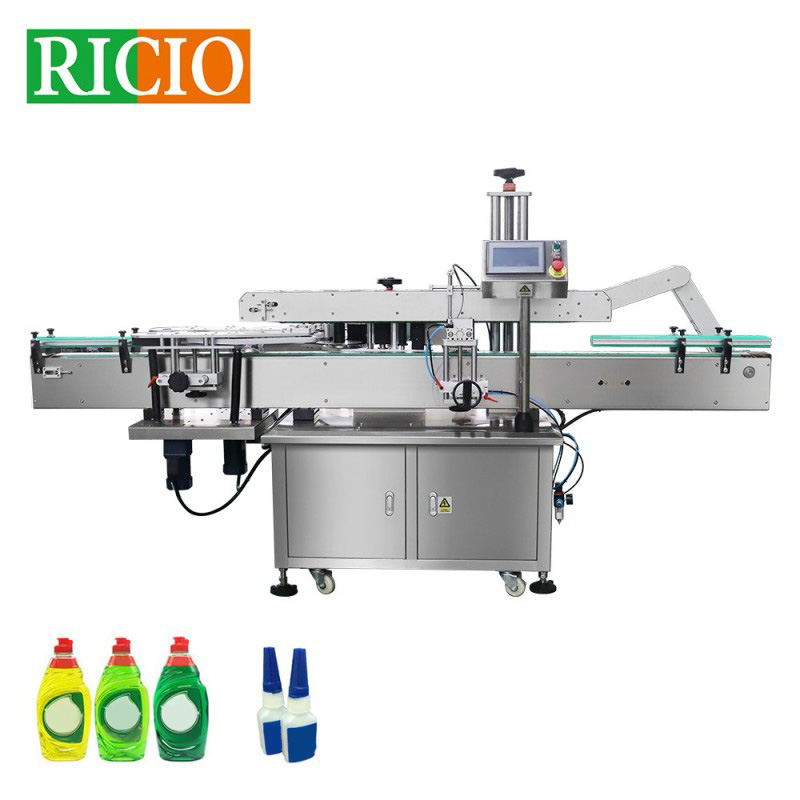
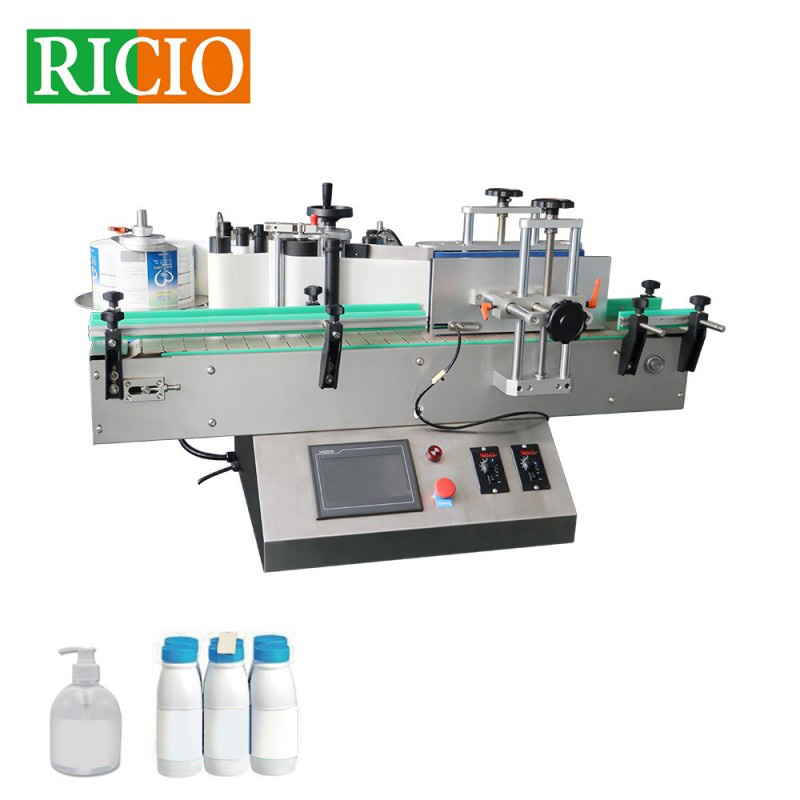
Automatic Single Side Sticker Labeling Machine
What Is an Automatic Single-Side Sticker Labeling Machine?
An automatic single-side sticker labeling machine is a packaging machine that applies one self-adhesive label to a designated surface of a product while the product moves through a conveyor system. Unlike a manual labeling station, the machine automatically controls product spacing, label dispensing, label detection, and application pressure. The operator loads products onto the infeed conveyor or connects the machine with another production unit, and the system performs the labeling cycle continuously.
The term “single-side” refers to the primary application method. The machine is intended to label one side or one defined surface at a time rather than applying labels to two opposing sides or wrapping a label around the entire circumference of a round container. This makes the equipment appropriate for packages with a front panel, side panel, or flat labeling area that must be presented in a controlled orientation.
Although the machine is designed for single-sided applications, it can accommodate a broad range of product forms. Square bottles and flat bottles are natural applications because their faces provide stable surfaces for label placement. Irregular bottles can also be processed when their shape, base stability, and conveying characteristics are suitable. Certain round containers may be labeled on one selected side when an appropriate positioning or alignment arrangement is used.
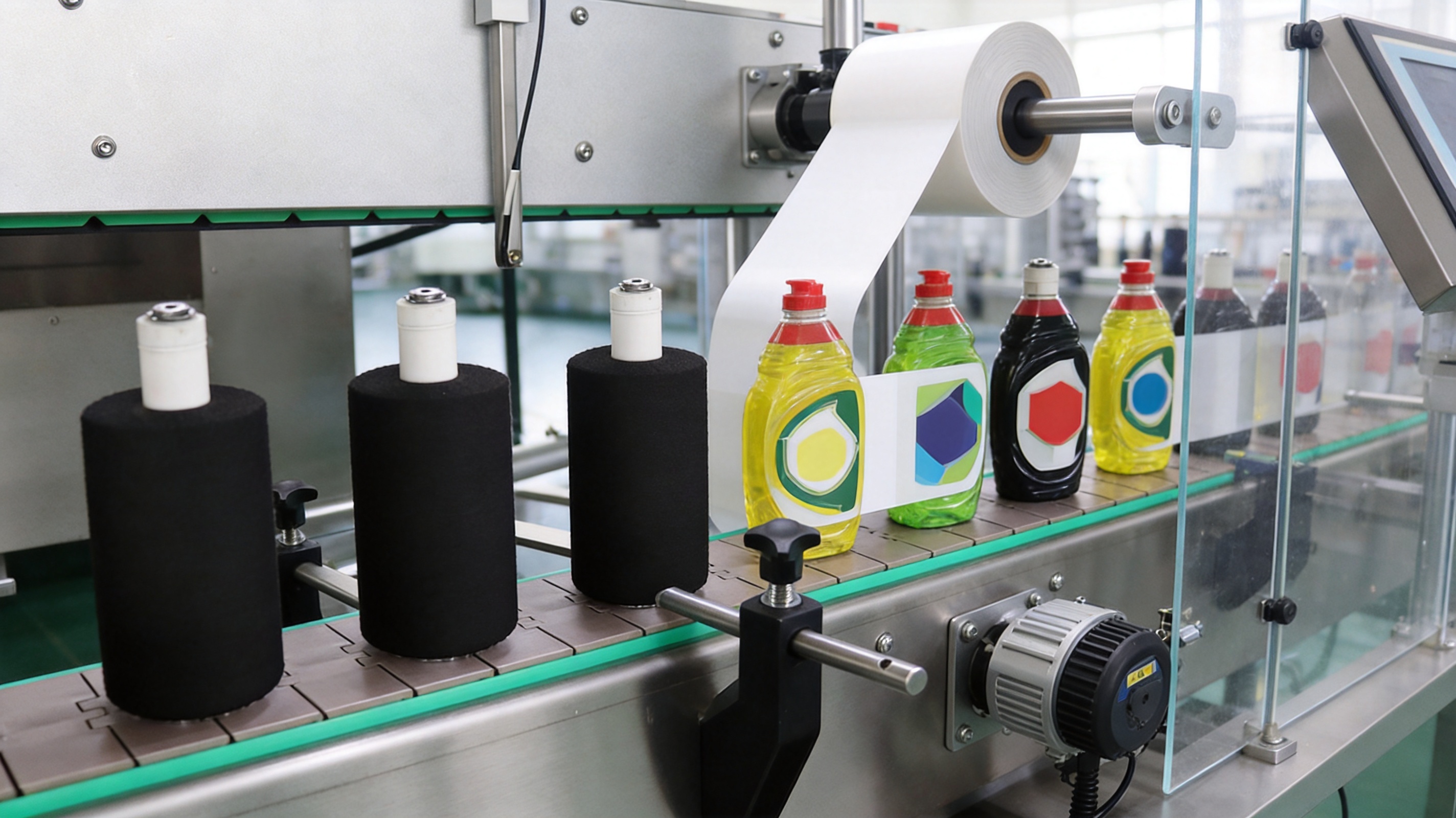
The system uses pressure-sensitive labels supplied on a roll. A label web passes through the dispensing mechanism, where the label separates from its backing paper at the peeling edge. A photoelectric sensor identifies the arriving product, and the control system coordinates the product speed with the label output. The label is then transferred to the container and pressed by a roller or wiping mechanism to improve adhesion and appearance.
How the Labeling Process Works
Product Infeed and Conveying
Products enter the machine through a conveyor designed to provide stable movement toward the labeling station. The conveyor width can be customized according to the dimensions of sample bottles, cases, boxes, or other containers. This flexibility is important because packaging formats differ significantly between industries. A narrow conveyor may be suitable for small medicine bottles, while wider products such as detergent containers or square food packages require a more generous conveying surface.
The conveyor supports the product while it travels through each stage of the machine. A stable transport path helps reduce vibration and unexpected rotation, both of which can affect label accuracy. The conveyor system can also be integrated into a larger packaging line, allowing the labeling operation to work together with filling, capping, inspection, coding, cartoning, and palletizing equipment.
Product Separation and Alignment
Before a label is applied, products must be separated at a suitable distance. If containers enter the labeling area too closely together, the sensor may not have sufficient time to detect each item or the label dispenser may release labels at an incorrect interval. The product separation mechanism automatically adjusts spacing and helps create a predictable labeling rhythm.
For square and flat bottles, correct orientation is especially important. A container that is slightly rotated may receive a label at an angle, even if the label dispenser itself is operating accurately. The alignment section therefore helps guide products into a consistent position before they reach the application point. Depending on the package design, side belts, guiding rails, positioning components, or other alignment devices can be configured to support the product.
This preparation stage is one of the key differences between automatic industrial labeling and manual application. An operator may place a label visually close to the desired position, but repeated manual placement is affected by fatigue, speed, hand position, product variation, and inconsistent pressure. Automated separation and alignment establish a repeatable process before the label is released.
Photoelectric Detection and Label Dispensing
When a product reaches the detection area, a photoelectric sensor identifies its presence. The control system then signals the label dispensing mechanism to output one label at the correct time. The synchronization between product movement and label release determines the distance from the container edge, the vertical or horizontal position of the label, and the interval between products.
Photoelectric detection also supports the no-bottle-no-label function. If no product is detected, the machine can hold the label instead of dispensing it into an empty space. This reduces label waste and helps keep the backing paper organized. In high-volume production, even a small reduction in unnecessary labels can produce meaningful savings over time, particularly when labels use special materials, multiple colors, security features, or variable information.
Label Application and Pressing
After the label is dispensed, the product passes through an application section that brings the adhesive label into contact with the selected surface. A pressing or rolling mechanism then smooths the label across the package. The application force and contact angle can be adjusted for different containers and label materials.
Effective pressing helps eliminate common appearance problems, including bubbles, wrinkles, edge lifting, and incomplete adhesion. It is particularly useful when labeling flat surfaces, because the roller can distribute pressure evenly from the initial contact point across the label. For irregular products, the pressing arrangement can be adjusted according to the usable labeling surface and the flexibility of the packaging material.
The result is a cleaner and more consistent package appearance. This is not only a cosmetic benefit. Accurate label placement can improve barcode scanning, make product information easier to read, support regulatory compliance, and strengthen the visual consistency of a brand’s packaging range.
Primary Advantages of the Automatic Single-Side Configuration
Versatility Across Product Shapes
Many packaging lines handle more than one bottle style. A company may use square containers for one detergent product, flat containers for another household chemical, and irregular bottles for a personal care product. A machine dedicated to only one shape can create unnecessary equipment costs and increase changeover time.
The automatic single-side sticker labeling machine is designed for a broad object range. Products with heights from approximately 40 to 400 millimeters and diameters from approximately 25 to 120 millimeters can be accommodated, subject to the specific package shape and production requirements. Customized arrangements are available when a product falls outside standard dimensions or has unusual stability and orientation needs.
This flexibility gives the machine an advantage over narrowly configured labeling equipment. Instead of purchasing separate machines for every container format, manufacturers can use one adaptable platform for a wider product portfolio. The actual level of compatibility should always be confirmed through sample testing, but the design provides a strong foundation for multi-product packaging operations.
Stable Single-Surface Placement
When a product has a clearly defined front or side panel, single-side labeling can produce a professional appearance without the mechanical complexity of a full-wrap system. The machine focuses its positioning, dispensing, and pressing functions on one application surface. This can make the equipment easier to adjust for flat bottles and square containers than a system intended primarily for cylindrical wrapping.
Stable placement is especially important for packages that display a logo, product name, instructions, warning information, barcode, or regulatory text. A label that is too close to one edge or visibly angled can reduce shelf appeal and may interfere with scanners or inspection systems. By controlling the product path and label release, the machine helps maintain a consistent relationship between the label and the container.
Adjustable Production Speed
The listed production capability is approximately 30 to 120 bottles per minute, depending on product dimensions, label length, container shape, label material, and line configuration. This adjustable speed allows the machine to serve different production environments. A smaller operation may prioritize gentle handling and easy changeover, while a larger plant may select a higher operating rate to match a faster filling or packing line.
Actual output depends on more than the nominal conveyor speed. Product stability, operator loading, label adhesive behavior, label gap, sensor response, and the efficiency of upstream equipment all influence the practical production rate. A machine that can be adjusted to the product rather than being forced to operate at one fixed speed is better suited to a changing production schedule.
Reduced Label Waste
Label waste can result from missing products, incorrect detection, misaligned containers, poor web tension, or repeated manual rework. The no-bottle-no-label function reduces waste caused by empty spaces on the conveyor. Photoelectric monitoring also helps the operator identify abnormal conditions before a large number of labels are incorrectly dispensed.
Waste reduction improves material utilization and contributes to more predictable operating costs. It also supports sustainability goals by reducing discarded label stock and backing paper. Although the savings depend on production volume and label cost, automatic control is generally more efficient than relying on manual timing.
Improved Appearance and Lower Rework
Manual labeling can produce skewed labels, bubbles, wrinkles, lifting edges, inconsistent height, and variation between shifts. These defects may require rework or cause products to be downgraded. Automated pressing and controlled product movement reduce the likelihood of these common issues.
A consistent label position also helps create a unified appearance across a product family. When containers are displayed together on retail shelves or packed into cases, alignment and repeatability influence how customers perceive quality. The machine therefore contributes not only to labor savings but also to packaging presentation and quality control.
Efficient Product Changeover
The touch screen control system can store multiple sets of labeling parameters. These stored settings may include speed, label position, detection timing, and other operating values appropriate to different products. When the production schedule changes, the operator can recall a suitable parameter group instead of entering every value from the beginning.
Stored recipes do not eliminate the need for mechanical adjustment. Conveyor guides, alignment devices, label roll position, and application components may still require physical changes. However, recipe storage reduces repeated electronic setup work and helps operators achieve a more orderly changeover process.
Technical Performance and Operating Range
The machine is specified for applications requiring a balance between flexibility, accuracy, and continuous operation. The following table summarizes the principal technical information provided for the standard configuration.
| Parameter | Standard Specification |
| Machine type | Automatic single-side sticker labeling machine |
| Model description | RXL-D |
| Power supply | AC380V, 50Hz, three-phase; alternatives may be considered when required |
| Power consumption | 2500W |
| Labeling speed | Approximately 30–120 bottles per minute, adjustable according to product and label size |
| Labeling accuracy | Approximately ±1 millimeter, subject to product shape, material, roundness, and surface condition |
| Product diameter range | Approximately 25–120 millimeters |
| Product height range | Approximately 40–400 millimeters; customization is available |
| Label height range | Approximately 10–150 millimeters |
| Label length range | Approximately 10–300 millimeters; special specifications may be customized |
| Minimum single-label spacing | At least 3 millimeters |
| Label thickness | At least 8 micrometers, with backing paper of at least 5 micrometers and suitable tensile strength |
| Paper roll core | Approximately 76 millimeters internal diameter |
| Maximum paper roll outside diameter | Approximately 350 millimeters |
| Machine net weight | Approximately 280 kilograms |
| Packaging dimensions | Approximately 2800 × 1400 × 1400 millimeters |
| Conveyor width | Customizable according to sample bottles, cases, boxes, and other products |
These specifications should be treated as a reference for preliminary equipment selection. Final performance depends on the actual product, label construction, adhesive, production layout, operator method, and desired quality standard. Sample testing is recommended before finalizing a machine configuration, especially when products are soft, tapered, highly curved, unstable, unusually lightweight, or manufactured with significant dimensional variation.
Advantages Compared with Less Integrated Labeling Solutions
Compared with Manual Labeling
The most direct comparison is with manual labeling. Manual work may appear inexpensive when production volumes are low, but it becomes difficult to control as demand increases. Each operator may place labels at a slightly different height or angle. Speed can vary throughout a shift, and labor availability may affect production continuity.
Automation improves repeatability. Once the machine is correctly adjusted, product spacing, sensor timing, label release, and pressing are controlled through the system rather than by individual hand movements. This reduces dependence on operator skill and makes production results more consistent between shifts.
Automation can also improve workplace organization. Operators can focus on material replenishment, inspection, product feeding, and exception handling rather than performing the repetitive motion of peeling and applying every label. The reduction in repetitive manual work may support better ergonomics, although appropriate machine guarding and safe operating procedures remain essential.
Compared with Basic Conveyor Labelers
Some basic conveyor labelers provide only a belt and a dispensing head. They may be suitable for simple, stable products that arrive at a consistent interval, but they can struggle when containers need separation or alignment. The automatic single-side system adds product management functions before the label is applied.
Separation and alignment are particularly valuable for square bottles and irregular packages. Without them, the product may twist, collide with the next container, or pass the labeling head in an inconsistent position. An integrated system can therefore provide more reliable results without requiring the customer to design separate positioning equipment.
Compared with Single-Format Machines
A machine built around one bottle diameter or one fixed product height may deliver excellent results for a single product but offer limited value when the packaging portfolio expands. The broader height and diameter range of this machine, together with adjustable guides and stored parameters, makes it more suitable for manufacturers with several product formats.
Flexibility does not mean that every shape can be processed without testing. Extremely unstable products, highly curved surfaces, or containers with no consistent reference face may require special tooling or a different labeling method. Nevertheless, the ability to configure the machine for square, flat, irregular, and selected round products provides a practical advantage for many general packaging applications.
Compared with More Complex Multi-Side Systems
Some products require labels on two sides or around the entire container. In those cases, a double-sided or wraparound system may be appropriate. However, purchasing a more complex machine for a single-side requirement can increase equipment cost, setup complexity, and maintenance demands.
A dedicated single-side configuration concentrates the mechanical system on the application that the product actually needs. It can offer a more economical and straightforward solution for packages with one main information panel. The appropriate comparison should consider the number of labels, required orientation, container geometry, production rate, and future product plans rather than choosing the most complicated machine available.
Optional Printing, Coding, and Inspection Functions
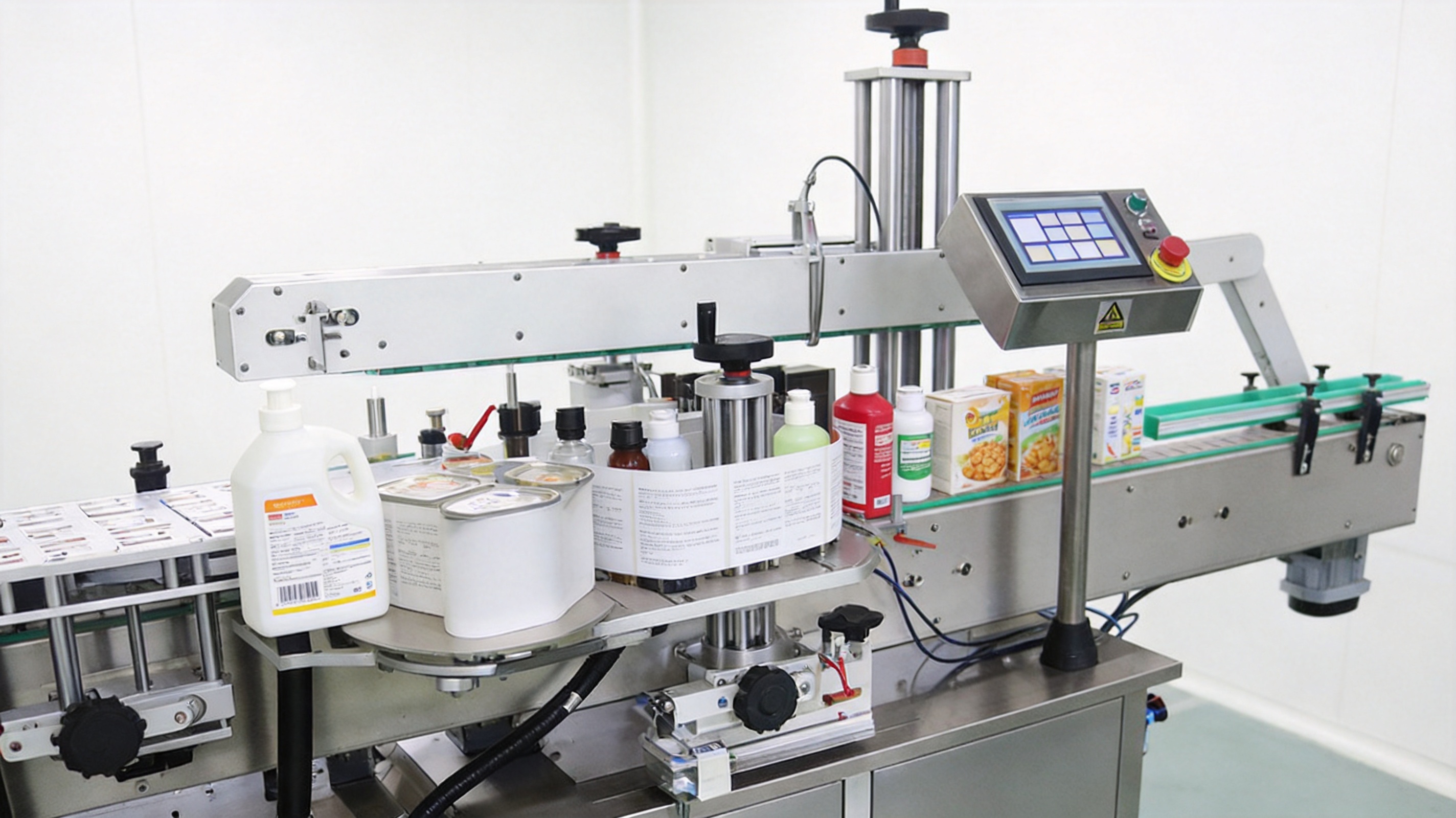
Many industries require more than a pre-printed label. Production dates, expiration dates, batch numbers, lot codes, supervision codes, QR codes, and traceability information may need to be printed or verified during the labeling process. The machine can be configured with optional accessories to support these requirements.
Thermal Coding Printer
A thermal coding printer can add variable information to suitable label materials or packaging surfaces. It is often used for dates, lot numbers, and other production information. The printer should be selected according to the substrate, print resolution, required character size, line speed, and environmental conditions.
Inkjet Printer
An inkjet printer provides another method for printing variable data. It may be useful when information must be printed directly onto a bottle, package, label, or another surface. Ink selection, drying time, adhesion, and resistance to water or chemicals should be considered during application testing.
Transparent Label Detection
Transparent labels can be more difficult to detect than opaque paper or film labels because standard sensors may not distinguish the label edge reliably. A transparent-label sensor can be added when clear labels are required. Correct sensor selection helps improve label dispensing accuracy and reduces interruptions caused by missed label detection.
Barcode and QR Code Reading
A barcode or QR code reader can be installed for identification and traceability applications. The reader may verify that the correct code is present, confirm product information, or connect the labeling station with a broader production data system. This function can help reduce the risk of applying the wrong label to a product or releasing a package with unreadable information.
Optional systems should be evaluated as part of the complete process rather than added without testing. Label contrast, print quality, code location, conveyor speed, lighting, and database communication can all affect inspection reliability. A coordinated supplier can help determine whether a printer, reader, sensor, or combined configuration is appropriate for the intended line.
Application Areas and Suitable Products
Daily Chemical and Household Chemical Products
Household chemical products often use square or flat bottles because these shapes use shelf space efficiently and provide broad front panels. Shampoo, laundry detergent, surface cleaner, dishwashing liquid, fabric care products, and disinfectants are common examples. These products benefit from stable single-side label placement because the label usually carries a prominent brand panel, usage instructions, warnings, and barcode.
The machine can help manufacturers manage several package styles while maintaining a consistent presentation. Its ability to process products with different heights and diameters is useful when a product family includes both small personal-care bottles and larger household containers.
Food and Beverage Packaging
Food containers and seasoning bottles often require readable labels with product names, ingredients, nutrition information, lot numbers, or traceability codes. Square food containers and flat plastic packages may be suitable for single-side application when the package has a designated front face.
In food-related environments, equipment selection should also consider cleanability, material compatibility, label adhesive requirements, and the possibility of exposure to moisture or oil. The actual machine layout should be reviewed according to the hygiene expectations of the specific production area.
Pharmaceutical and Healthcare Products
Pharmaceutical, healthcare, and medical-related packages demand clear information and repeatable placement. Medicine bottles, health product containers, and selected medical packages may require labels containing dosage information, batch identification, expiry dates, or regulatory data.
For these applications, labeling accuracy and traceability are especially important. A photoelectric detection system, optional code reader, and controlled application process can support a more reliable packaging workflow. Final suitability depends on the product, regulatory requirements, validation procedures, and the customer’s quality system.
Personal Care and Cosmetics
Cosmetic and personal care products are often judged strongly by appearance. A label that is wrinkled, crooked, or positioned inconsistently can reduce the perceived quality of the product. Flat and square cosmetic containers are well suited to controlled single-side application, especially when a smooth front label is central to the package design.
Different materials such as glossy plastic, frosted containers, coated surfaces, or flexible packages may require different adhesive and pressing settings. Testing ensures that the label adheres properly without edge lifting or surface distortion.
Chemical and Lubricant Packaging
Lubricants, industrial chemicals, and related products may use containers with larger dimensions, textured surfaces, or more demanding environmental conditions. Labels may need resistance to oil, moisture, abrasion, or chemical exposure. The labeling machine can provide the application platform, while the label material and adhesive must be selected for the product environment.
When these packages include hazard symbols, batch information, or technical instructions, accurate placement is important for both communication and compliance. Optional printing and code-reading functions can support variable information requirements.
Manufacturing Strengths Behind the Equipment
The performance of a labeling machine depends heavily on how it is designed and manufactured. A supplier that only assembles standard purchased parts may have limited control over dimensional accuracy, component compatibility, lead times, and long-term service. A source manufacturer with internal machining and engineering capabilities can manage more of the product lifecycle.
Shanghai Ruixiao Packaging Technology Co., Ltd., operating under the RICIO identity, specializes in the research, development, and manufacture of labeling machinery. The company is headquartered in Shanghai, China, and developed from the acquisition of Shanghai Zhenbao Machinery Parts Factory. This background is significant because it combines packaging-machine experience with a foundation in precision mechanical parts manufacturing.
In-House Precision Machining
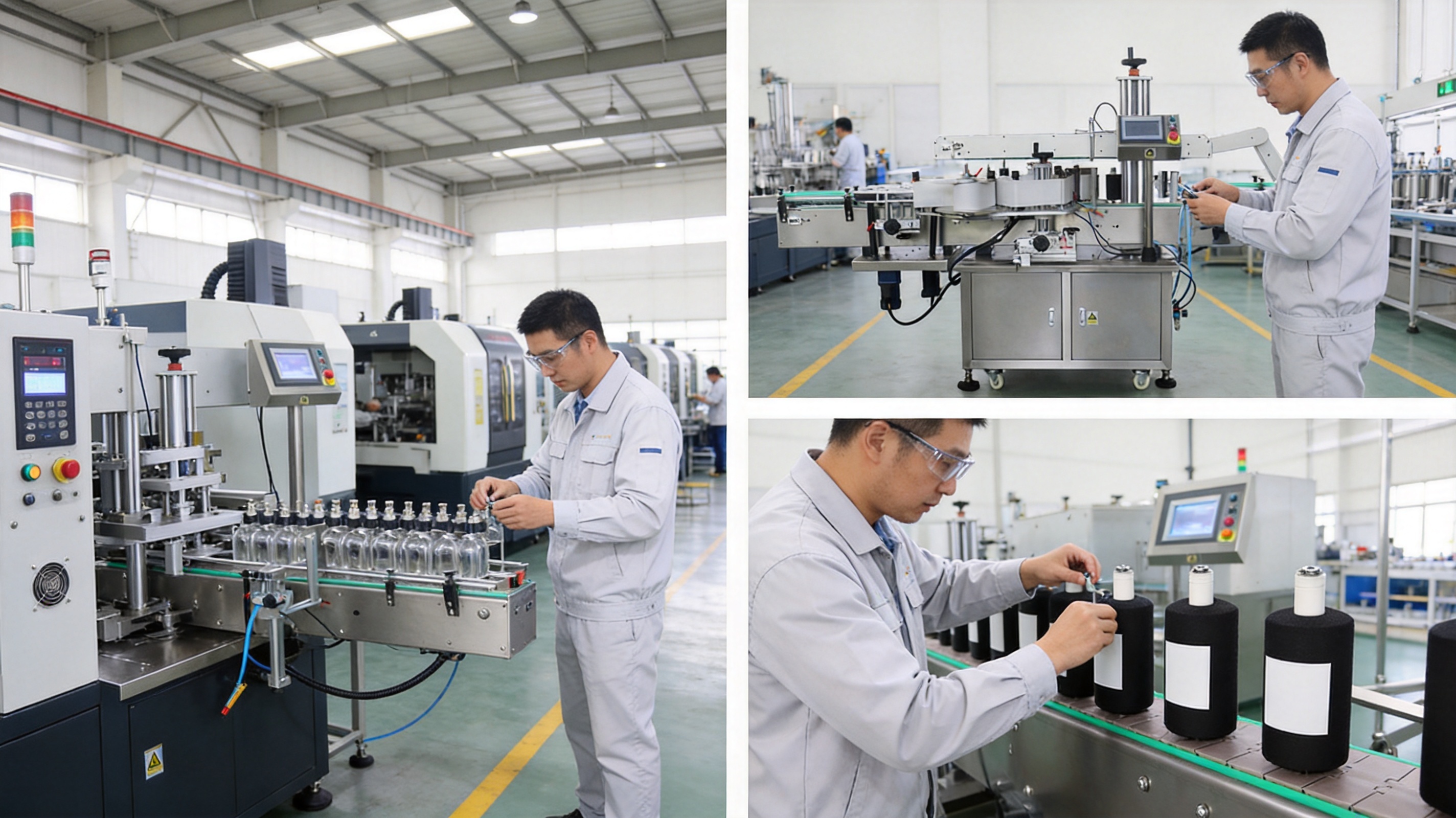
The company operates multiple CNC machining centers and has an experienced technical team. In-house CNC machining allows key components to be produced with controlled dimensions and repeatable quality. Components such as brackets, plates, shafts, guide parts, mounting structures, and other precision elements can be manufactured with closer coordination between design and production.
Internal machining can also shorten the feedback loop between engineering and manufacturing. If a component requires a dimensional improvement, mounting change, or design adjustment, the technical team can evaluate the change directly within the manufacturing process. This is valuable for customized labeling machines, where the conveyor, guides, sensors, and application mechanisms may need to be adapted to sample products.
Control from Component Production to Assembly
The company manages a broad process from core component machining to complete machine assembly and commissioning. This type of process control helps reduce the risk that individual parts will be designed or produced without considering their relationship to the full system.
For a labeling machine, small mechanical relationships can have a substantial effect on performance. The position of a sensor bracket influences detection timing. The alignment of a guide affects product stability. The rigidity of an application support influences label pressure. The relationship between the conveyor and dispensing head affects the final position of the label. Coordinated manufacturing makes it easier to evaluate these relationships as one system.
Engineering and Customization Capability
Labeling equipment often has to be adapted to a customer’s actual packaging rather than selected only from a catalog. Bottle dimensions, surface shape, label size, label gap, line speed, conveyor height, and available floor space all influence the final configuration.
The company’s engineering team can use sample products and labels to determine how the machine should be adjusted. Customization may involve conveyor width, guide structure, product separation, label head positioning, special sensors, printing devices, code readers, or other application components. This is an important advantage over suppliers that offer only fixed standard machines with limited adaptation.
Assembly and Commissioning
Assembly quality affects the smoothness of machine operation. Correct installation of motors, transmission elements, sensors, control components, label dispensing parts, and protective structures is essential. After assembly, commissioning verifies whether the system performs as intended with the selected products and labels.
Commissioning should include product feeding, spacing, sensor response, label release, application pressure, speed adjustment, emergency functions, and fault alarms. The objective is not merely to make the conveyor move but to confirm that the complete labeling cycle is stable under realistic production conditions.
ISO 9001 Quality System
The manufacturing and assembly process is conducted in accordance with the ISO 9001 international quality system. A quality management system provides a framework for documented processes, inspection, corrective action, traceability, and continual improvement. It does not replace product testing, but it supports a more disciplined approach to manufacturing and service.
For industrial customers, process consistency is important because labeling equipment may operate for many years and must be supported through maintenance, spare parts, upgrades, and technical assistance. A documented quality system can contribute to more reliable communication and repeatable production practices.
Control System, Safety, and Operator Convenience
The touch screen control system provides an operator interface for setting and monitoring the labeling process. Depending on the configuration, operators can adjust production speed, label timing, detection parameters, and stored product settings. A clear interface helps reduce setup mistakes and supports quicker response when the production format changes.
Multiple parameter groups can be stored for different bottles or labels. Each group should be identified clearly so the operator can select the correct recipe before starting production. Although recipe storage improves efficiency, operators should still confirm that the selected label roll, product, and mechanical guide position correspond to the chosen settings.
The fault alarm system helps identify abnormal conditions. Possible situations may include missing labels, product detection errors, label material problems, motor overload, or other interruptions. Alarms allow the operator to respond promptly rather than discovering a defect only after a large number of products has passed through the machine.
Safety design should be reviewed before installation and during operation. Operators need training in emergency stop use, guarding, label roll replacement, adjustment procedures, cleaning, and maintenance. Moving components should not be accessed while the machine is running unless the procedure is specifically designed and authorized for that purpose. Electrical installation should be completed by qualified personnel according to local requirements and the selected power configuration.
Installation, Setup, and Changeover Considerations
Evaluating the Production Layout
Before installation, the customer should confirm the available floor area, conveyor height, product flow direction, operator access, electrical supply, and connection points for upstream and downstream machines. The listed packaging size is approximately 2800 by 1400 by 1400 millimeters, but additional space is needed for operation, maintenance, label roll replacement, and safe movement around the equipment.
The line layout should prevent products from accumulating at the machine exit. If the downstream conveyor stops unexpectedly, the labeling machine may need a signal interface or accumulation strategy. Similarly, the infeed must provide products at a rate and spacing that the labeling system can manage.
Preparing Product and Label Samples
Sample testing is one of the most important steps in choosing an automatic labeling machine. Customers should provide representative containers from normal production, including any dimensional tolerances, surface variations, caps, handles, seams, or recessed areas that may affect labeling. Several label rolls should also be provided when label materials, adhesives, or designs differ.
Testing should measure label position, appearance, adhesion, speed, changeover time, sensor reliability, and waste. It should also examine the machine’s behavior when products are slightly different from the ideal sample. A robust setup should tolerate normal manufacturing variation without frequent manual correction.
Adjusting Guides and Application Components
Mechanical guides should support the product without causing excessive friction or scratching. The application roller or pressing component should contact the label evenly but should not deform lightweight containers. The label head should be positioned according to the label height and the selected application surface.
When changing from a small bottle to a larger one, the operator may need to adjust conveyor guides, product separation settings, sensor position, label head height, and pressing components. Stored parameters can reduce electronic adjustments, while clearly marked mechanical scales or reference points can make physical setup more repeatable.
Managing Label Rolls
The standard paper roll information includes an inner diameter of approximately 76 millimeters and an outside diameter of up to approximately 350 millimeters. The label web must have adequate tensile strength, and the label gap should meet the stated minimum spacing requirement. Poorly wound rolls, damaged edges, excessive adhesive squeeze-out, or inconsistent gaps can affect dispensing performance.
Operators should load the roll in the correct direction, thread the backing paper through the dispensing path, and ensure appropriate tension. Regular inspection of the label roll and backing paper helps prevent sudden web breaks and unnecessary downtime.
Maintenance and Long-Term Performance
Routine maintenance helps preserve labeling accuracy and production reliability. Operators should clean product-contact surfaces, remove adhesive residue, inspect rollers, check sensor lenses, and verify that guides remain secure. Adhesive buildup can change the contact surface and cause labels to lift or drag, while dust on a photoelectric sensor can lead to missed detections.
Mechanical fasteners, belts, bearings, and transmission components should be inspected according to the maintenance schedule. Electrical cabinets and control components should be checked by qualified personnel. Any unusual noise, vibration, repeated alarm, or change in label position should be investigated before it becomes a major failure.
Preventive maintenance is generally less disruptive than emergency repair. A planned inspection can be completed during scheduled downtime, while an unexpected breakdown may stop the entire packaging line. Customers should also maintain suitable spare parts for wear components and keep records of adjustments, repairs, and product recipes.
Long-term serviceability is influenced by the availability of technical support and replacement parts. A manufacturer with internal engineering and machining capabilities may be better positioned to reproduce or modify components when a special part is required. This can be especially valuable for customized machines that include product-specific guides or application assemblies.
How to Select the Right Configuration
Choosing an automatic single-side sticker labeling machine should begin with the product rather than the machine model. The customer should define the package material, dimensions, weight, surface shape, stability, and orientation requirements. A square bottle with a rigid front panel presents a different challenge from a soft, tapered, or irregular container.
The label should also be analyzed. Important factors include material, thickness, length, height, adhesive type, backing paper, transparency, minimum gap, roll diameter, print requirements, and resistance to moisture, oil, chemicals, or temperature. A label that performs well on one package may not adhere correctly to another surface.
Production requirements should include target bottles per minute, working hours per day, number of product formats, required accuracy, acceptable waste, operator availability, and integration with other machines. If the customer expects future product expansion, selecting a machine with a wider adjustment range and recipe storage may provide better long-term value.
Special requirements should be identified early. These may include transparent label detection, variable data printing, barcode verification, QR code reading, special product orientation, high-speed operation, or a customized conveyor. Early communication reduces the risk of designing a standard system that later requires extensive modification.
Why Source Manufacturing Matters to Customers
Purchasing directly from a source manufacturer can provide benefits beyond the initial machine price. The manufacturer has greater visibility into the design, parts, control system, assembly process, and commissioning results. This can make technical communication more direct and reduce the number of intermediaries between the customer and the engineering team.
Direct manufacturing capability can also support OEM and ODM projects. Customers may need a machine with a particular appearance, conveyor height, production interface, code-printing arrangement, or special application head. A source manufacturer can assess whether these changes are practical and incorporate them into the engineering process.
Cost competitiveness may result from internal production of selected precision components and coordinated assembly. However, the lowest purchase price should not be the only evaluation criterion. Total cost of ownership includes installation, training, spare parts, downtime, label waste, changeover labor, maintenance, and future adaptability. A machine that is easier to adjust and maintain may provide greater value over its operating life.
Shanghai Ruixiao Packaging Technology Co., Ltd. reports that its labeling machinery is exported to more than 40 countries and regions. International experience can help a manufacturer understand different packaging practices, electrical expectations, documentation requirements, and customer service needs. The company’s product range includes syringe labelers, round bottle labelers, square bottle labelers, double-sided systems, high-speed labelers, and real-time print-and-apply equipment, providing broader experience across labeling applications.
Practical Benefits for Production Managers
For a production manager, the value of the machine can be measured through several operational indicators. These include labeling output, first-pass quality, label waste, labor requirements, changeover time, unplanned downtime, and the ability to support new products.
Higher first-pass quality reduces rework and helps prevent defective packages from reaching inspection or shipping. Consistent placement can also reduce customer complaints related to appearance and improve the performance of barcode scanners. If variable coding and code verification are included, the machine can contribute to better lot control and traceability.
Changeover efficiency is another important factor. A company that produces many short runs may lose significant time when settings must be entered repeatedly or mechanical adjustments are difficult to reproduce. Parameter storage, adjustable guides, and clear setup procedures can help shorten these interruptions.
For growing businesses, adaptability may be more valuable than maximum speed. A machine that can handle several products and accommodate optional accessories may remain useful as the product portfolio expands. This can postpone the need for additional equipment and simplify the overall packaging department.
Frequently Asked Questions
What types of products can this machine label?
It is designed for square bottles, flat bottles, irregular bottles, and selected round containers that have a suitable single labeling surface. Typical applications include shampoo bottles, laundry detergent bottles, disinfectant bottles, medicine bottles, seasoning bottles, food containers, personal-care packages, chemical containers, and lubricant packaging.
Can it apply labels to two sides at the same time?
The standard configuration is intended for automatic single-side labeling. If a product requires simultaneous front-and-back or double-sided labeling, a different configuration or additional labeling head may be required. The application should be reviewed using actual product samples.
What is the maximum labeling speed?
The reference speed is approximately 30 to 120 bottles per minute. Actual output depends on bottle size, label length, product stability, label material, spacing, sensor response, and the configuration of the complete production line.
How accurate is the label placement?
The listed labeling accuracy is approximately ±1 millimeter. Actual accuracy can vary according to container roundness, softness, hardness, surface condition, product alignment, label construction, and production speed. Sample testing is recommended for a confirmed result.
Can the machine handle transparent labels?
Yes, a transparent label sensor can be added as an optional function. Clear labels may require specialized detection because the sensor must reliably identify the label edge or gap against the backing paper.
Can dates and batch numbers be printed during labeling?
Optional thermal coding printers or inkjet printers can be integrated according to the required print surface, information type, speed, and material. Date codes, expiry dates, batch numbers, supervision codes, and other variable data may be supported.
Can barcodes or QR codes be checked?
A barcode or QR code reader can be added for identification, verification, and traceability. The reader configuration should be selected according to code type, printing quality, position, lighting, line speed, and the customer’s data-management requirements.
How does the no-bottle-no-label function work?
A photoelectric sensor detects whether a product is present at the labeling station. If no product is detected, the control system can prevent the label dispensing mechanism from releasing a label. This helps reduce waste caused by empty conveyor spaces.
Is the machine suitable for multiple product sizes?
It is designed for product heights of approximately 40 to 400 millimeters and diameters of approximately 25 to 120 millimeters, with customized specifications available. Mechanical guides and labeling parameters may need to be adjusted for each product format.
What information is needed for a quotation and final design?
Useful information includes product drawings or samples, product dimensions, material, weight, label drawings, label roll information, desired label position, target speed, power requirements, existing conveyor height, coding needs, barcode or QR code requirements, and the available installation space.
Why should customers test samples before ordering?
Testing confirms whether the container is stable, whether the label adheres correctly, whether the sensor detects the product and label reliably, and whether the desired speed and accuracy can be achieved. It also helps determine the correct guide, pressing, printing, and detection configuration.
What supports long-term machine reliability?
Correct installation, operator training, regular cleaning, preventive maintenance, proper label loading, timely replacement of wear parts, and prompt attention to alarms all contribute to reliability. Manufacturer support and access to suitable spare parts are also important.
Conclusion
The automatic single-side sticker labeling machine offers a practical solution for manufacturers that need consistent labeling on square bottles, flat bottles, irregular packages, and selected round containers. By combining product conveying, separation, alignment, photoelectric detection, label dispensing, pressing, and rolling, it provides a more controlled process than manual application or a basic dispensing head used without product management.
Its main advantages include a broad product range, adjustable speed of approximately 30 to 120 bottles per minute, reference accuracy of approximately ±1 millimeter, no-bottle-no-label operation, stored labeling parameters, optional coding and inspection functions, and a customizable conveyor arrangement. These features help reduce labeling waste, improve package appearance, lower manual errors, and support more efficient product changeover.
The machine’s value is strengthened by the manufacturing capabilities of Shanghai Ruixiao Packaging Technology Co., Ltd. Through in-house CNC machining, experienced engineering, coordinated assembly, commissioning, and an ISO 9001 quality-management framework, the company can control more of the equipment-development process. This source-manufacturer approach is useful for customers that require customized dimensions, product handling, labeling positions, printing accessories, code readers, or integration with an existing packaging line.
Before final selection, customers should test representative products and labels, verify the required speed and accuracy, review the installation layout, and define all optional functions. When correctly configured, the automatic single-side sticker labeling machine can provide a stable, scalable, and production-line-friendly labeling platform for food, beverage, pharmaceutical, healthcare, daily chemical, personal care, chemical, lubricant, and light-industry packaging applications.
References
1. Product technical information for the RXL-D automatic single-side sticker labeling machine, including operating range, labeling speed, accuracy, label specifications, and machine dimensions.
2. Packaging machinery engineering principles concerning pressure-sensitive label dispensing, photoelectric product detection, conveyor synchronization, product separation, and label pressing.
3. ISO 9001 quality management system principles for manufacturing process control, documented inspection, corrective action, and continual improvement.
4. General industrial guidance for the selection, installation, operation, and preventive maintenance of automatic labeling equipment.
5. Technical considerations for barcode verification, QR code reading, thermal coding, inkjet printing, transparent label detection, and packaging traceability.
6. Manufacturer information concerning the research, development, precision machining, assembly, commissioning, and international supply of labeling machinery.
Product: Automatic Single Side Sticker Labeling Machine

related products
related News
 +86 13681850339
 sales@raxpack.com
 Building 6, No. 477 Tiefeng Road, Baoshan District, Shanghai, China
- Tabletop Labeling Machine
- Round Bottle Labeling Machine
- Automatic Tube Labeling Machine
- Pouch Labeling Machine
- Rotary Labeling Machine
- Syringe Labeling Machine
- Top Labeling Machine
- Single Side Sticker Labeling Machine
- Double Side Labeling Machine
- Bucket Labeling Machine
- Bottom Labeling Machine
- Corner Label Applicator
- Waist Sealing Labeling Machine
- Square Bottle Labeling Machine
