 English
 русский
 Español
 عربى



Automatic Paging Pouch Labeling Machine: Precision Top Labeling for Flat Products
2026-11-19
Content
- 1 What Is an Automatic Paging Pouch Labeling Machine?
- 2 Core Operating Principle
- 3 Applications Across Multiple Industries
- 4 Major Advantages Over Manual and Conventional Labeling Methods
- 5 Technical Specifications
- 6 Intelligent Control and Production Management
- 7 Mechanical Design for Flat and Flexible Products
- 8 Manufacturing Strengths and Engineering Capabilities
- 9 How the Machine Compares with Alternative Methods
- 10 Installation, Setup, and Maintenance Considerations
- 11 Product Quality and Labeling Performance
- 12 Benefits for Production Efficiency
- 13 Customization Possibilities
- 14 Frequently Asked Questions
- 14.1 What products can the machine label?
- 14.2 Does it label individual products from a stack?
- 14.3 Where is the label applied?
- 14.4 What is the maximum labeling speed?
- 14.5 What labeling accuracy can be expected?
- 14.6 Can the machine handle lightweight paper and pouches?
- 14.7 Can transparent labels be used?
- 14.8 Can a printer or coder be added?
- 14.9 Can barcodes and QR codes be checked?
- 14.10 What electrical supply is required?
- 14.11 Can the machine be customized?
- 14.12 What information should a buyer provide?
- 14.13 Is the machine suitable for export projects?
- 15 Why Manufacturer Capability Matters
- 16 Conclusion
- 17 References
- 18 Product: Automatic Paging Pouch Labeling Machine
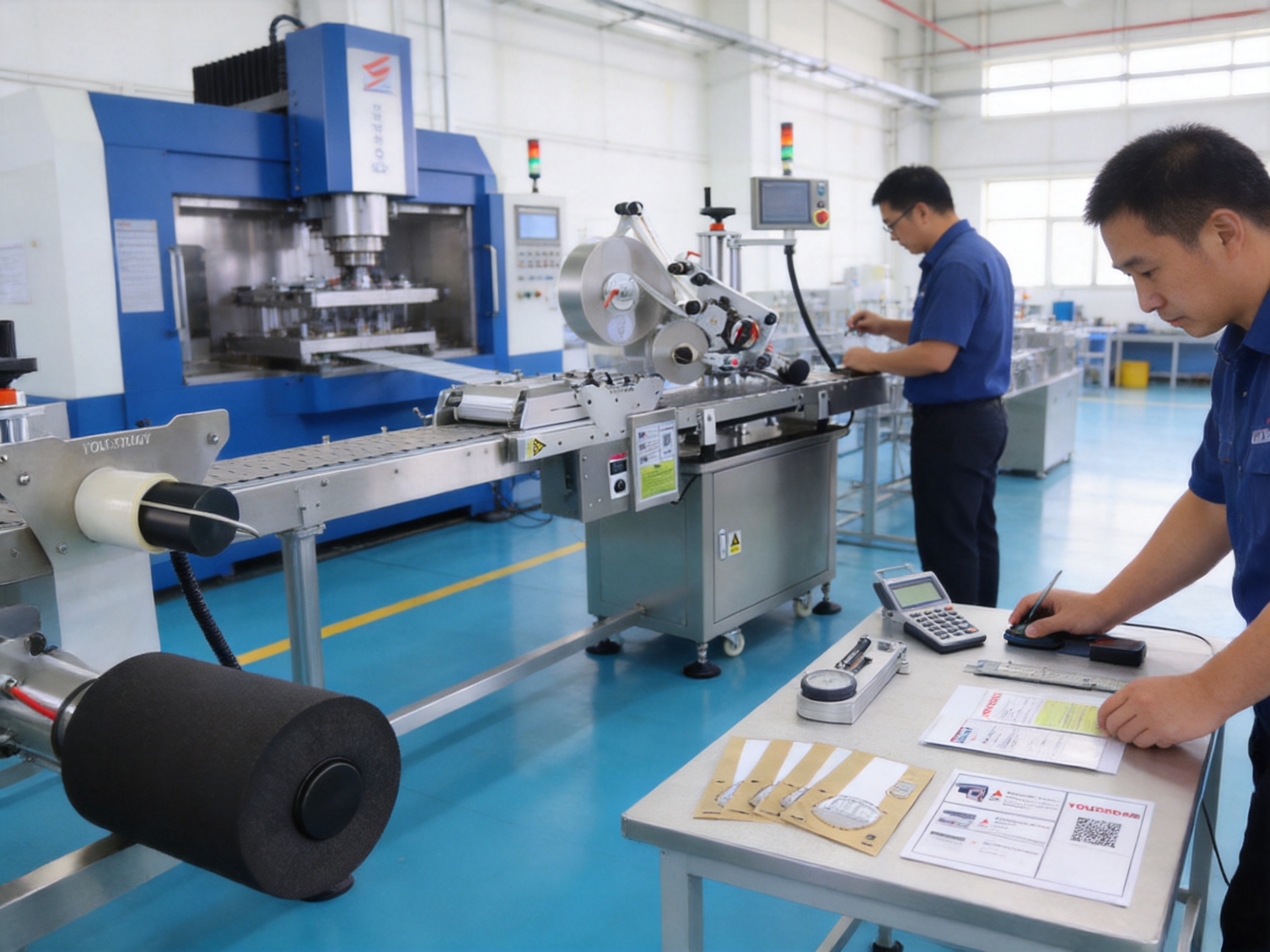
Modern packaging lines increasingly handle products that are lightweight, flexible, thin, or difficult to separate manually. Pouches, paper sheets, cards, leaflets, plastic bags, and flat cartons often arrive in stacked groups, making consistent feeding and accurate labeling a demanding task. The automatic paging pouch labeling machine is developed to solve this challenge by combining automatic product separation, controlled conveying, precise top labeling, and intelligent production monitoring in one integrated system.
Designed for continuous labeling of flat and sheet-like products, the machine separates stacked items one at a time before transferring them to the labeling conveyor. A label is then dispensed and applied to the upper surface at a preset position. This operating method reduces manual handling, supports stable production, and helps manufacturers achieve a more consistent appearance across every packaged item.
The equipment is particularly suitable for packaging operations in which product presentation, traceability, and reliable label placement are important. It can be used for plastic packaging bags, paper pouches, folding cartons, cards, instruction leaflets, prepaid cards, membership cards, internet cards, barcode labels, QR code labels, and many other thin products. With optional coding and identification devices, the machine can also support integrated printing, scanning, and traceability processes.
What Is an Automatic Paging Pouch Labeling Machine?
An automatic paging pouch labeling machine is a specialized labeling system for flat products that are supplied in stacks. The term “paging” refers to the process of separating individual products from a pile in a controlled sequence, similar to turning pages one by one. After separation, each item is conveyed independently to the labeling station, where a pressure-sensitive label is applied to its top surface.
Unlike a conventional conveyor labeler that is designed mainly for bottles, jars, or rigid containers, this type of equipment is optimized for products with a low profile. Flexible pouches, cards, paper sheets, and thin packaging materials may slide, overlap, bend, or move sideways during transport. The paging mechanism and suction-assisted conveyor are therefore essential components rather than simple accessories.
The machine is configured to perform several operations automatically. These include product loading into the paging area, friction separation, individual transfer, photoelectric detection, label dispensing, top-surface application, pressing, counting, and fault monitoring. The result is a continuous workflow with fewer manual interventions and more repeatable labeling quality.
For many manufacturers, the main value of the machine is not only its labeling speed. It is the combination of stable feeding and precise application. If a product is not separated correctly, even a highly accurate labeling head cannot place the label properly. By controlling both stages in one system, the machine provides a more complete solution for flat-product packaging lines.
Core Operating Principle
Products are first placed into the paging section in a stacked arrangement. The operator can load a batch of pouches, cards, sheets, or other flat items without manually placing every product on the conveyor. The friction-type paging mechanism then grips the lower or leading product and separates it from the stack.
As each product leaves the stack, the conveying system transfers it toward the detection and labeling area. A photoelectric sensor detects the product position and sends a signal to the control system. The servo-driven label-feeding system releases the label at the correct moment, while the conveyor maintains a controlled product speed.
The label is applied to the top surface as the product passes beneath or alongside the application mechanism. Pressure rollers or a customized pressing device can then smooth the label and improve contact with the product surface. This process helps minimize bubbles, wrinkles, lifted edges, and partial adhesion.
The suction conveyor supports lightweight products during transport. Vacuum assistance helps keep paper, pouches, and thin plastic materials close to the conveying surface, reducing unwanted movement. This is especially useful for products that might otherwise be affected by air movement, friction changes, curled edges, or uneven thickness.
The operator manages the complete process through a PLC control system and touch screen interface. Parameters such as labeling speed, product spacing, label position, and detection settings can be adjusted for different product formats. The system can also stop labeling when no product is detected, identify missing labels, correct label feeding, record production quantities, and issue alarms when an abnormal condition occurs.
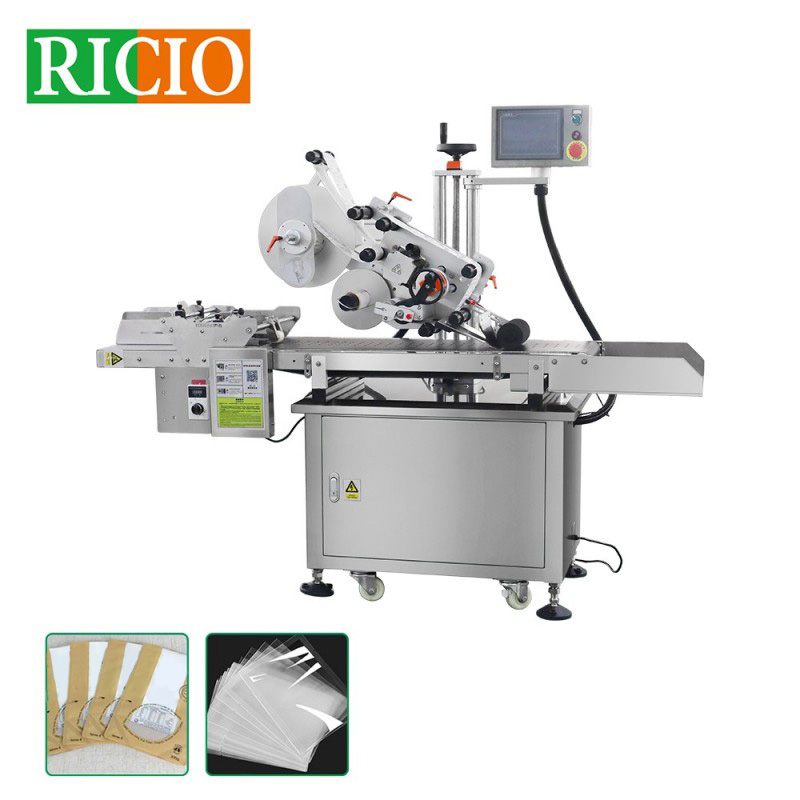
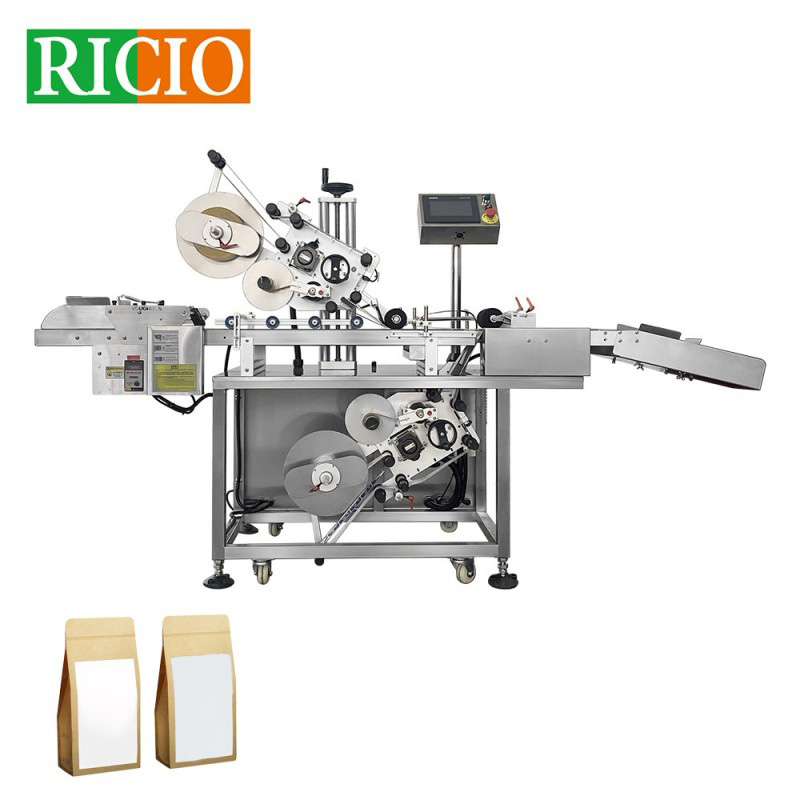
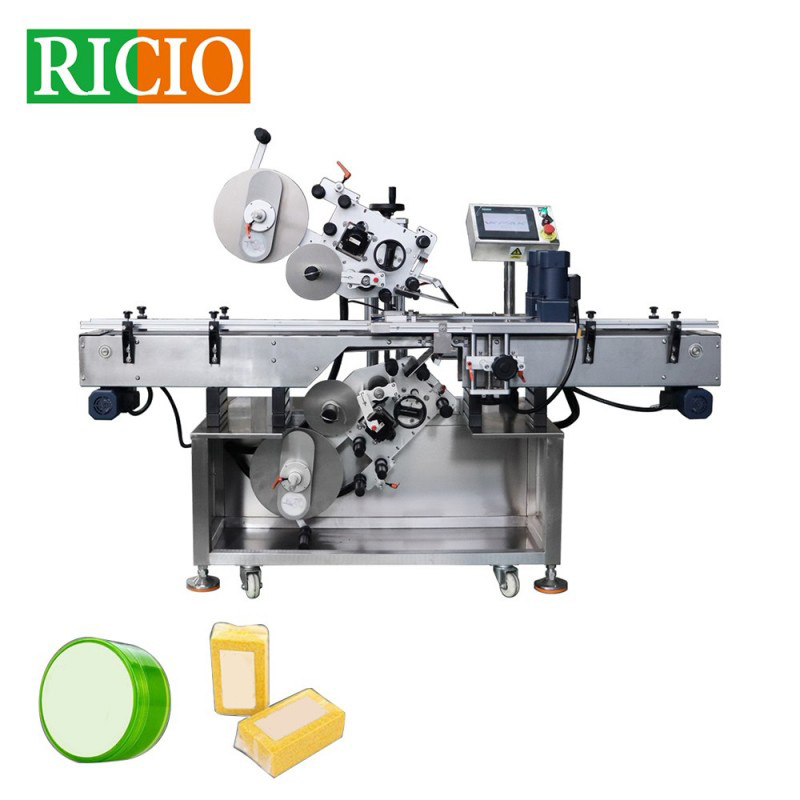
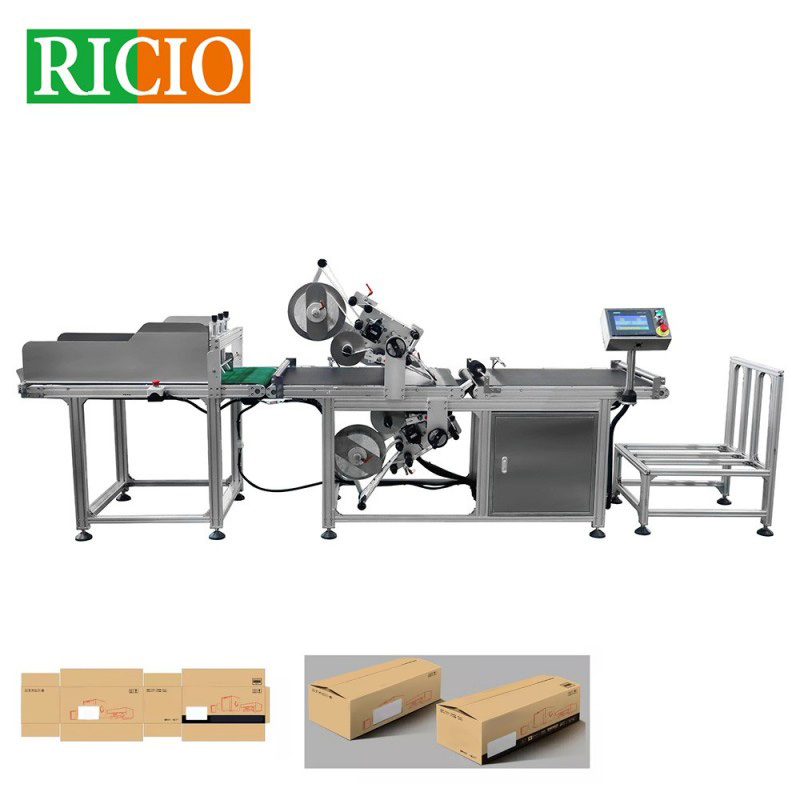
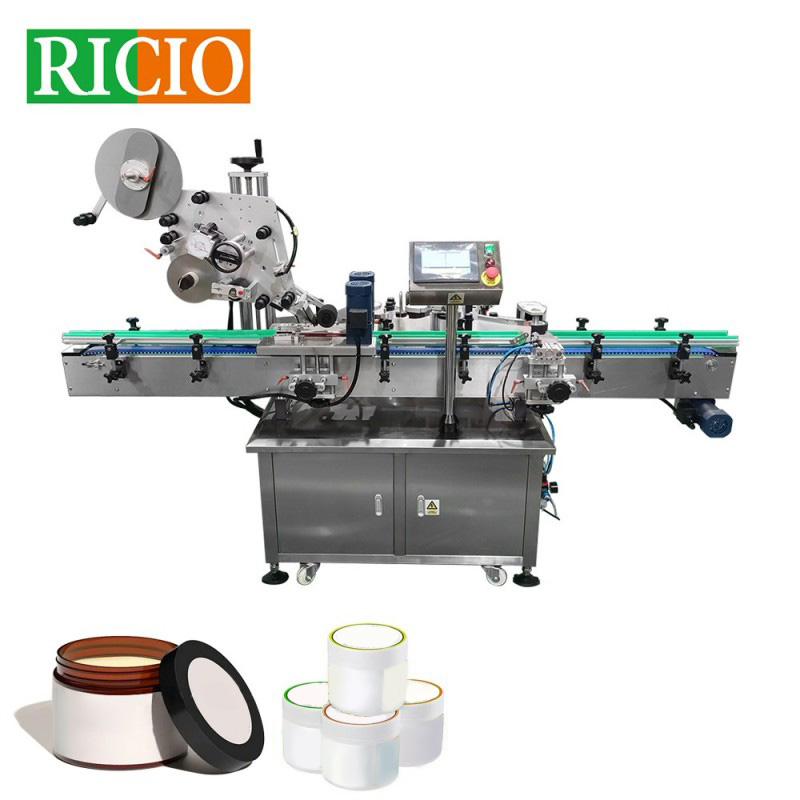
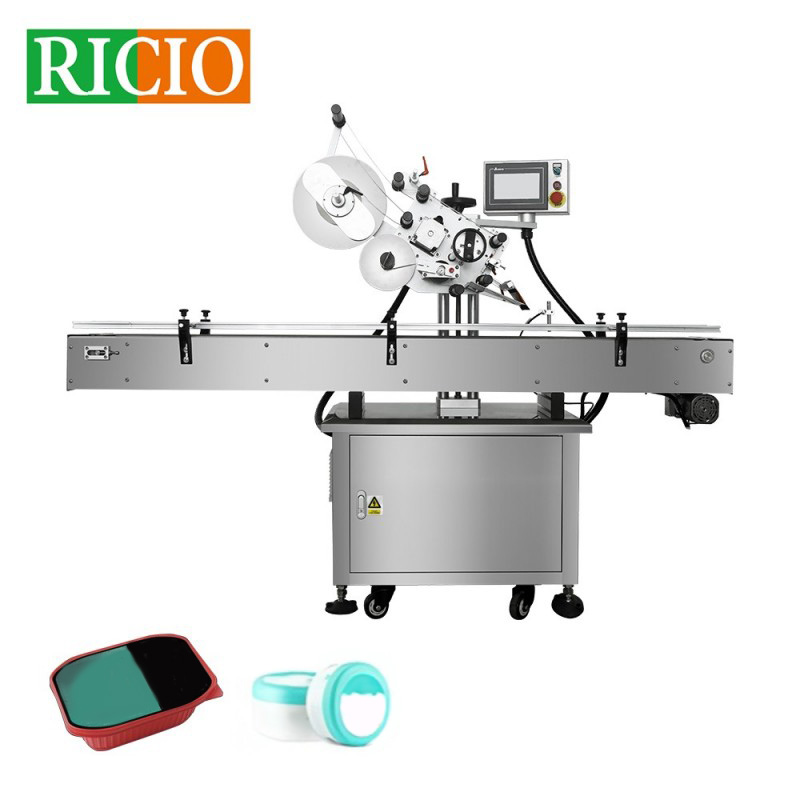
Automatic Paging Pouch Labeling Machine
Applications Across Multiple Industries
The automatic paging pouch labeling machine can serve a broad range of industries because it is designed for product shape and feeding requirements rather than for one narrow product category. Its principal application is the top labeling of flat items that are supplied in stacks or batches.
Food and Flexible Packaging
Food producers use pouches, sachets, bags, and flat flexible packs for snacks, condiments, powdered products, seasonings, and other packaged goods. These materials are often lightweight and may have a soft or slightly uneven surface. The suction conveyor and adjustable pressing mechanism help stabilize the package and support reliable label application.
The machine can apply branding labels, product information labels, promotional labels, batch-related labels, or barcode labels. When connected to a coding device, it can support variable information such as production dates, lot numbers, and product identification codes.
Pharmaceutical and Healthcare Packaging
Pharmaceutical and healthcare products frequently require clear labeling and accurate identification. Instruction sheets, medical packaging pouches, flat cartons, cards, and other thin packaging components may benefit from automated top labeling. The controlled feeding system helps reduce the variation that can occur when products are handled manually.
For regulated or quality-sensitive packaging operations, the no-product-no-labeling function is particularly useful. It helps prevent labels from being dispensed when a product is absent. Missing-label detection and production counting also support routine inspection and process management.
Stationery and Paper Products
Paper sheets, instruction leaflets, educational cards, envelopes, promotional inserts, and stationery products can be difficult to label consistently by hand. Paper may shift during transport, especially when it is thin, smooth, or affected by static electricity. Vacuum-assisted conveying improves product stability and allows the labeling head to work with a more predictable product position.
The machine can be used for top labeling of paper boxes, folded cartons, cards, booklets, and packaged stationery. The adjustable operating parameters allow manufacturers to change formats without replacing the entire production line.
Card and Plastic Product Applications
Prepaid cards, membership cards, internet cards, identification cards, plastic cards, and anti-counterfeit cards are common flat products that require accurate label placement. Labels may contain a barcode, QR code, product number, activation information, or promotional content.
Optional barcode readers and QR code readers can be integrated into the process. Depending on the production configuration, the reader may verify a code before labeling, confirm the identity of the item, or support downstream traceability. This creates a more connected packaging process and reduces the need for separate manual inspection.
Logistics and Industrial Packaging
Logistics companies may use flat labels or identification materials for parcels, shipping inserts, documents, and product packets. Industrial manufacturers may also label flat components, instruction packets, or small packaging units. The machine’s adjustable conveyor and labeling parameters allow it to support different sizes and materials within its working range.
Major Advantages Over Manual and Conventional Labeling Methods
Automatic Separation of Stacked Products
One of the machine’s most important advantages is its ability to separate stacked products automatically. Manual feeding requires an operator to pick up and place each item individually. This is labor-intensive and can produce inconsistent spacing. It can also become a bottleneck when production volumes increase.
The friction-type paging mechanism continuously separates products one by one. Stable paging helps reduce double-feeding, overlapping products, and missed feeding. By controlling the first stage of the process, the machine provides a more reliable foundation for accurate labeling.
More Consistent Label Positioning
Manual labeling often produces differences in label position, angle, and pressure. Even a small deviation may affect the appearance of a package or interfere with a barcode and QR code. The automatic system uses product detection, controlled label feeding, and preset parameters to place labels more consistently.
The stated labeling accuracy can reach approximately ±1 millimeter, depending on the product size, label size, material properties, and labeling pattern. Actual performance should be verified with production samples because flexible products and irregular surfaces can influence final results.
Stable Conveying for Lightweight Materials
Thin products may move unexpectedly on a standard belt conveyor. They can lift, rotate, slide, or remain partially attached to another product. The suction conveyor creates a holding effect that helps keep the product in position during transport and labeling.
This feature is especially valuable for paper, film, plastic pouches, and other low-weight items. It helps reduce alignment errors without requiring excessive mechanical pressure that could damage or deform the product.
Servo-Controlled Label Feeding
The label-feeding system uses servo control to deliver labels smoothly and accurately. Compared with a less responsive drive system, servo feeding provides more precise control of acceleration, stopping, and label release. Elastic pressure rollers help maintain contact with the label material and reduce slipping.
Consistent label delivery is important when the label is long, narrow, transparent, or printed with a code that must remain within a defined reading area. The combination of servo feeding and pressure control supports accurate label placement over extended production runs.
Reduced Material Waste
Label waste can increase when labels are dispensed without products, applied incorrectly, or damaged during manual handling. The no-product-no-labeling function reduces unnecessary dispensing. Automatic correction and missing-label detection can further reduce the number of incorrectly labeled items reaching the next stage.
Although the actual savings depend on the material, production volume, and operating settings, reducing rework and rejected products can make a meaningful difference in total packaging cost.
Flexible Format Adjustment
The machine supports a range of product sizes and can be customized for specific applications. The standard product size range is approximately 120 to 400 millimeters in length and 70 to 320 millimeters in width. These values are application-dependent and should be confirmed through sample testing.
Label dimensions are also configurable. The supplied specifications list a label length range of approximately 120 to 400 millimeters and a width range of approximately 70 to 320 millimeters, with customization available. Because label dimensions, backing material, product surface, and application pattern affect performance, customers should provide complete samples before final machine configuration.
Integrated Printing and Identification Options
The machine can be equipped with optional modules such as a hot coding machine, inkjet printer, transparent label sensor, barcode reader, or QR code reader. These options allow several packaging functions to be combined in one line.
A hot coder may be used for date or batch information. An inkjet printer can produce variable text, numbers, or codes. A transparent label sensor can assist with clear-label detection, while barcode and QR code readers can support product verification and traceability. Integrating these devices helps reduce additional handling and simplifies production organization.
Technical Specifications
The following table summarizes the principal specifications provided for the automatic paging pouch labeling machine. Final values may vary according to product samples, label materials, required speed, and customized machine configuration.
| Specification | Technical Information |
|---|---|
| Model description | RXL-F automatic paging pouch labeling machine |
| Electrical supply | AC 220 V, 50/60 Hz, single phase; variable configurations available when required |
| Power consumption | Approximately 1000 W |
| Labeling speed | 0–100 pieces per minute, depending on product size, label size, and labeling pattern |
| Labeling accuracy | Approximately ±1 mm under suitable operating conditions |
| Conveyor speed | 0–50 meters per minute, adjustable |
| Product size range | Approximately L120–400 mm and W70–320 mm; customization available |
| Label size range | Approximately L120–400 mm and W70–320 mm; customization available |
| Label thickness | Approximately 0.02–5 mm, adjustable according to application requirements |
| Label roll inner diameter | Approximately 76 mm |
| Label roll outer diameter | Approximately 300 mm |
| Machine weight | Approximately 200 kg |
| Machine dimensions | Approximately 2000 × 750 × 1500 mm |
| Conveyor width | Customized according to the product and application requirements |
| Control system | PLC control with touch screen operation |
| Optional modules | Hot coder, inkjet printer, transparent label sensor, barcode reader, and QR code reader |
The listed labeling speed of up to 100 pieces per minute is a reference value rather than a universal production guarantee. Product dimensions, stack condition, label size, label stiffness, surface texture, adhesive performance, and the selected labeling pattern can all affect the final speed. Sample testing is therefore an important part of machine selection and commissioning.
Intelligent Control and Production Management
The PLC and touch screen provide a central interface for operating and monitoring the machine. Instead of relying on multiple independent manual adjustments, the operator can manage key parameters from one control system. This reduces setup complexity and helps operators maintain consistent settings between production batches.
The touch screen can be used to adjust operating speed, product detection timing, label feeding parameters, and other application settings. The exact interface depends on the final electrical and mechanical configuration, but the general objective is to make format changeover clear and repeatable.
No-product-no-labeling is an important protection function. When the sensor does not detect a product, the system can prevent the label from being released. This helps reduce wasted labels and avoids creating unassigned labels on the conveyor.
Missing-label detection adds another layer of quality control. If a label fails to feed or is not detected correctly, the machine can issue an alarm or initiate a corrective action according to the selected configuration. Automatic label correction helps maintain the relationship between product arrival and label release.
Production counting allows operators and supervisors to monitor output. Counts can support shift management, material planning, production reporting, and maintenance scheduling. Fault alarms help bring attention to conditions such as label depletion, product feeding problems, sensor errors, or other operational interruptions.
Energy-saving standby reduces unnecessary operation when the machine is temporarily inactive. Parameter protection helps prevent unauthorized or accidental changes to critical settings. Together, these functions support more organized daily production and reduce the risk of inconsistent operation between shifts.
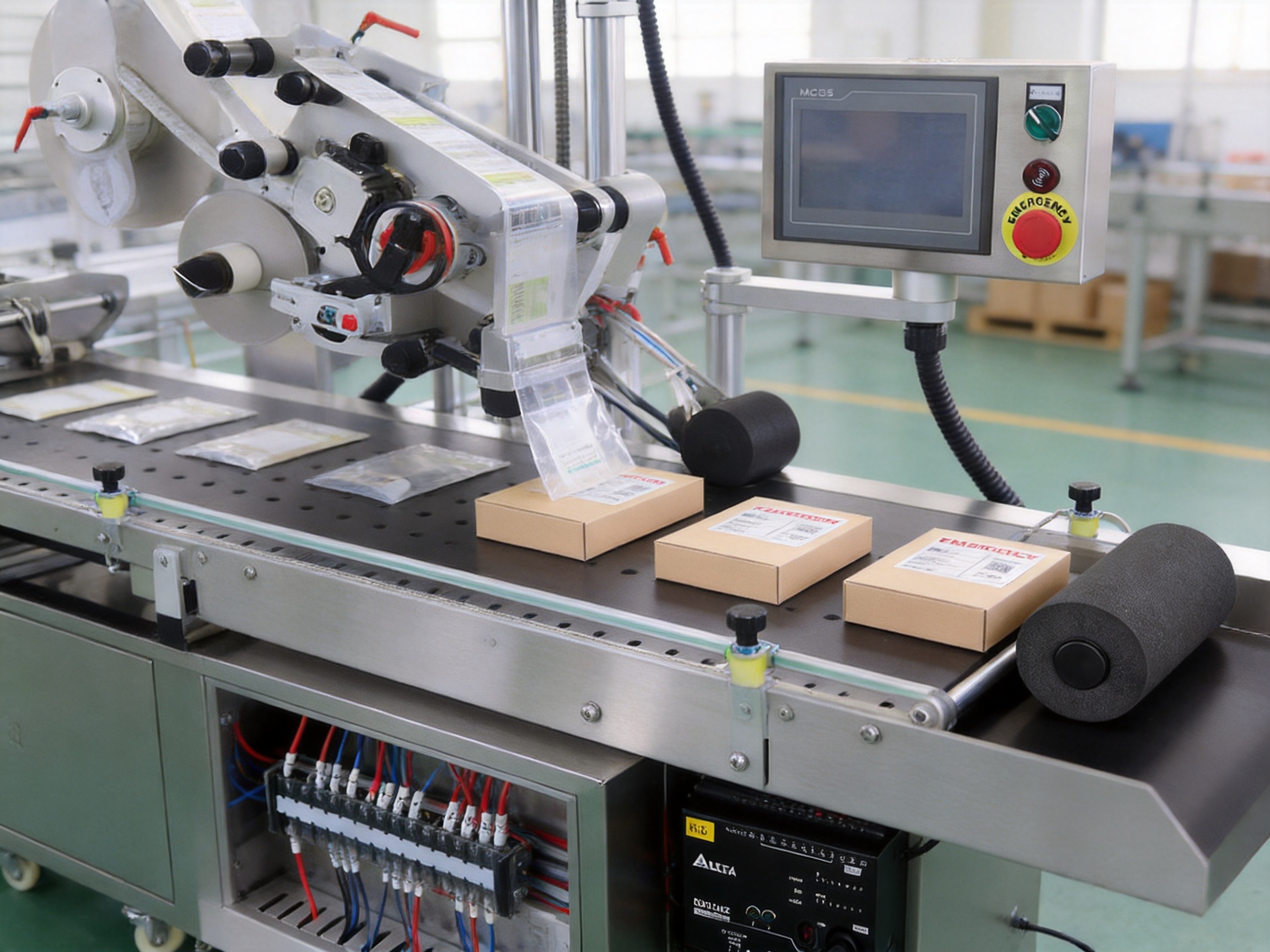
Mechanical Design for Flat and Flexible Products
Flat products require a different mechanical approach from cylindrical or rigid containers. A bottle can often be guided by side rails and rotated or wrapped during labeling. A pouch or sheet may not have a stable vertical wall, and its surface can deform under pressure. The automatic paging pouch labeling machine addresses these characteristics through coordinated feeding, vacuum conveying, label dispensing, and pressing.
Paging Mechanism
The paging section is designed to handle stacked products and separate them individually. Friction must be controlled carefully: too little friction may result in double-feeding, while too much friction may damage the material or stop the product. A suitable mechanism must be matched to product thickness, surface texture, stiffness, and stack height.
Because product behavior varies, the paging unit may require adjustment during commissioning. Operators should use the recommended setup for the product type and avoid mixing materials with significantly different thicknesses or surface finishes in the same batch.
Vacuum-Assisted Conveyor
The vacuum-assisted conveyor helps maintain contact between the product and the conveying surface. This is useful for lightweight products that may otherwise move due to vibration, air resistance, or belt acceleration. Stable contact improves the repeatability of product detection and label placement.
The suction effect should be selected appropriately for the product. Excessive vacuum may make thin film or delicate materials difficult to release, while insufficient vacuum may not provide adequate stability. Proper adjustment balances holding force with smooth product transfer.
Elastic Pressure Rollers
Pressure rollers help guide the label material and support smooth application. Their elastic properties allow them to adapt to small changes in product thickness and surface condition. They can also help press the label after initial contact, improving adhesion across the label area.
Customized Pressing Mechanisms
Different products require different pressing methods. A smooth paper sheet may need only light contact, while a flexible pouch may benefit from a longer pressing section. Products with textured, coated, or slightly curved surfaces may require additional adaptation.
A customized pressing mechanism can improve label bonding and reduce bubbles, wrinkles, and lifted edges. The design should be determined through testing with the actual product and label combination.
Manufacturing Strengths and Engineering Capabilities
The equipment is manufactured by Shanghai Ruixiao Packaging Technology Co., Ltd., also known as RICIO. The company specializes in the research, development, and manufacture of labeling machinery for applications including syringes, round bottles, square bottles, double-sided products, high-speed labeling, and real-time print-and-apply systems.
A major manufacturing strength is the company’s development from an equipment assembler into a source manufacturer with in-house precision machining capabilities. This background is important because labeling machines depend on mechanical accuracy. Paging rollers, guide assemblies, label brackets, conveyor components, sensor mounts, and application mechanisms must work together with controlled alignment.
With multiple CNC machining centers and an experienced technical team, the company can manage the production of key components internally. In-house machining can improve control over dimensional consistency, component fit, and design modifications. It can also make it easier to implement application-specific changes when standard components are not suitable for a particular product.
Internal manufacturing capability supports more direct communication between design, machining, assembly, and commissioning teams. When a customer requires a customized conveyor width, product guide, pressing device, sensor arrangement, or coding module, engineering decisions can be evaluated alongside production considerations rather than being handled as isolated tasks.
The company manages the process from core component machining to complete machine assembly and commissioning. This integrated approach helps connect mechanical construction with electrical control and application testing. It is especially valuable for equipment such as paging labelers, where feeding performance and labeling performance must be evaluated together.
Manufacturing and quality activities are conducted in accordance with the ISO 9001 international quality system. A quality management framework supports documented procedures, process control, inspection, corrective action, and continual improvement. While certification and implementation details should be verified for a particular project, the use of an ISO-oriented quality system reflects an organized approach to manufacturing management.
Precision Machining
CNC machining allows components to be produced according to controlled digital designs. This can improve repeatability for brackets, shafts, plates, supports, and other parts that affect machine alignment. Precision components are particularly important for label-feeding mechanisms because small deviations may influence label tracking and application accuracy.
Complete Assembly and Commissioning
Assembly is not limited to installing parts into a frame. The machine must be adjusted for product flow, sensor response, label release, conveyor speed, and pressing performance. Commissioning verifies that the mechanical and electrical systems operate as an integrated unit.
For a flat-product labeling application, commissioning should include tests with the customer’s actual pouches, sheets, cards, or other products. It should also evaluate the intended label stock, adhesive, dimensions, roll direction, and required application position.
Application-Oriented Engineering
A labeling machine is most effective when it is treated as an application solution rather than a generic piece of equipment. The manufacturer’s product range and engineering background allow the company to address several types of labeling challenges. Experience with bottles, syringes, cartons, flexible packaging, and print-and-apply applications contributes to a broader understanding of product handling and label control.
For the automatic paging pouch labeling machine, this application-oriented approach can include selecting the correct paging friction, configuring suction strength, positioning sensors, adapting guide rails, choosing the pressing method, and integrating inspection or coding equipment.
How the Machine Compares with Alternative Methods
Compared with Manual Labeling
Manual labeling may be practical for very small batches or frequent product changes, but it becomes less efficient as volume increases. It depends heavily on operator speed and concentration, and it may produce variations in label placement. Manual handling also increases contact with the product and may complicate production counting.
The automatic machine improves repeatability, reduces repetitive labor, and maintains a controlled product flow. It is particularly advantageous when many items must be labeled in a consistent top position.
Compared with a Standard Belt Labeler
A standard belt labeler may convey products effectively once they are already separated and positioned. However, it may not include a dedicated paging mechanism for stacked flat products. Without controlled separation, products can overlap or arrive too close together, reducing labeling accuracy.
The automatic paging pouch labeling machine combines separation and labeling. This integrated design is better suited to products that are loaded in stacks rather than individually placed on a conveyor.
Compared with Bottle Labeling Equipment
Bottle labelers are generally designed around cylindrical or rigid containers. Their guiding and application mechanisms are not always suitable for flexible pouches, paper sheets, or cards. A flat-product labeling system uses a different conveying strategy and often requires vacuum support.
The automatic paging pouch labeling machine is optimized for top labeling and flat-product stability. Its design addresses the specific problems of low-profile materials rather than adapting a bottle-labeling machine to an unsuitable application.
Compared with Separate Labeling and Coding Stations
Using separate machines for feeding, labeling, coding, and inspection can require additional transfer conveyors and manual handling. It may also increase floor space and create more points at which products can be misaligned.
Optional modules for coding, printing, barcode reading, and QR code reading allow these functions to be integrated into a coordinated process. This can simplify line organization and support better traceability.
Installation, Setup, and Maintenance Considerations
Before installation, the production area should provide sufficient space around the machine for operation, inspection, cleaning, label-roll replacement, and maintenance. The floor should be level and capable of supporting the approximately 200-kilogram machine. Electrical supply should match the selected configuration.
Product and label samples should be prepared before commissioning. Samples should represent normal production conditions, including the actual product thickness, surface finish, packaging material, label adhesive, label backing, roll direction, and intended application position.
During setup, operators should adjust the paging mechanism so that products separate individually without excessive friction. Guide components should be aligned to prevent sideways movement while allowing products to pass smoothly. Vacuum strength should be adjusted to stabilize the material without obstructing release.
The label roll must be installed with the correct inner diameter, outer diameter, winding direction, and web path. Pressure rollers should be clean and correctly positioned. Sensors should be aligned so that they detect both the leading edge of the product and the label when required.
Regular cleaning is important for reliable operation. Dust, adhesive residue, paper fibers, and product particles can affect sensors, rollers, belts, and vacuum openings. A routine cleaning schedule can reduce false detection, label tracking errors, and unstable feeding.
Wear parts should be inspected periodically. These may include friction surfaces, conveyor belts, pressure rollers, guide components, sensor lenses, and other parts that contact products or label material. Preventive maintenance is generally more effective than waiting for a failure during production.
Operators should also review alarms and production counts. Repeated alarms may indicate an underlying issue with product quality, label material, sensor position, or machine adjustment. Addressing the cause rather than repeatedly resetting the alarm helps maintain long-term stability.
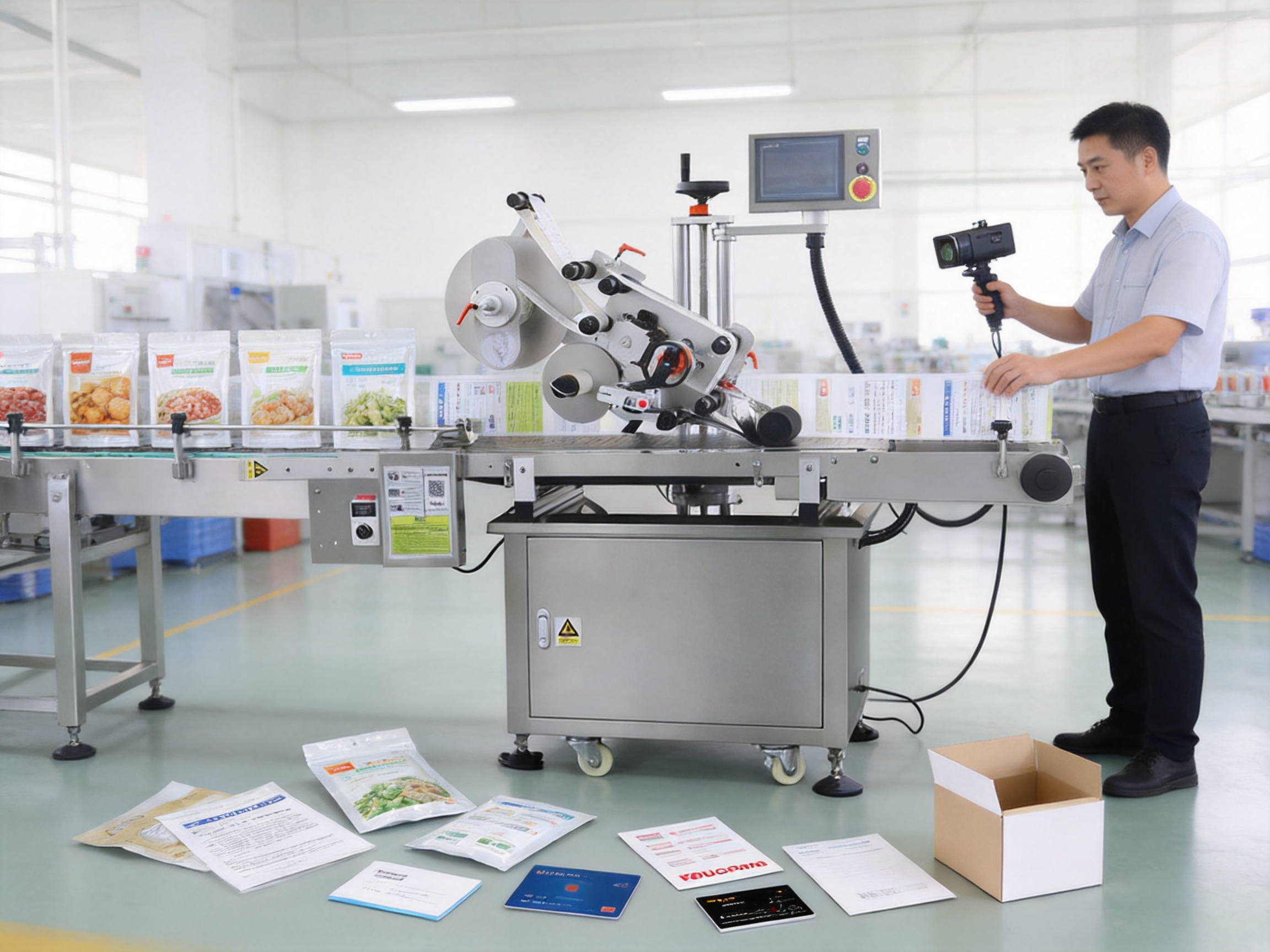
Product Quality and Labeling Performance
Labeling quality depends on more than the machine alone. The product surface must be sufficiently clean and dry, and the label adhesive must be compatible with the material. Dust, moisture, oil, low surface energy, coatings, and extreme temperatures can affect adhesion.
Flat products should be supplied with reasonably consistent dimensions and thickness. Large variations can change the contact between the paging mechanism and the product. Curled or folded items may not separate or pass through the conveyor in the same way as flat items.
The label should be properly die-cut and wound. Damaged edges, inconsistent gaps, uneven backing, and excessive roll tension can create feeding problems. Transparent labels may require a special sensor, and reflective or dark products may require an adjusted detection method.
Labeling accuracy should be evaluated using a representative quantity of samples rather than a single item. Testing should consider the first products in a batch, products near the end of a stack, different product orientations, and normal operating speed. Such testing provides a more realistic understanding of production performance.
Benefits for Production Efficiency
Automation changes the role of operators from repetitive product placement to machine supervision, material replenishment, quality checking, and production coordination. This can improve labor utilization while reducing the physical strain associated with high-frequency manual labeling.
The integrated process also improves line organization. Products are separated, conveyed, labeled, pressed, and counted in a planned sequence. When optional printing or scanning devices are installed, information handling can occur at the appropriate stage without requiring separate manual operations.
Consistent label placement supports a more professional product appearance. It also reduces the likelihood that a barcode or QR code will be positioned incorrectly. For products that depend on labels for identification, traceability, or consumer information, consistent placement contributes to better downstream processing.
Adjustable speed allows the machine to be matched to the product and the wider packaging line. A slower setting may be appropriate for large pouches or difficult materials, while a higher setting may be used for small cards or stable paper products. This flexibility helps manufacturers balance output with quality.
Customization Possibilities
Customization may involve the product conveyor, paging unit, vacuum system, label applicator, pressing assembly, control software, or optional inspection equipment. Conveyor width can be adapted to the product. Guide structures can be modified for unusual dimensions or materials.
The paging section may require a special friction surface or adjustment range for thin, glossy, textured, or flexible products. The suction conveyor can also be configured according to product size and weight. For products with sensitive surfaces, contact materials and pressure settings should be selected carefully.
Label placement can be configured for different top-surface positions and label orientations. If the product requires multiple labels or a specific distance from an edge, the application mechanism and control parameters may need to be adapted.
Optional printing and inspection modules can be selected according to production requirements. A hot coder may be suitable for basic batch information, while an inkjet printer may be preferred for variable data. Barcode or QR code readers can be used where product verification and traceability are required.
Frequently Asked Questions
What products can the machine label?
The machine is designed for flat or sheet-like products such as plastic bags, paper sheets, paper boxes, cards, instruction leaflets, packaging pouches, prepaid cards, membership cards, internet cards, plastic cards, and other thin items. The exact product range depends on dimensions, thickness, rigidity, surface condition, and stack behavior.
Does it label individual products from a stack?
Yes. The paging mechanism separates stacked products one by one before transferring them to the labeling conveyor. This is a primary function of the machine and helps reduce double-feeding and missed feeding.
Where is the label applied?
The standard application is top labeling. The label is dispensed onto the upper surface of the product as it moves through the labeling station. The precise position can be adjusted according to the product and label layout.
What is the maximum labeling speed?
The reference speed is up to approximately 100 pieces per minute. Actual speed depends on product size, label dimensions, material properties, stack condition, label position, and the selected operating pattern. Sample testing is recommended before confirming a production rate.
What labeling accuracy can be expected?
The reference labeling accuracy is approximately ±1 millimeter under suitable conditions. Product flexibility, label adhesive, surface texture, sensor response, and application speed can influence actual results.
Can the machine handle lightweight paper and pouches?
Yes. The suction-assisted conveyor is intended to help stabilize lightweight products such as paper, plastic bags, pouches, and thin packaging materials. Vacuum strength and product guides should be adjusted according to the material.
Can transparent labels be used?
Transparent labels may be used when the machine is equipped with an appropriate transparent-label sensor and the label material is compatible with the application. Testing is important because clear backing and transparent label gaps can affect detection.
Can a printer or coder be added?
Yes. Optional equipment can include a hot coding machine or an inkjet printer. These devices can add production dates, batch numbers, variable text, or other information during the labeling process.
Can barcodes and QR codes be checked?
Barcode readers and QR code readers can be integrated as optional modules. They may be used for product identification, label verification, or traceability depending on the control configuration.
What electrical supply is required?
The standard specification is AC 220 volts, 50/60 hertz, single phase. Other configurations may be available when required and should be confirmed before ordering.
Can the machine be customized?
Yes. Product dimensions, conveyor width, paging components, pressing mechanisms, label position, sensor arrangement, and optional modules can be customized according to application requirements. Final configuration should be based on product and label samples.
What information should a buyer provide?
A buyer should provide product samples, product dimensions, thickness range, material, stack height, label samples, label dimensions, adhesive type if available, desired label position, production speed, electrical requirements, and any coding or inspection needs.
Is the machine suitable for export projects?
The manufacturer exports labeling equipment to more than 40 countries and regions. Export projects should confirm local electrical standards, documentation, installation requirements, operator training, spare parts, and after-sales support before shipment.
Why Manufacturer Capability Matters
Choosing a labeling machine is not only a matter of comparing speed and dimensions. The long-term value of the equipment depends on mechanical quality, application engineering, software stability, commissioning, service response, and the manufacturer’s ability to provide modifications when production requirements change.
A manufacturer with in-house machining and complete assembly capabilities can offer stronger control over key components and machine integration. This is particularly relevant for a paging labeler because performance depends on the interaction between friction surfaces, vacuum conveying, sensors, servo feeding, and pressing components.
The manufacturer’s experience in multiple labeling sectors also supports broader technical problem-solving. Knowledge gained from syringe labelers, bottle labelers, double-sided labelers, high-speed systems, and print-and-apply equipment can contribute to the design of reliable product handling and label control systems.
For customers, this can simplify communication. Instead of coordinating separate suppliers for mechanical equipment, labeling heads, printing modules, and inspection devices, customers may be able to obtain a more integrated solution from one technical source.
Conclusion
The automatic paging pouch labeling machine provides a practical solution for manufacturers that need to label flat products supplied in stacks. Its key functions include automatic paging, individual product separation, vacuum-assisted conveying, servo-controlled label feeding, accurate top labeling, pressing, counting, and fault monitoring.
Compared with manual labeling or conventional conveyors that lack a paging function, the machine offers more consistent feeding and improved control of label position. It is suitable for pouches, plastic bags, paper sheets, cards, cartons, leaflets, packaging materials, and other lightweight flat products used in food, pharmaceutical, healthcare, stationery, electronics, logistics, and daily chemical applications.
Its PLC control, touch screen interface, no-product-no-labeling function, missing-label detection, label correction, parameter protection, and optional coding and scanning modules support efficient production management. The adjustable product range and customizable conveyor, pressing, and detection systems allow the machine to be adapted to different packaging requirements.
The manufacturing capabilities behind the equipment are also significant. Shanghai Ruixiao Packaging Technology Co., Ltd. combines research and development, CNC precision machining, complete assembly, commissioning, and ISO 9001-oriented quality management. This integrated manufacturing approach supports reliable machine construction and application-specific customization.
For companies seeking to upgrade from manual labeling or improve the consistency of flat-product packaging, the automatic paging pouch labeling machine offers a balanced combination of automation, flexibility, and precision. Proper sample testing, product preparation, and commissioning remain essential, but the machine provides a strong foundation for stable and scalable labeling operations.
References
1. Shanghai Ruixiao Packaging Technology Co., Ltd., Automatic Paging Pouch Labeling Machine technical specifications and product information.
2. Shanghai Ruixiao Packaging Technology Co., Ltd., Company manufacturing and engineering profile.
3. ISO 9001, Quality Management Systems: Requirements.
4. General principles of pressure-sensitive label application and packaging-line automation.
5. Industrial guidance on conveyor conveying, photoelectric detection, servo motion control, and product traceability.
Product: Automatic Paging Pouch Labeling Machine

 +86 13681850339
 sales@raxpack.com
 Building 6, No. 477 Tiefeng Road, Baoshan District, Shanghai, China
- Tabletop Labeling Machine
- Round Bottle Labeling Machine
- Automatic Tube Labeling Machine
- Pouch Labeling Machine
- Rotary Labeling Machine
- Syringe Labeling Machine
- Top Labeling Machine
- Single Side Sticker Labeling Machine
- Double Side Labeling Machine
- Bucket Labeling Machine
- Bottom Labeling Machine
- Corner Label Applicator
- Waist Sealing Labeling Machine
- Square Bottle Labeling Machine
