 English
 русский
 Español
 عربى



Automatic Tape and Labeling Machine for Secure, Consistent Package Sealing
2026-10-04
Content
- 1 What Is an Automatic Tape and Labeling Machine?
- 2 Core Applications of the RXL-TST Machine
- 3 Operating Principle and Production Workflow
- 4 Principal Advantages Compared with Manual or Less Integrated Equipment
- 5 Machine Construction and Control System
- 6 Technical Specifications
- 7 Advantages in Different Packaging Industries
- 8 Manufacturing Strengths and Engineering Capabilities
- 9 Why Manufacturing Process Matters to Labeling Performance
- 10 Installation, Setup, and Changeover Considerations
- 11 Maintenance and Operational Reliability
- 12 How the Machine Compares with Alternative Labeling Methods
- 13 Selection Guidance for Buyers
- 14 Frequently Asked Questions
- 14.1 What products can the machine label?
- 14.2 Can it apply tamper-evident labels?
- 14.3 What is the normal production speed?
- 14.4 How accurate is the labeling process?
- 14.5 Can the conveyor width be customized?
- 14.6 Can the machine print batch numbers or expiry dates?
- 14.7 Can the machine read barcodes or QR codes?
- 14.8 What type of control system does it use?
- 14.9 What label roll sizes are supported?
- 14.10 Is the machine suitable for high-speed production?
- 14.11 What information should be supplied for a quotation?
- 15 Conclusion
- 16 References
- 17 Product: Automatic Tape and Labeling Machine
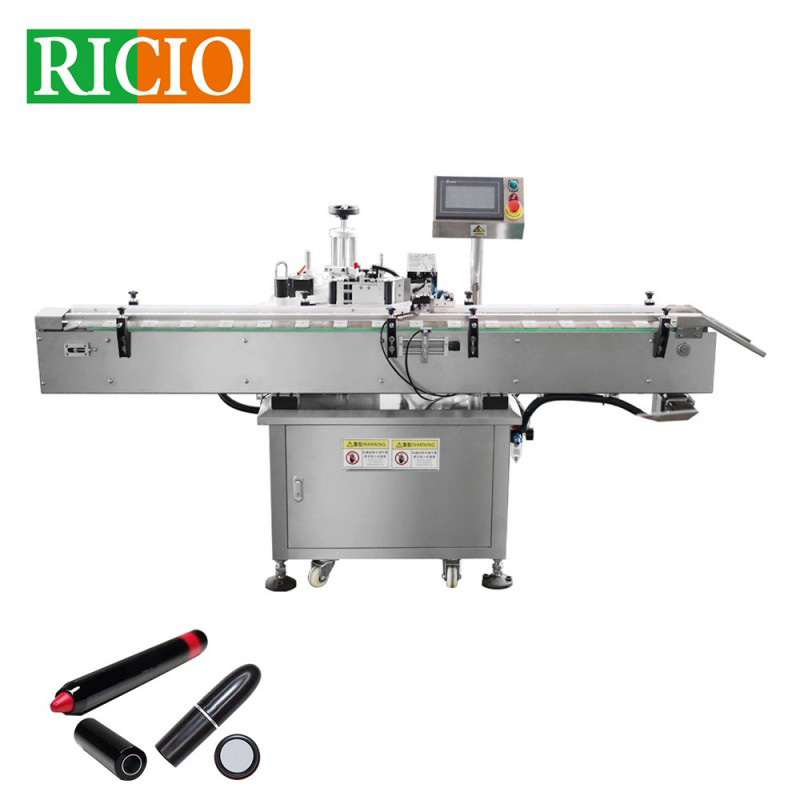
Modern packaging operations increasingly require more than simple product identification. A package may need a top label, a sealing strip, a tamper-evident mark, a barcode, a traceability code, or a combination of several of these functions. When these operations are completed manually or by separate machines, production lines can experience inconsistent placement, unnecessary handling, higher labor costs, and avoidable packaging defects. The automatic tape and labeling machine is designed to address these challenges by combining product conveying, spacing, detection, label dispensing, label application, and smoothing in one coordinated system.
The RXL-TST automatic tape and labeling machine is intended for cartons, plastic boxes, flat packages, and other box-shaped products. It is particularly suitable for top labeling and tape-style sealing applications where labels must be applied accurately and consistently across the upper surface of a package. By automating the process, the machine helps manufacturers produce a cleaner appearance while supporting dependable package closure, tamper evidence, product identification, and production tracking.
Designed for industrial packaging environments, the machine incorporates a PLC control system, a touch screen interface, an adjustable conveyor, a stable label feeding structure, and a wear-resistant driving roller. These features allow operators to adapt the equipment to different products and label specifications while maintaining controlled label positioning during continuous operation. Optional coding and inspection modules can further transform the equipment into an integrated labeling, coding, and data collection station.
Shanghai Ruixiao Packaging Technology Co., Ltd., operating under the RICIO brand, manufactures labeling machinery for food and beverage, pharmaceutical and healthcare, daily chemical, cosmetics, chemical, electronics, grain and oil, and gift box packaging applications. The company combines product development, precision machining, assembly, commissioning, and technical support to provide labeling equipment for both standard and customized production requirements.
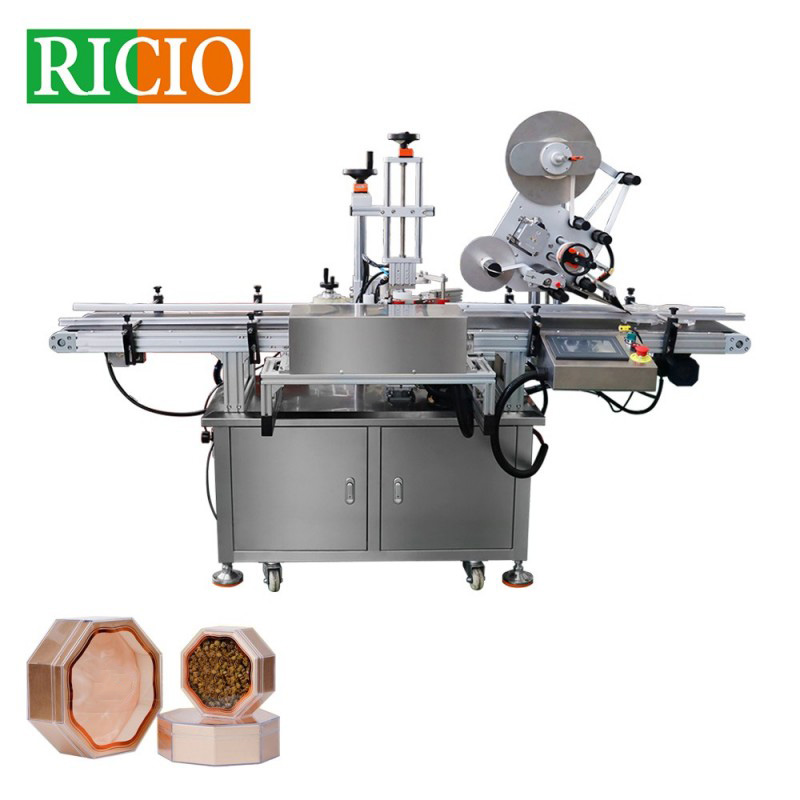
Automatic Tape and Labeling Machine
What Is an Automatic Tape and Labeling Machine?
An automatic tape and labeling machine is a packaging system that applies adhesive labels or tape-style sealing labels to the top surface of products as they move along a conveyor. The products may be cartons, plastic boxes, trays, flat packages, or similarly shaped containers. Depending on the production requirement, the applied material can function as a product label, a sealing label, a tamper-evident label, an instruction label, a barcode label, or a traceability label.
In a typical operating cycle, an operator places products on the infeed conveyor or connects the machine to an upstream production line. The conveyor transports each product into the labeling area. Product sensors detect the approaching package, while the control system manages product spacing and coordinates the label dispensing action. The label is separated from its backing material and presented at the correct position. An applicator places the label on the package surface, and a smoothing or pressing component helps remove air pockets, wrinkles, or loose edges.
The term “tape sealing” refers to the use of an adhesive strip or label to close, secure, identify, or provide visible evidence of package opening. On a carton or box, a sealing label may cross a flap or opening. If the package is opened, the label may tear, separate, or visibly change, helping operators or end users identify possible tampering. The same machine can also be configured for simple top labeling where the label provides information without serving as a closure.
Unlike a basic manual labeling station, an automatic system synchronizes product movement and label delivery. Unlike a machine designed only for round bottles, this equipment is optimized for flat, rectangular, or box-shaped products. Its design is therefore well suited to packaging lines where the top surface must receive a repeatable label or sealing strip.
Core Applications of the RXL-TST Machine
Top Labeling on Cartons and Boxes
Top labeling is widely used for folding cartons, retail boxes, gift boxes, pharmaceutical packages, cosmetic packages, and consumer goods packaging. A top label can carry product information, brand information, a barcode, a batch reference, or a handling instruction. Consistent placement is important because a label that is too close to an edge, angled, wrinkled, or partially detached may reduce the perceived quality of the package and interfere with scanning.
The RXL-TST machine guides each package through a controlled application area so that labels can be placed in a consistent position. The exact position depends on product dimensions, label geometry, conveyor speed, sensor arrangement, and machine configuration. During commissioning, these factors can be adjusted to match the customer’s packaging format.
Tape-Style Sealing
Tape-style sealing is used when an adhesive label or strip must bridge a carton flap, box opening, or package seam. This type of application is common in gift boxes, sample boxes, pharmaceutical cartons, food packaging, electronics packaging, and shipping-related packages. The sealing label may provide both a functional and visual role: it keeps a package closed while also showing whether the package has been opened.
Automatic application is especially valuable where the sealing label must be centered over a seam or applied at a fixed distance from the front or rear edge. Manual application can vary from operator to operator, particularly during long shifts or high-volume production. An automated conveyor and sensor system reduces this variation and helps create a more uniform appearance.
Tamper-Evident and Security Labeling
Tamper-evident labels are used to support product integrity and consumer confidence. The label can be designed to tear, leave residue, display a hidden message, or otherwise show evidence of opening. The machine does not create the tamper-evident function by itself; rather, it applies the selected label material accurately and consistently to the designated package position.
For pharmaceutical, healthcare, cosmetics, food, and chemical packaging, consistent application may be part of a broader quality assurance program. The equipment can be integrated with coding or inspection devices when the production line requires additional information such as batch numbers, expiry dates, serial numbers, or traceability codes.
Instruction, Barcode, and Traceability Labels
Some packages require a top label containing handling instructions, usage information, a barcode, a QR code, or a production reference. The machine can apply these labels after upstream filling, assembly, or packing operations. Optional printing and reading systems can be added to support variable information management.
A barcode or QR code reader may be used to verify the presence or readability of a code. A thermal coder or inkjet printer can print variable data before or after label application, depending on the line layout and product requirements. These options help manufacturers move toward a more connected packaging process in which labeling and data capture are managed together.
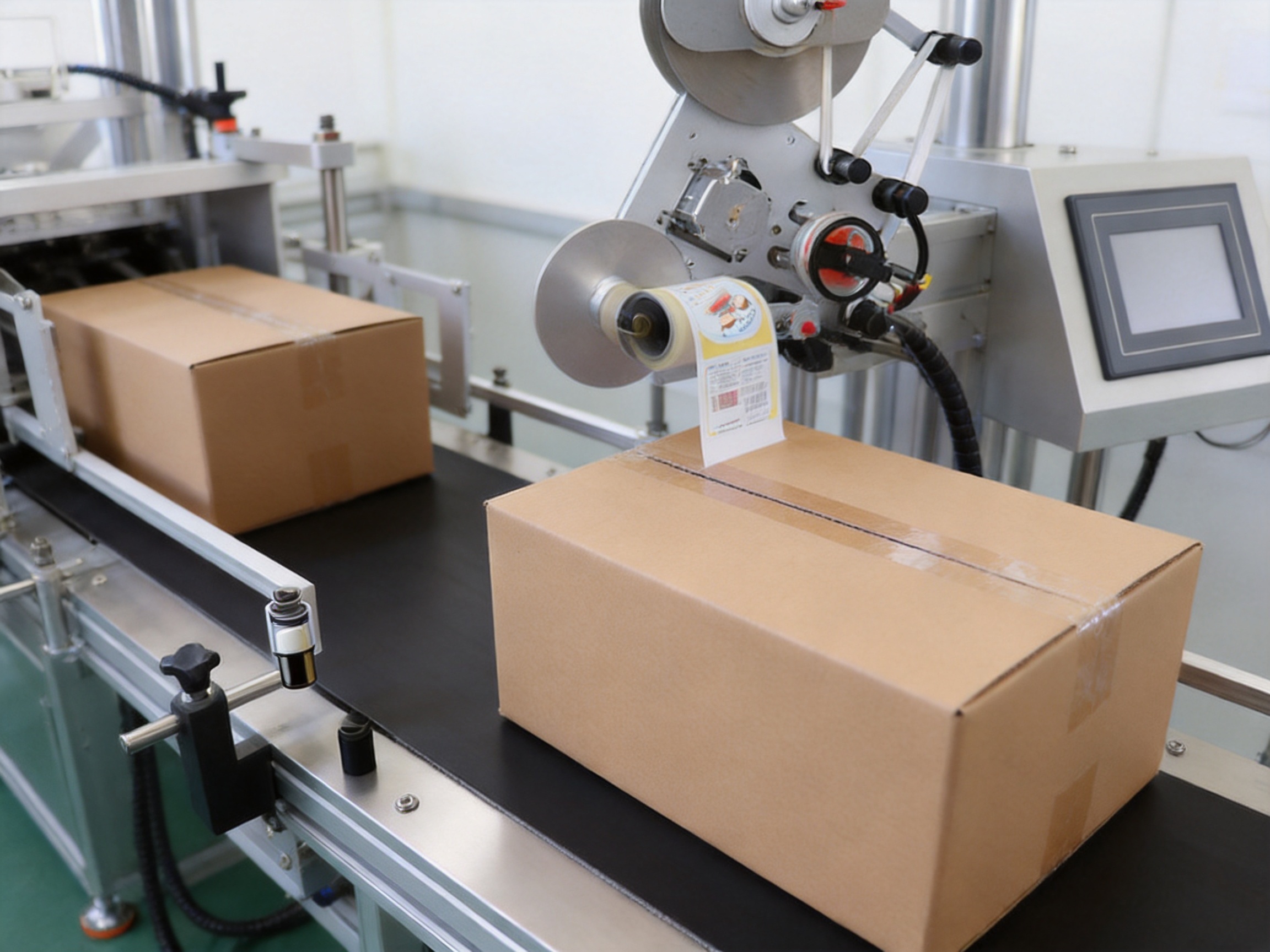
Operating Principle and Production Workflow
The automatic tape and labeling machine performs several coordinated steps. Each step contributes to stable application quality and reliable production flow.
Product Infeed and Spacing
Products enter the conveyor from an operator, an upstream machine, or a connected production line. Product spacing is important because the label dispenser needs sufficient time and distance to prepare the next label. If products are too close together, the sensor may not distinguish them correctly, or the label may be released at the wrong time.
The conveyor and control system are configured according to product dimensions and line speed. Depending on the package shape and surface condition, side guides or product positioning components may be used to keep the package aligned as it moves through the labeling station.
Product Detection
A sensor detects the leading edge or presence of each product. The PLC uses this signal to coordinate the label dispensing cycle. Sensor sensitivity and position can be adjusted according to package color, reflectivity, transparency, and surface characteristics. Optional transparent-label sensors may be used when the label material or substrate presents special detection challenges.
Label Dispensing
The label roll is mounted on the dispensing assembly. The label web passes through a controlled feeding path, where the backing material and label are separated at the dispensing edge. The driving roller advances the web at a controlled rate. Its wear-resistant construction is intended to support stable feeding and reduce the risk of slipping during extended operation.
Accurate label feeding depends on several conditions, including label roll quality, backing paper stiffness, adhesive properties, label dimensions, roll alignment, and machine adjustment. The machine’s feeding structure helps control these variables, but the label supplier and production team must also ensure that the label material is appropriate for the application.
Application and Smoothing
After the label is dispensed, an application component transfers it to the top surface of the moving product. A smoothing mechanism then presses the label against the package. This step helps minimize air bubbles, lifting edges, wrinkles, and incomplete adhesion.
For sealing labels, the application position must normally correspond with a flap, seam, or designated closure area. The smoothing force and contact angle may need to be adjusted for cardboard, coated paperboard, plastic, laminated film, or other package surfaces. A suitable adhesive and clean product surface are also essential to long-term adhesion.
Counting, Monitoring, and Fault Indication
The control system can record production counts and support label usage management. Operators can monitor output, review operating conditions, and respond to alarms or fault indications through the touch screen. These functions help production teams identify issues such as label depletion, product detection errors, abnormal feeding, or other conditions that may interrupt normal operation.
Operation records and production data can assist with shift handover, maintenance planning, and quality review. While the exact data functions depend on the selected control configuration, the general objective is to provide a clearer view of machine activity than would be possible with a purely manual process.
Principal Advantages Compared with Manual or Less Integrated Equipment
More Consistent Label Placement
One of the main advantages of automatic application is repeatability. Manual workers may apply labels accurately at the beginning of a shift but gradually develop variation due to fatigue, changing product orientation, or differences in handling technique. A machine uses sensors, programmed timing, and guided product movement to repeat the same application sequence for each package.
The stated labeling precision is approximately plus or minus 1 millimeter under suitable conditions. Actual results depend on product hardness, softness, roundness, surface condition, label quality, conveyor stability, and other application factors. Since the machine is designed primarily for box-shaped and flat products, the best results are achieved when packages have consistent dimensions and a stable top surface.
Reduced Labor Dependence
Manual sealing and labeling require workers to pick up, orient, label, inspect, and transfer every product. Automation reduces the number of repetitive handling steps. Operators can focus on supplying products, monitoring the process, checking label rolls, handling finished packages, and completing quality inspections.
Labor savings are not limited to headcount reduction. Automation can also improve task allocation, reduce repetitive-motion exposure, and support longer production runs with a more predictable output. For businesses experiencing labor shortages or fluctuating staffing levels, an automatic labeling station can provide greater production continuity.
Improved Package Appearance
A clean and uniform label contributes to the perceived quality of a product. Crooked labels, folded corners, exposed adhesive, and inconsistent sealing positions may create customer complaints or reduce confidence in the package. Automatic smoothing and controlled placement help establish a more professional finish across the production batch.
Uniformity is particularly important for retail products, gift boxes, pharmaceutical cartons, and products sold in multi-unit displays. When packages are arranged together, differences in label location become immediately visible. A stable labeling process helps manufacturers maintain a consistent visual standard.
Better Support for Continuous Production
The machine is designed for continuous operation at a stated labeling speed of approximately 20 to 40 pieces per minute. Actual speed depends on product size, label size, manual feeding speed, linked machines, conveyor layout, and the required application position. Even at moderate speeds, automatic labeling can provide a significant improvement over inconsistent manual work.
For higher production requirements, the machine can be connected with upstream and downstream equipment. The final line speed should be determined through a production test because the slowest linked process generally controls the overall output. Product accumulation, package orientation, label inspection, and coding requirements can also influence the practical speed.
Flexible Adjustment for Different Formats
The touch screen interface allows operators to adjust operating parameters for different products and label specifications. Conveyor width can be customized according to actual customer requirements. Product dimensions, label dimensions, sensor positions, guide widths, and dispensing settings may be configured during installation and commissioning.
This flexibility is valuable for manufacturers handling several box formats or seasonal product lines. Instead of purchasing a separate machine for every package type, a configurable system may support a wider range of products, provided that the dimensions and surface characteristics fall within the machine’s working range.
Integrated Options for Coding and Inspection
Optional thermal coding, inkjet printing, transparent-label sensors, and barcode or QR code readers can be added to the system. These modules allow companies to combine labeling with variable data printing and verification.
An integrated arrangement may reduce the need for multiple transfer points between separate machines. Fewer transfers can mean fewer alignment problems, less floor space, and a more straightforward operator workflow. The correct configuration depends on whether the customer needs static labels, variable printed information, code verification, label presence detection, or complete traceability.
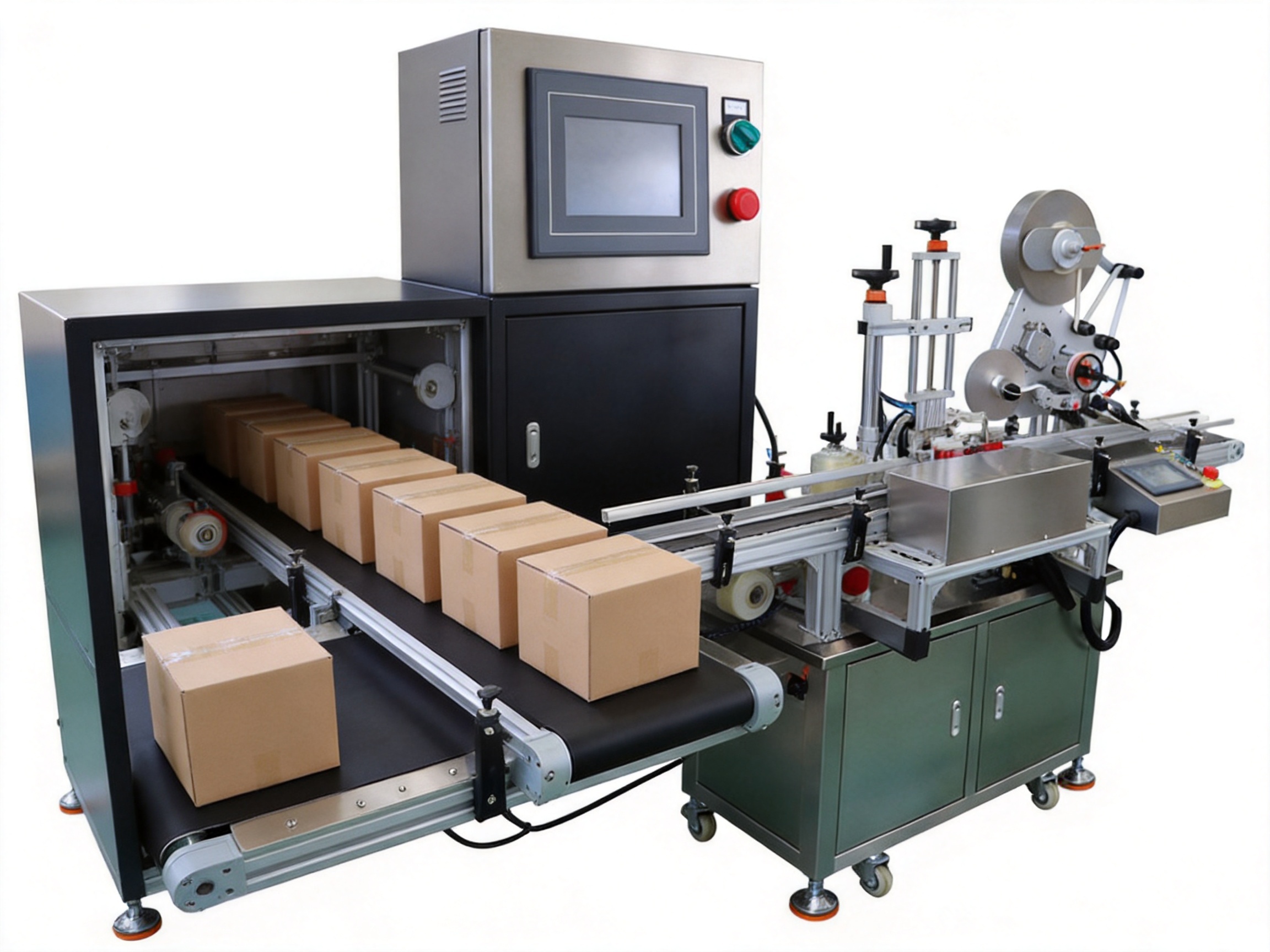
Machine Construction and Control System
PLC-Based Control
The PLC control system coordinates sensors, conveyor movement, label feeding, application timing, alarms, and counting functions. PLC-based architecture is widely used in industrial automation because it provides stable control, logical sequencing, and convenient adjustment of production parameters.
For operators, the touch screen interface provides a more practical way to manage settings than a collection of individual switches. Common functions may include speed adjustment, product detection timing, label dispensing timing, counter reset, fault display, and parameter storage. The exact interface depends on the final machine configuration and selected components.
Touch Screen Operation
An easy-to-use touch screen allows production staff to make adjustments with less dependence on complex manual intervention. When changing products, operators can select or enter the relevant operating parameters, confirm sensor signals, and observe machine status.
A clear operator interface is also important for training. New personnel can learn the basic operating sequence more quickly when the controls are logically organized. Maintenance teams can use displayed alarms and operating information to identify possible causes before beginning a detailed inspection.
Stable Label Feeding Structure
Label feeding is one of the most important mechanical functions in an automatic labeler. A poorly controlled web can wander from side to side, produce irregular label release, or cause wrinkles and missing labels. The RXL-TST design uses a stable label feeding structure and a wear-resistant driving roller to help maintain controlled movement.
Correct roll installation remains essential. The label roll must be aligned, the web must follow the intended path, and the backing material must be compatible with the dispensing system. Operators should also inspect the roller and dispensing edge regularly to remove adhesive buildup, dust, or debris.
Conveyor and Guide Adjustment
The conveyor transports products through the machine while maintaining a consistent path. Guides can be adjusted to accommodate package width and help prevent lateral movement. For best results, the package should be sufficiently rigid and should not rock or rotate during application.
The conveyor width can be customized according to customer needs. Customization may be especially useful when products are unusually wide, narrow, lightweight, or sensitive to contact. A production test should be completed before final approval to confirm that the conveyor, guides, sensor arrangement, and application mechanism work together as intended.
Technical Specifications
The following specifications describe the standard reference configuration. Final values may vary according to product format, label material, conveyor design, optional modules, and customer requirements.
| Model description | RXL-TST automatic tape and labeling machine |
| Primary application | Top labeling and tape-style sealing for cartons, plastic boxes, flat packages, and box-shaped products |
| Power supply | AC 220 V, 50/60 Hz; other configurations may be available when required |
| Machine power | 850 W |
| Labeling speed | Approximately 20–40 pieces per minute, adjustable according to product and line conditions |
| Labeling precision | Approximately ±1 mm under suitable application conditions |
| Conveyor width | Customizable according to the customer’s actual requirements |
| Net weight | Approximately 280 kg |
| Packaging size | Approximately 2.10 m × 1.20 m × 1.60 m |
| Label height range | Approximately 10–150 mm |
| Label length range | Approximately 15–300 mm; special sizes may be reviewed for customization |
| Label roll inner diameter | Minimum approximately 76 mm |
| Label roll outer diameter | Maximum approximately 300 mm |
| Reference sample diameter | Approximately 25–120 mm, depending on the applicable configuration |
| Reference object height | Approximately 20–30 mm in the listed configuration; special product sizes require technical confirmation |
| Optional systems | Thermal coding, inkjet printing, transparent-label sensing, barcode reading, and QR code reading |
Some specifications are application-dependent rather than fixed production limits. For example, the listed label height range, label length range, sample diameter, and object height should be evaluated together with the actual package shape, label position, adhesive performance, and required conveyor arrangement. Customers should provide representative samples, drawings, label rolls, and production targets before final machine confirmation.
Advantages in Different Packaging Industries
Food and Beverage Packaging
Food and beverage manufacturers use cartons, trays, plastic boxes, and gift packages that may require top labels, closure labels, promotional labels, or traceability information. The machine can help apply labels consistently after packing while supporting production counting and optional coding.
For food-related use, the label adhesive, package material, cleaning conditions, and environmental temperature should be reviewed carefully. If packages are cold, damp, dusty, or coated, adhesive selection and application testing become especially important.
Pharmaceutical and Healthcare Packaging
Pharmaceutical and healthcare packaging often requires accurate labeling, secure closure, batch information, and traceability. A top sealing label can help indicate whether a carton has been opened. Optional thermal or inkjet printing can support variable data such as batch numbers and expiry dates.
In regulated environments, the machine should be incorporated into the customer’s validation, documentation, inspection, and quality control procedures. Label placement accuracy alone does not replace the need for approved artwork, verified codes, suitable adhesive, and documented operating procedures.
Daily Chemical and Cosmetic Products
Cosmetic cartons, personal care boxes, and daily chemical packages often emphasize appearance. A label that is centered, smooth, and free from wrinkles can support a premium presentation. The equipment can be configured for different package sizes and label styles, including closure strips, instruction labels, and promotional labels.
Chemical and Industrial Products
Chemical products may require warning information, handling instructions, lot identification, or traceability marks. Depending on the package and label material, the machine can apply a label to a box or plastic container while optional printing systems add changing production data.
For chemical packaging, the compatibility of the adhesive and label face material with the product environment must be confirmed. Exposure to oils, solvents, moisture, heat, or abrasion can affect label performance after application.
Electronics and Gift Boxes
Electronics packaging and gift boxes often have smooth, attractive surfaces where label misalignment is easily noticed. A sealing label can provide a visible closure while a barcode or QR code label can support inventory management and product identification.
The machine’s controlled conveyor movement and smoothing process help reduce the visual defects that commonly result from hurried manual application. This is useful for products where packaging presentation is closely associated with perceived product value.
Manufacturing Strengths and Engineering Capabilities
The performance of a labeling machine depends not only on its design but also on how consistently it is manufactured, assembled, adjusted, and tested. Shanghai Ruixiao Packaging Technology Co., Ltd. has developed its manufacturing capabilities from an equipment assembly background into a source-manufacturer model with in-house precision machining capabilities.
The company’s development is connected with the acquisition of Shanghai Zhenbao Machinery Parts Factory. This foundation has supported the creation of a manufacturing process that includes component machining, machine assembly, control integration, commissioning, and delivery preparation. Managing more of these activities internally can improve communication between design, production, and service teams.
In-House Precision Machining
The company operates multiple CNC machining centers and maintains an experienced technical team. CNC machining can provide repeatable dimensions for brackets, rollers, mounting plates, shafts, frames, and other precision components. Consistent component dimensions are important because even small variations may affect label alignment, web tracking, conveyor stability, or sensor positioning.
In-house machining also gives engineers more control when a customer requires a special conveyor width, product guide, mounting structure, or optional module. Rather than relying entirely on external suppliers, the manufacturer can evaluate and produce selected components within its own production system.
Integrated Assembly and Commissioning
After machining and component preparation, the machine is assembled and commissioned as a complete system. Mechanical components, sensors, PLC controls, conveyor drives, label dispensing assemblies, and optional devices must work together. Commissioning identifies timing conflicts, feeding instability, detection errors, and adjustment requirements before shipment.
Testing with customer samples is particularly valuable. A machine may perform well with one type of carton but require different pressure, timing, guide spacing, or sensor settings for another. Sample-based commissioning helps determine whether the final configuration is suitable for the actual product rather than only for a general specification.
ISO 9001 Quality System
The manufacturing process is managed in accordance with the ISO 9001 international quality system. A quality management framework encourages documented procedures, controlled production activities, inspection, corrective action, and ongoing process improvement.
For customers, a structured quality system provides confidence that the machine is produced through a repeatable process rather than being assembled without consistent documentation. It also supports communication about specifications, inspection requirements, service records, and future modifications.
Export Experience
The company exports labeling equipment to more than 40 countries and regions. International experience requires attention to electrical standards, documentation, packaging, communication, spare parts, installation support, and different production environments.
Export capability also exposes the manufacturer to a wide range of product materials, package shapes, operating speeds, and industry requirements. This experience can help engineers recommend practical configurations and identify application risks before a project is finalized.
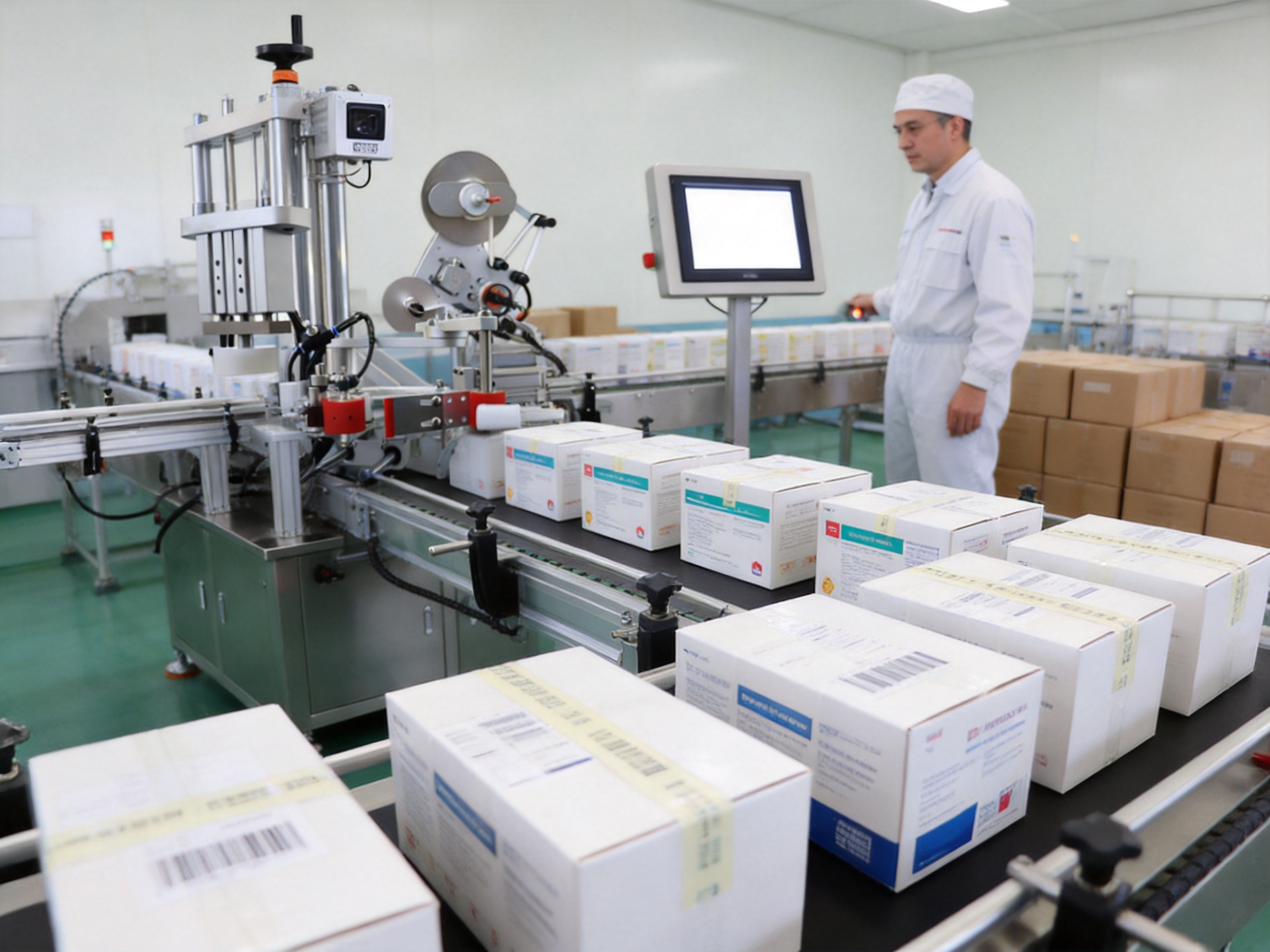
Why Manufacturing Process Matters to Labeling Performance
Labeling performance is often discussed in terms of speed and accuracy, but mechanical consistency is equally important. A labeler may have an advanced control system, yet still produce poor results if the dispensing edge is misaligned, the roller surface is inconsistent, or the conveyor frame lacks rigidity.
Precision machining supports the correct alignment of moving and fixed components. A stable frame reduces vibration. Consistent roller dimensions support controlled web movement. Properly machined mounting points make it easier to adjust sensors and applicators. These details contribute to repeatable placement and reduced setup time.
Manufacturing integration also helps when troubleshooting is required. If a component is designed, machined, and assembled within a connected engineering process, technical staff can more easily understand its function and recommend modifications. This can be particularly useful when customers request a new product format, unusual label size, or connection with an existing line.
Installation, Setup, and Changeover Considerations
Site Preparation
Before installation, the customer should prepare a level floor, adequate electrical power, sufficient operating space, and a clear material flow path. The machine has a reference packaging size of approximately 2.10 meters by 1.20 meters by 1.60 meters, but additional space is needed for operators, label roll replacement, maintenance access, and product transfer.
Electrical requirements should be confirmed before shipment. The standard supply is AC 220 V at 50/60 Hz, while alternative electrical configurations may be discussed when necessary. The customer should also confirm whether the machine will be installed in a cleanroom, temperature-controlled area, dusty environment, humid location, or other special operating condition.
Label and Product Testing
Representative products and labels should be used for testing whenever possible. The test should evaluate label placement, adhesion, smoothing, product stability, sensor detection, changeover time, and line speed. If the label is intended to bridge a carton seam, the sample should include the actual flap geometry and closure condition.
Testing should also consider the condition of the package. Dust, oil, condensation, rough cardboard fibers, coatings, and uneven surfaces can affect adhesion. A successful mechanical application does not guarantee long-term label performance if the adhesive and package materials are incompatible.
Changeover Procedure
When changing to a different product, operators may need to adjust conveyor guides, sensor positions, application height, label roll alignment, dispensing timing, and smoothing pressure. The touch screen can be used to adjust stored operating parameters where supported.
A clear changeover procedure helps reduce waste and ensures that the first acceptable package is produced quickly. Many manufacturers benefit from maintaining a setup record for each product, including label roll information, guide positions, speed, timing values, and inspection requirements.
Maintenance and Operational Reliability
Regular maintenance helps preserve labeling accuracy and reduce unexpected stoppages. Operators should keep the conveyor, dispensing path, sensor surfaces, rollers, and application components clean. Adhesive residue can build up gradually and affect label separation or smoothing. Dust and loose backing material can interfere with sensors and moving parts.
Wear points should be checked according to the manufacturer’s maintenance schedule. The driving roller, belts, bearings, dispensing edge, guide components, and electrical connections may require inspection or replacement over time. A preventive maintenance program is generally more efficient than waiting for a production failure.
Label roll changes should be completed carefully. The web must follow the correct path, remain aligned, and be secured without excessive tension. Operators should verify that the new roll has the correct label direction, core size, outer diameter, and material properties.
Fault indication on the control system can help operators respond to abnormal conditions. However, alarms should not simply be reset repeatedly without investigation. Repeated faults may indicate incorrect sensor alignment, product spacing problems, label feeding resistance, adhesive buildup, or a component requiring adjustment.
How the Machine Compares with Alternative Labeling Methods
Compared with Manual Labeling
Manual labeling has a low initial investment and may be appropriate for very small production volumes or frequent temporary packaging changes. However, it normally provides less consistent placement, lower predictable output, and greater dependence on operator availability. The automatic tape and labeling machine is more suitable when the customer requires repeatability, production records, tamper-evident application, or integration with a conveyor line.
Compared with Separate Sealing and Labeling Stations
Using separate machines for sealing and labeling can provide specialized performance, but it may require additional floor space, transfer conveyors, controls, and operators. A combined tape and labeling system can simplify the packaging flow when both functions are applied to the top of a box or flat package.
The best choice depends on the label design and required production rate. If sealing and labeling must occur at different locations or in different orientations, separate stations may be appropriate. If one top application can perform both functions, the combined machine may offer a more compact and efficient arrangement.
Compared with Bottle-Oriented Labelers
Round bottle labelers use wraparound belts, rollers, or rotating mechanisms to position labels around cylindrical containers. Those systems are not always suitable for flat boxes or cartons. The RXL-TST machine is designed around top application and box-shaped products, making it a better match for packages that require a label across a flat upper surface or carton seam.
Compared with Basic Conveyor Labelers
A basic conveyor labeler may apply a label but provide fewer options for sealing, smoothing, coding, data collection, or customization. The automatic tape and labeling machine adds a broader set of functions, including production counting, label management, fault indication, operation records, and optional code readers or printers.
Selection Guidance for Buyers
Before purchasing an automatic tape and labeling machine, buyers should define the products to be processed, the label design, the required output, and the desired integration level. Important information includes package length, width, height, material, weight, surface finish, flap location, label dimensions, label roll core, label roll outer diameter, adhesive type, and expected production speed.
Buyers should also clarify whether the label is decorative, informational, functional, tamper-evident, or intended to seal a package. A label that crosses a seam may require different application pressure and positioning from a label placed on a smooth, uninterrupted surface.
The production line layout should be reviewed in advance. Infeed and outfeed heights, conveyor direction, operator access, coding position, barcode reader location, and finished product handling all affect the final machine configuration. If the labeler will connect to another machine, communication signals and product transfer conditions should be discussed before manufacturing.
A reliable supplier should be able to explain the operating range, identify conditions that may affect accuracy, recommend suitable options, and test the equipment with real samples. Buyers should be cautious of specifications that do not clearly state the relationship between speed, product size, label size, and application conditions.
Frequently Asked Questions
What products can the machine label?
The machine is designed for cartons, plastic boxes, flat packages, and other box-shaped products. It is especially suitable for packages requiring a top label or a tape-style sealing label. The exact product range depends on dimensions, rigidity, surface condition, weight, and the final conveyor configuration.
Can it apply tamper-evident labels?
Yes. The machine can apply suitable tamper-evident labels to the top surface or closure area of packages. The tamper-evident effect comes from the selected label construction and package design, while the machine provides controlled and repeatable application.
What is the normal production speed?
The reference speed is approximately 20 to 40 pieces per minute. Actual output depends on product size, label size, manual feeding speed, connected machines, product spacing, coding requirements, and the time required for stable application.
How accurate is the labeling process?
The stated reference precision is approximately plus or minus 1 millimeter under suitable conditions. Actual accuracy can be influenced by product hardness or softness, roundness, surface condition, label properties, conveyor stability, and operator setup.
Can the conveyor width be customized?
Yes. Conveyor width can be customized according to the customer’s actual product and line requirements. Product samples and dimensional drawings should be provided so that the appropriate guide structure and conveying arrangement can be selected.
Can the machine print batch numbers or expiry dates?
Optional thermal coding and inkjet printing systems can be added according to the production requirement. The location and timing of printing should be confirmed during project design because printing may occur before or after label application.
Can the machine read barcodes or QR codes?
Optional barcode or QR code readers can be integrated. These devices may be used to verify printed information, confirm label presence, collect traceability data, or connect package identification with a broader production management system.
What type of control system does it use?
The machine uses a PLC control system with a touch screen interface. The control system coordinates detection, spacing, label feeding, application, counting, fault indication, and other configured functions.
What label roll sizes are supported?
The reference specifications include a minimum inner diameter of approximately 76 millimeters and a maximum outer diameter of approximately 300 millimeters. Label height is approximately 10 to 150 millimeters and label length is approximately 15 to 300 millimeters in the listed configuration. Special sizes require technical review.
Is the machine suitable for high-speed production?
The machine is intended for stable automatic production at approximately 20 to 40 pieces per minute. If a higher speed is required, the complete application must be evaluated, including product dimensions, label size, feeder performance, coding devices, inspection requirements, and linked equipment.
What information should be supplied for a quotation?
Customers should provide product drawings or samples, label samples, label roll dimensions, required application position, target speed, electrical supply, line layout, optional coding or inspection requirements, and information about the operating environment. These details help the manufacturer recommend a suitable configuration instead of relying only on general specifications.
Conclusion
The automatic tape and labeling machine provides a practical solution for manufacturers that need consistent top labeling, secure tape-style sealing, tamper-evident application, and efficient package handling. Its coordinated conveyor, product detection, label dispensing, application, and smoothing functions reduce the variation associated with manual work and support a more professional packaging finish.
The RXL-TST model combines a PLC control system, touch screen operation, stable label feeding, wear-resistant driving components, production counting, label management, fault indication, and operation record functions. Optional thermal coding, inkjet printing, transparent-label sensing, barcode reading, and QR code reading allow the equipment to be adapted to more advanced packaging requirements.
Its value is further supported by the manufacturer’s engineering and production capabilities. Shanghai Ruixiao Packaging Technology Co., Ltd. combines CNC machining, experienced technical personnel, integrated assembly, commissioning, and ISO 9001-based quality management. This source-manufacturer approach can provide greater control over component quality, customization, system integration, and technical support.
For the best result, the machine should be selected through sample testing and a complete review of product dimensions, label materials, production speed, application location, and line integration. When correctly configured, it can help food, pharmaceutical, healthcare, cosmetic, chemical, electronics, gift box, and general packaging manufacturers improve consistency, reduce repetitive labor, strengthen package presentation, and establish a more reliable automated labeling process.
References
1. Shanghai Ruixiao Packaging Technology Co., Ltd. Product information for the RXL-TST automatic tape and labeling machine.
2. Shanghai Ruixiao Packaging Technology Co., Ltd. Manufacturing and company profile information concerning CNC machining, assembly, commissioning, and quality management.
3. International Organization for Standardization. ISO 9001: Quality Management Systems—Requirements.
4. General industrial packaging engineering principles concerning pressure-sensitive label application, conveyor handling, sensor detection, and tamper-evident package closure.
5. General automation engineering practices for PLC control, production counting, fault indication, variable data printing, barcode verification, and packaging line integration.
Product: Automatic Tape and Labeling Machine

related products
related News
 +86 13681850339
 sales@raxpack.com
 Building 6, No. 477 Tiefeng Road, Baoshan District, Shanghai, China
- Tabletop Labeling Machine
- Round Bottle Labeling Machine
- Automatic Tube Labeling Machine
- Pouch Labeling Machine
- Rotary Labeling Machine
- Syringe Labeling Machine
- Top Labeling Machine
- Single Side Sticker Labeling Machine
- Double Side Labeling Machine
- Bucket Labeling Machine
- Bottom Labeling Machine
- Corner Label Applicator
- Waist Sealing Labeling Machine
- Square Bottle Labeling Machine
