 English
 русский
 Español
 عربى



Automatic Paging Box Labeling Machine: A Complete Guide to High-Precision Carton and Flat-Packaging Automation
2026-09-22
Content
- 1 What Is an Automatic Paging Box Labeling Machine?
- 2 How the Machine Works
- 3 Key Advantages Over Conventional Labeling Methods
- 4 Technical Specifications
- 5 Applications Across Multiple Industries
- 6 Control System and Operator Experience
- 7 Advanced Manufacturing Capabilities
- 8 Optional Modules and Line Integration
- 9 Installation and Maintenance Considerations
- 10 How to Select the Correct Configuration
- 11 Why Work with an Experienced Labeling-Machine Manufacturer?
- 12 Competitive Position in the Labeling Equipment Market
- 13 Frequently Asked Questions
- 13.1 What products can the machine label?
- 13.2 Can it label the top and bottom surfaces?
- 13.3 Does the machine separate stacked products automatically?
- 13.4 How does the machine prevent missed labels?
- 13.5 What is the expected labeling accuracy?
- 13.6 Can label sizes be customized?
- 13.7 Can the machine handle different carton sizes?
- 13.8 Can a printer be installed on the machine?
- 13.9 Can the machine read barcodes or QR codes?
- 13.10 Is vacuum conveying necessary for every application?
- 13.11 What is the maximum conveying speed?
- 13.12 What power supply does the machine use?
- 13.13 How should the machine be maintained?
- 13.14 Can the equipment be integrated into an existing production line?
- 13.15 What information should be provided when requesting a quotation?
- 14 Conclusion
- 15 References
- 16 Product: Automatic Paging Box Labeling Machine
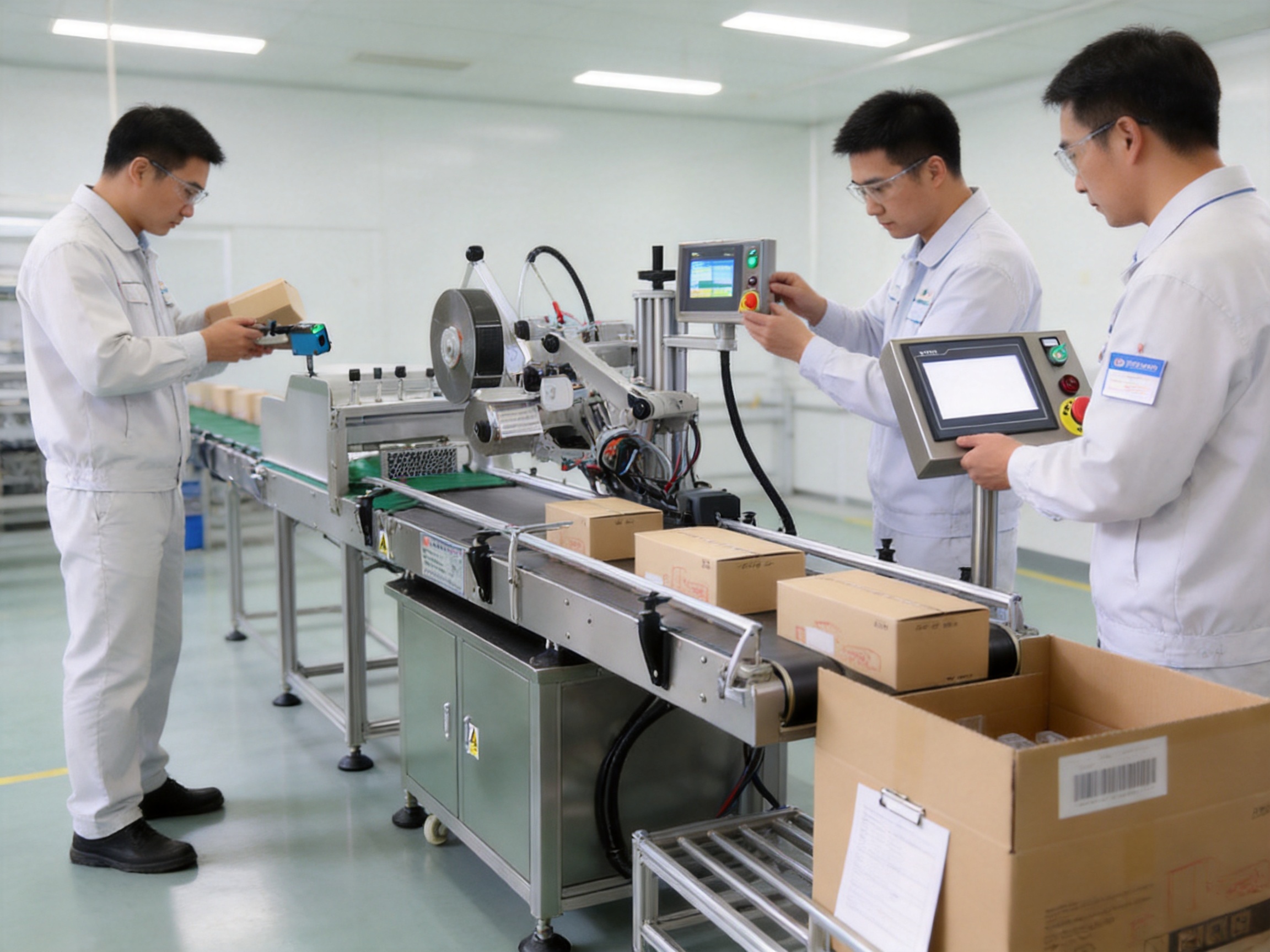
Modern packaging operations increasingly depend on equipment that can perform several coordinated tasks without interrupting product flow. Cartons, paper boxes, folded carton blanks, cards, instruction sheets, and other flat packaging materials must often be separated, transported, labeled, inspected, coded, and transferred to later production stages. When these tasks are carried out manually or by separate machines with limited coordination, packaging lines may experience inconsistent labeling, product overlap, excessive labor requirements, and avoidable material waste.
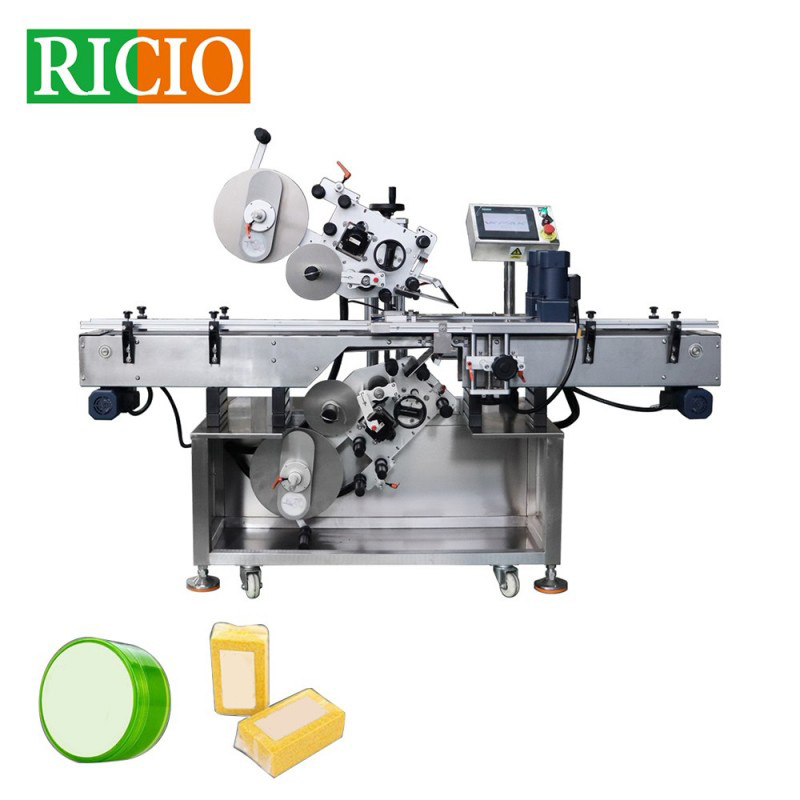
The automatic paging box labeling machine is designed to address these challenges through an integrated process. It separates stacked paper-based products one by one, conveys them through a controlled labeling area, detects their position, applies labels, and presses the labels onto the product surface. Depending on production requirements, the system can support top labeling, bottom labeling, side labeling, or combined labeling configurations.
This type of equipment is particularly valuable for manufacturers that need flexible handling of different carton sizes and label formats. It combines paging, conveying, detection, labeling, pressing, counting, and optional coding functions in one coordinated system. The result is a practical automation solution for packaging lines in food, pharmaceuticals, daily chemicals, electronics, stationery, e-commerce logistics, and paper-product manufacturing.
The equipment described in this article is manufactured by Shanghai Ruixiao Packaging Technology Co., Ltd., also known as RICIO. The company specializes in industrial labeling machinery and provides equipment for cartons, bottles, syringes, pouches, tubes, and other packaging formats. Its manufacturing capabilities include precision machining, machine assembly, electrical integration, commissioning, and customized labeling-system development.
What Is an Automatic Paging Box Labeling Machine?
An automatic paging box labeling machine is a specialized labeling system for flat or relatively flat packaging products that are supplied in a stacked condition. The machine first separates the stacked products into individual pieces. This operation is commonly called paging, sheet feeding, or product separation. Once a single carton or paper product has been separated, it is transferred through the conveying section toward the labeling head.
During transport, sensors identify the arrival and position of each product. The labeling unit then dispenses a label at the appropriate moment. A pressing or smoothing mechanism follows the application point to help the label adhere evenly to the carton surface. Depending on the selected configuration, labels may be applied to the upper surface, lower surface, or two sides of the product.
Unlike a simple conveyor with a manually operated label dispenser, the automatic paging box labeling machine coordinates multiple actions through a programmable control system. Product separation, detection, label dispensing, conveyor movement, pressing, counting, and fault monitoring are managed as parts of one production sequence.
The machine is suitable for products such as:
• Folding cartons and paper boxes
• Flat carton blanks
• Paper cards and instruction cards
• Product inserts and promotional cards
• Flat pouches and paper packaging products
• E-commerce shipping materials
• Pharmaceutical and healthcare cartons
• Stationery and printed paper products
• Other flat packaging articles requiring automatic labeling
Although the product is listed within the pouch labeling machine category, its working principle is especially relevant to carton and flat-packaging applications. The flexible conveyor and labeling structure can be adjusted for different product dimensions, materials, and labeling positions.
How the Machine Works
1. Loading the Product Stack
Operators place a stack of cartons, paper boxes, or flat packaging products into the paging section. The loading area is designed to hold the products in an organized position so that the separation mechanism can process them consistently. Adjustable guides help accommodate different widths and lengths.
The product stack does not need to be manually divided into individual pieces before labeling. This reduces repetitive labor and allows operators to focus on material replenishment, quality checks, and line supervision.
2. Automatic Paging and Separation
The paging mechanism separates products from the bottom or controlled release point of the stack and feeds them forward one at a time. Stable separation is essential because two overlapping cartons could receive one label, while a missing carton could result in a missed labeling cycle.
Compared with manual feeding, automatic paging provides more consistent spacing and reduces variation caused by operator fatigue. It also improves the repeatability of the labeling process because each product reaches the labeling station in a controlled position.
3. Vacuum-Assisted Conveying
The conveying system may use vacuum assistance to hold lightweight or flexible products firmly against the conveyor surface. This feature helps reduce product shifting, lifting, sliding, and overlapping during transport.
Vacuum-assisted conveying is especially useful for thin carton blanks, paper cards, folded packaging, and products with a smooth or lightweight surface. By keeping the product stable, the system helps maintain the relationship between the product edge and the label application point.
4. Product Detection
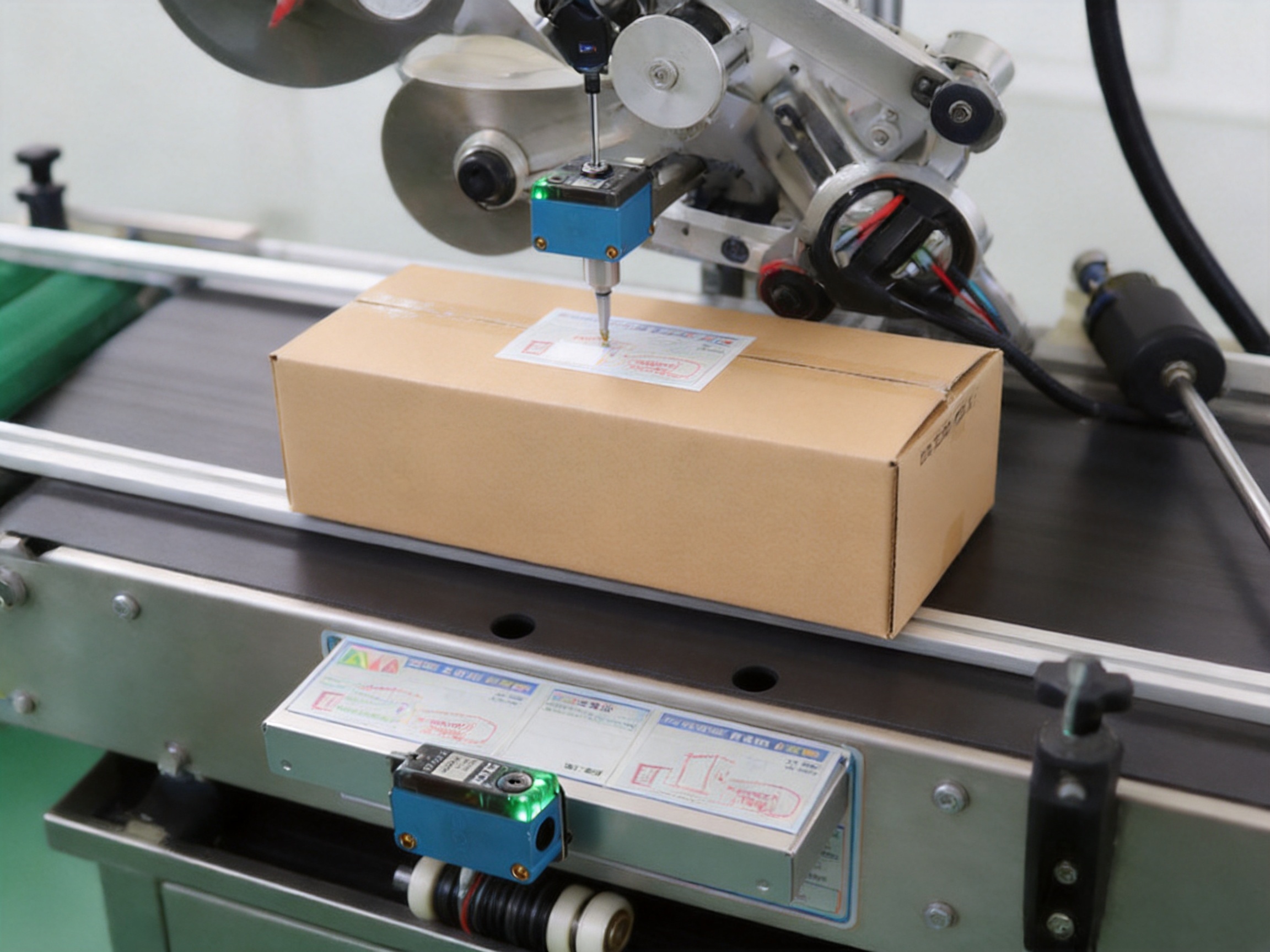
Photoelectric sensors detect the presence and movement of each product. The control system uses this information to coordinate label dispensing with product arrival. Labels are released only when a product is detected, helping reduce empty dispensing cycles and unnecessary label consumption.
Detection also supports production counting and fault monitoring. If a product is missing, incorrectly positioned, or delayed, the machine can respond according to the programmed control logic. This is more reliable than operating a label dispenser continuously without product feedback.
5. Label Application
The label dispenser applies the label to the programmed surface. The exact application method depends on the label type, product material, label dimensions, and desired position. The system can be configured for top labeling, bottom labeling, or two-sided labeling.
Label positioning is influenced by product size, conveyor speed, sensor location, and label length. These settings can be adjusted through the control interface to support different production requirements.
6. Label Pressing and Smoothing
After the label contacts the carton or paper product, a pressing mechanism helps smooth the label and improve adhesion. This step is important for reducing bubbles, wrinkles, folded corners, and lifted edges.
Consistent pressing is particularly valuable when cartons move directly to coding, inspection, or packing equipment. A poorly attached label can interfere with scanning, create an unattractive appearance, or become detached during transportation.
7. Counting and Discharge
After labeling, products continue toward the discharge end of the machine or into a connected downstream system. The control system can count processed products and display production information for operators.
The discharge section can be integrated with printers, marking equipment, inspection systems, packing machines, or other conveyor-based equipment. This makes the machine suitable for both standalone use and complete automated production lines.
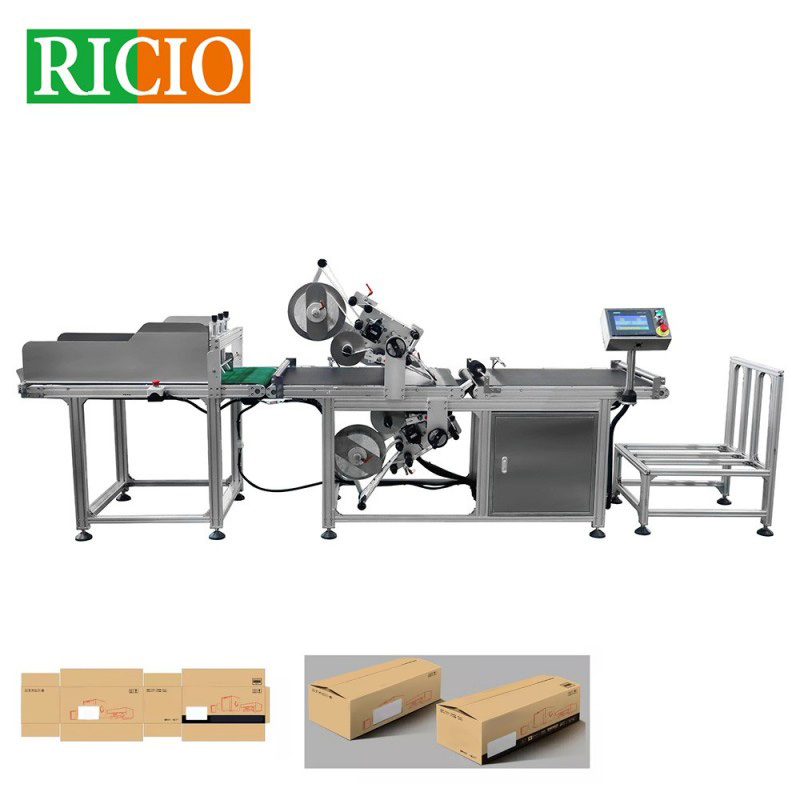
Automatic Paging Box Labeling Machine
Key Advantages Over Conventional Labeling Methods
Integrated Paging and Labeling
One of the most important advantages of the machine is its integration of product separation and labeling. Many basic labeling systems require products to be manually spaced before entering the labeling station. This arrangement adds labor and may produce inconsistent distances between products.
The automatic paging box labeling machine performs separation and labeling in a coordinated sequence. This reduces manual handling and creates a more predictable production flow. It is especially useful when products are supplied in large stacks and must be processed continuously.
More Stable Label Placement
Label accuracy depends on product stability. If a carton shifts while moving through the labeling area, the label may be placed too close to an edge, applied at an angle, or positioned differently from one product to the next. The combination of controlled paging, guided conveying, sensor detection, and pressing helps improve placement consistency.
The stated labeling accuracy can reach approximately plus or minus one millimeter, depending on product size, label size, and the selected labeling pattern. Actual performance should be verified through testing because surface material, product rigidity, label adhesive, and operating speed all influence the final result.
Reduced Label Waste
A conventional continuously running label dispenser may release labels even when no product is present. The automatic system uses photoelectric detection to coordinate dispensing with product arrival. This helps reduce missing labels, repeated labels, and labels applied without a product.
Reduced waste can provide a direct financial benefit, particularly when labels contain variable information, security features, pharmaceutical data, barcodes, or expensive specialty materials.
Improved Product Protection
Manual handling can cause cartons to become bent, scratched, contaminated, or incorrectly stacked. By moving products through the process with fewer manual interventions, the machine helps protect packaging appearance and reduce unnecessary contact.
The vacuum-assisted conveyor can also reduce product movement during transport. This is beneficial for lightweight paper items that might otherwise lift, overlap, or rotate when exposed to high conveyor speeds.
Flexible Product Changeover
Packaging producers often process several carton sizes, label sizes, and product types on the same line. A rigid machine designed for only one product format may create long changeover periods and limit production flexibility.
The automatic paging box labeling machine can be adjusted according to carton length, width, label dimensions, and labeling position. Its configurable design supports a wider range of product specifications than a fixed-format labeling station.
Combination with Printing and Coding
The machine can be integrated with online printers, thermal transfer printers, ribbon coding machines, inkjet printers, laser marking systems, barcode readers, and QR code readers. These options enable manufacturers to combine label application with batch coding, date printing, serial number marking, tracking, and traceability.
Combining these operations in one line can reduce intermediate handling and lower the risk of mixing products between separate processes. It can also help manufacturers build a more complete packaging information system.
Better Suitability for Continuous Production
Manual labeling may be acceptable for small batches, prototypes, or products with unusual shapes. However, it becomes increasingly difficult to control when production volumes rise. Operator fatigue, inconsistent positioning, and variable feeding speed can affect output quality.
Automatic paging and labeling create a continuous workflow that is easier to monitor and scale. Operators can concentrate on replenishing product stacks, replacing label rolls, checking samples, and responding to alarms rather than applying each label by hand.
Technical Specifications
The following table summarizes the principal specifications provided for the automatic paging box labeling machine. Actual configurations may vary according to product dimensions, label requirements, and optional equipment.
| Specification | Parameter |
| Electrical supply | AC 220 V, 50/60 Hz |
| Installed power | 1,200 W |
| Capacity | Dependent on product size and label size |
| Labeling accuracy | Approximately ±1 mm, depending on product, label, and pattern |
| Conveying speed | 0 to 50 m/min, adjustable |
| Conveyor width | Approximately 800 mm; customizable according to application requirements |
| Machine dimensions | Approximately 2,800 × 1,000 × 1,400 mm |
| Carton length range | Approximately 100 to 800 mm |
| Carton width range | Approximately 100 to 700 mm |
| Label dimensions | Customizable according to the product and labeling pattern |
| Label roll core diameter | Approximately 76 mm |
| Maximum label roll outside diameter | Approximately 300 mm |
| Optional mechanisms | Online printer, thermal transfer printer, ribbon coding machine, inkjet printer, barcode reader, or QR code reader |
The capacity of the machine should not be evaluated only by conveyor speed. Product length, label length, spacing requirements, paging behavior, and operator loading frequency all influence practical throughput. A shorter product with a small label may be processed faster than a large carton requiring a long label and greater spacing.
Before ordering, manufacturers should provide representative cartons, label samples, and production targets for testing. This allows the supplier to confirm paging stability, label adhesion, accuracy, changeover requirements, and compatibility with optional printing or inspection equipment.
Applications Across Multiple Industries
Food and Beverage Packaging
Food producers use cartons, sleeves, paper cards, ingredient packages, and shipping materials in many formats. Labels may contain product information, promotional content, batch identification, logistics data, or compliance information.
The automatic paging box labeling machine can process flat packaging materials before filling, after folding, or during secondary packaging. When combined with coding equipment, it can support date, batch, and traceability requirements.
Pharmaceutical and Healthcare Packaging
Pharmaceutical cartons and instruction cards often require accurate positioning and reliable information control. A label may identify the product, strength, batch, expiry date, market, or distribution channel.
Automatic detection and optional barcode or QR code reading can help manufacturers create a more controlled labeling process. The system can also be integrated with printers or marking devices for variable data applications.
Pharmaceutical applications may require additional validation, cleanability, inspection, and documentation. The final machine configuration should therefore be selected according to the applicable production and quality requirements.
Daily Chemical and Cosmetic Products
Cosmetic boxes, personal-care cartons, sample packs, and promotional paper products often require attractive and consistent labeling. Wrinkled or poorly positioned labels can reduce the perceived quality of the finished package.
The pressing mechanism helps create a smoother appearance, while the adjustable conveyor and labeling head support different carton formats. The machine can also be connected to coding systems for production and inventory management.
Electronics and Electrical Products
Electronic accessories, components, chargers, cables, and small devices are often packed in cartons or paperboard sleeves. Labels may contain model numbers, serial numbers, safety markings, barcodes, or market-specific information.
Integration with barcode and QR code readers can help connect physical packaging with digital production and logistics systems. This makes the labeling machine useful in applications where product identity and traceability are important.
E-Commerce and Logistics
E-commerce operations process a wide range of shipping cartons, inserts, cards, and promotional materials. Automatic paging and labeling can help standardize the application of delivery, identification, warehouse, or promotional labels.
Because the system supports adjustable product dimensions and optional coding equipment, it can be adapted to changing product assortments and fulfillment requirements.
Stationery and Paper Products
Notebook covers, cards, instruction sheets, envelopes, folders, and other paper products can be difficult to label consistently by hand, especially when large quantities are involved. Vacuum-assisted conveying is valuable for lightweight paper products because it helps maintain contact with the conveyor surface.
The machine can support both plain label application and more advanced processes involving printing, reading, and verification.
Control System and Operator Experience
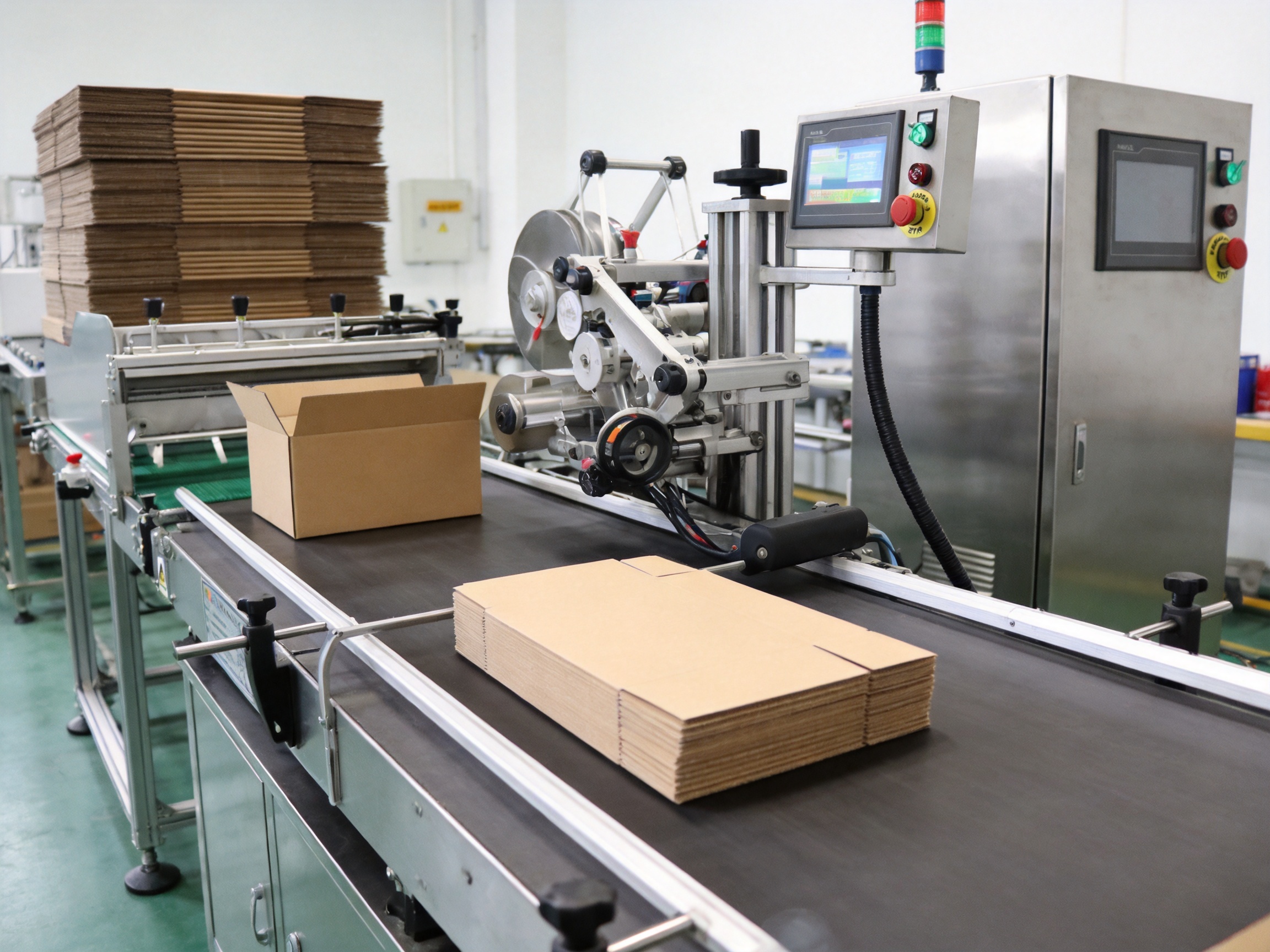
The automatic paging box labeling machine uses a PLC control system and touch-screen interface. The PLC coordinates the sensors, conveyor, paging mechanism, labeling head, pressing unit, and optional modules. This centralized control structure helps simplify operation and supports repeatable production settings.
Operators can typically adjust parameters such as conveying speed, product spacing, label position, detection timing, and counting functions. The interface can also display machine status and fault information, helping operators identify the source of an interruption.
A user-friendly interface is important because labeling equipment may be operated by different personnel across multiple shifts. Clear parameter settings and practical fault prompts reduce training time and make changeovers more manageable.
Production counting is another useful function. Operators and supervisors can monitor completed quantities, compare output with production targets, and identify whether a line is operating normally. When connected to a larger production system, this information may also contribute to manufacturing reporting and traceability.
Fault Monitoring
Fault monitoring may cover conditions such as product absence, label shortage, sensor interruption, conveyor overload, abnormal paging, or emergency-stop activation. Prompt detection helps prevent a small issue from becoming a larger batch-quality problem.
When a fault occurs, the machine can stop or enter a controlled pause according to the programmed logic. This protects products and equipment while allowing the operator to correct the issue before restarting.
Changeover Management
Changeover generally involves adjusting product guides, conveyor width, sensor position, label dispenser settings, and paging parameters. The exact procedure depends on the product range and machine configuration.
To reduce setup errors, manufacturers should document standard settings for each carton and label combination. A product recipe system, if included in the control configuration, can further improve repeatability by allowing operators to recall previously tested parameters.
Advanced Manufacturing Capabilities
The performance of a labeling machine depends not only on its control software but also on the quality of its mechanical structure, components, and assembly process. Shanghai Ruixiao Packaging Technology Co., Ltd. has developed manufacturing capabilities covering precision machining, component production, complete machine assembly, electrical integration, and commissioning.
In-House Precision Machining
The company developed from the acquisition of Shanghai Zhenbao Machinery Parts Factory and has progressed from equipment assembly toward source manufacturing. Its production capabilities include multiple CNC machining centers and an experienced technical team.
In-house machining can provide greater control over key mechanical parts such as brackets, guide components, mounting plates, shafts, rollers, and customized structural elements. This control can help improve dimensional consistency and simplify the development of application-specific equipment.
When critical components are produced or controlled within the same manufacturing organization, engineering teams can coordinate mechanical design and production more efficiently. This is valuable for custom conveyors, special product guides, nonstandard label positions, and integrated line layouts.
Full-Process Equipment Development
The company manages processes from core component machining to complete machine assembly and commissioning. This full-process approach allows mechanical, electrical, pneumatic, and control-system elements to be evaluated together rather than treated as isolated parts.
For customers, this may simplify communication during equipment development. Instead of coordinating separate suppliers for the conveyor, labeling unit, sensors, control cabinet, and optional printer, the customer can work with one solution provider for the main system.
ISO 9001 Quality-System Approach
Manufacturing and commissioning are carried out in accordance with the ISO 9001 international quality system. A quality-management approach helps organize design review, production control, inspection, assembly, testing, and after-sales support.
Quality-system implementation is especially important for labeling machinery because reliability depends on the interaction of many components. A sensor, guide, motor, label roller, control parameter, or software setting can influence the final result. Systematic quality procedures help reduce variation between machines and improve the traceability of production activities.
Engineering and Commissioning
Commissioning is a critical stage in the production of a labeling machine. The supplier must confirm that the paging mechanism, conveyor, sensors, label dispenser, pressing unit, and control program work together under realistic operating conditions.
Testing with customer samples is particularly important. Carton stiffness, surface finish, printing ink, dust, label adhesive, product curvature, and stacking behavior may differ significantly from one application to another. A machine that performs well with one carton may require different adjustments for another.
Engineering teams can use sample testing to identify appropriate conveyor settings, paging adjustments, sensor positions, label peel angles, and pressing methods before shipment. This reduces the risk of extensive troubleshooting after installation.
Export and International Service Experience
The company exports labeling equipment to more than 40 countries and regions. International experience can be beneficial when customers require different electrical standards, languages, documentation formats, safety expectations, or line-integration practices.
Export-oriented manufacturing also encourages suppliers to develop consistent packaging, technical documentation, remote communication, spare-parts support, and commissioning procedures. These capabilities are important for customers purchasing equipment for overseas factories or multinational production networks.
Optional Modules and Line Integration
The basic machine can be expanded with optional modules according to the production objective. The correct combination depends on whether the customer needs variable-data printing, product identification, inspection, coding, or traceability.
Thermal Transfer Printing
A thermal transfer printer can apply variable information such as batch codes, manufacturing dates, expiry dates, product numbers, and barcodes. It is useful when printing must be clear, durable, and repeatable on suitable label or packaging materials.
Ribbon Coding
A ribbon coding machine provides another option for printing information onto labels or packaging surfaces. It may be selected for applications requiring economical coding and straightforward operation.
Inkjet Printing
Inkjet printers can print variable data directly onto cartons, paper products, or labels. They are useful for high-speed marking and for applications involving text, codes, logos, or serialized information.
Laser Marking
Laser marking equipment may be integrated when permanent or high-contrast marking is required. The suitability of laser marking depends on the packaging material, surface coating, required contrast, and regulatory requirements.
Barcode and QR Code Reading
Barcode and QR code readers can verify product identity or connect the labeling process to a traceability system. A reader may be used to confirm that the correct label, product, or variable data is present before the item proceeds to the next stage.
Downstream Packaging Equipment
The machine can be installed before cartoning, bundling, packing, inspection, or collection equipment. Its compact structure and conveyor-based design make it suitable for integration into larger automated lines.
When planning integration, engineers should review conveyor height, product orientation, communication signals, emergency-stop circuits, line speed, product spacing, and reject handling. Proper coordination prevents bottlenecks and ensures that the labeling machine does not operate faster than the surrounding equipment can accept.
Installation and Maintenance Considerations
Correct installation helps the machine achieve stable performance. The floor should be level and capable of supporting the equipment. Adequate space should be provided for label-roll replacement, cleaning, inspection, electrical access, and operator movement.
Electrical power should match the required AC 220 V, 50/60 Hz supply unless a different configuration has been specified. Customers should also confirm grounding, environmental conditions, compressed-air requirements if applicable, and communication arrangements for connected equipment.
Daily Checks
Daily checks may include inspecting the paging section, conveyor surface, guide rails, label roll, sensor lenses, pressing rollers, emergency-stop devices, and control-panel alarms. Paper dust and adhesive residue should be removed before they affect product movement or sensor detection.
Label Roll Inspection
The label roll should be installed with the correct direction and tension. Excessive tension may cause label deformation or feeding problems, while insufficient tension may create loops or irregular dispensing.
The roll core and outside diameter should remain within the machine’s specified range. Labels should be wound consistently and should not contain damaged edges, excessive telescoping, or adhesive contamination.
Sensor Cleaning
Photoelectric sensors must remain clean and correctly aligned. Dust, paper fibers, adhesive, or reflected light from glossy materials can affect detection. Regular cleaning and periodic alignment checks help maintain reliable product triggering.
Paging Mechanism Maintenance
The paging section should be checked for wear, accumulation of paper dust, guide looseness, and changes in product separation behavior. If two products begin feeding together or gaps become inconsistent, the paging settings and mechanical contact points should be inspected.
Conveyor and Pressing Components
Conveyor belts, vacuum surfaces, rollers, guide rails, and pressing components should be checked for wear and contamination. A damaged or contaminated belt may reduce product stability, while worn pressing components may result in incomplete adhesion.
Preventive Maintenance
Preventive maintenance should follow the supplier’s recommendations and the customer’s operating environment. Maintenance records can include cleaning dates, component replacement, sensor checks, software updates, and fault history.
Organized maintenance improves uptime and helps identify gradual changes before they result in production stoppages. It also supports consistent product quality over the service life of the machine.
How to Select the Correct Configuration
Customers should define the application carefully before purchasing. Important questions include the product material, length, width, thickness, rigidity, surface finish, stack height, label material, label dimensions, labeling position, required speed, and downstream process.
Product Characteristics
Carton and paper products vary widely. A rigid folded carton behaves differently from a thin flat card. A coated glossy surface may require different label adhesive and pressing conditions than an uncoated paper surface.
Customers should provide samples representing the full product range rather than only one ideal sample. This gives the supplier a more realistic basis for confirming machine flexibility.
Label Characteristics
Label size, material, adhesive type, liner thickness, roll direction, and spacing influence dispenser performance. Transparent labels may require a specialized sensor. Very small labels may require different dispensing geometry, while large labels may require additional pressing support.
Labeling Position
The desired position should be defined in relation to product edges, printed graphics, folds, seams, barcodes, and other features. Top, bottom, side, corner, or dual-sided labeling may require different mechanical arrangements.
Production Target
Capacity should be calculated from actual product spacing and the required label application cycle. Customers should distinguish between theoretical conveyor speed and practical output. A production test can reveal whether paging, labeling, inspection, and downstream transfer remain stable at the target speed.
Future Expansion
It may be beneficial to plan for future printing, reading, coding, or traceability requirements. Selecting a machine frame and control system that can accommodate optional modules may reduce the cost and disruption of later upgrades.
Why Work with an Experienced Labeling-Machine Manufacturer?
Labeling equipment is not simply a collection of motors, sensors, and rollers. It is an application-specific system in which mechanical design, product behavior, label properties, software logic, and line integration must work together.
An experienced manufacturer can evaluate the complete process rather than focusing only on the label dispenser. This is important when the customer requires paging, vacuum conveying, variable product sizes, top and bottom labeling, coding, barcode verification, or connection to downstream machinery.
Shanghai Ruixiao Packaging Technology Co., Ltd. offers experience across multiple labeling categories, including syringe labeling machines, round bottle labeling machines, square bottle labeling machines, double-sided labeling machines, high-speed labeling machines, and real-time print-and-apply systems. This broad product background supports the development of customized solutions for different packaging shapes and production environments.
The company’s technical strengths include in-house precision machining, CNC manufacturing resources, complete equipment assembly, PLC-based controls, application testing, and international project experience. These capabilities can help customers obtain a machine that is better matched to their product rather than a generic unit with limited adjustment range.
Competitive Position in the Labeling Equipment Market
The automatic paging box labeling machine competes primarily through process integration, flexibility, product stability, and customization. Its advantages are most apparent when compared with manual labeling, simple standalone dispensers, and conventional conveyor systems that lack automatic paging.
Manual labeling may have a lower initial investment, but it requires continuous labor and usually creates greater variation in label position. A basic dispenser may apply labels quickly, but it may not separate stacked cartons or control product spacing. A machine designed only for one carton format may perform well in a narrow application but provide limited flexibility when product sizes change.
The automatic paging box labeling machine combines these functions in one system. It supports adjustable product handling, controlled detection, label dispensing, label pressing, and optional integration. This combination can reduce the need for several independent operators or machines.
Its competitive value also comes from engineering support. A supplier with machining and assembly capabilities can modify guides, conveyors, mounting structures, and labeling positions according to product requirements. This is particularly important for packaging manufacturers whose products do not fit standard dimensions.
However, the best machine should always be selected through application testing and a complete technical review. Performance depends on real materials, actual operating conditions, and the chosen configuration. A responsible comparison should consider accuracy, usable speed, changeover time, maintenance, integration, service, spare parts, and total cost of ownership rather than purchase price alone.
Frequently Asked Questions
What products can the machine label?
The machine is designed for cartons, paper boxes, folded carton blanks, paper cards, instruction cards, flat pouches, and other flat or relatively flat packaging products. The final suitability depends on product dimensions, thickness, rigidity, surface characteristics, and stacking behavior.
Can it label the top and bottom surfaces?
Yes. The system can be configured for top labeling, bottom labeling, or combined labeling. The appropriate arrangement depends on the product and the required label positions.
Does the machine separate stacked products automatically?
Yes. The paging mechanism separates stacked products into individual pieces before they enter the labeling area. Stable paging is one of the machine’s main functions.
How does the machine prevent missed labels?
Photoelectric detection identifies product arrival and coordinates label dispensing. This helps prevent labels from being released when no product is present. Correct sensor adjustment and routine maintenance are still necessary for reliable operation.
What is the expected labeling accuracy?
The stated accuracy is approximately plus or minus one millimeter, depending on product size, label size, labeling pattern, material, and operating conditions. Sample testing is recommended for confirmation.
Can label sizes be customized?
Yes. Label dimensions can be customized according to the product and application. The label roll should remain within the specified core and outside-diameter ranges unless another configuration is designed.
Can the machine handle different carton sizes?
Yes. The machine can be adjusted for different carton lengths and widths. The stated carton range is approximately 100 to 800 millimeters in length and 100 to 700 millimeters in width, with customization available for specific applications.
Can a printer be installed on the machine?
Yes. Optional equipment may include an online printer, thermal transfer printer, ribbon coding machine, inkjet printer, or other marking system. The choice depends on the required information and packaging material.
Can the machine read barcodes or QR codes?
Barcode readers and QR code readers can be added as optional modules. They may be used for product identification, verification, variable-data control, or traceability.
Is vacuum conveying necessary for every application?
Not necessarily. Vacuum assistance is particularly useful for lightweight, thin, flexible, or smooth products that may move during conveying. The final conveyor design should be selected after evaluating the product sample and operating speed.
What is the maximum conveying speed?
The listed conveying speed is adjustable from zero to approximately 50 meters per minute. Practical production output depends on product size, label size, paging stability, spacing, and the requirements of connected equipment.
What power supply does the machine use?
The stated electrical supply is AC 220 V at 50/60 Hz, with an installed power of approximately 1,200 watts. Customers should confirm the required electrical configuration before ordering.
How should the machine be maintained?
Maintenance includes cleaning paper dust and adhesive residue, checking sensors, inspecting the paging mechanism, verifying conveyor and pressing components, checking label-roll installation, and reviewing fault records. Preventive maintenance should follow the supplier’s recommendations.
Can the equipment be integrated into an existing production line?
Yes. The conveyor-based structure can be integrated with printers, coding systems, barcode readers, inspection systems, downstream packaging equipment, and other line components. Conveyor height, signals, product direction, speed, spacing, and safety circuits must be reviewed during project planning.
What information should be provided when requesting a quotation?
Customers should provide product samples or detailed dimensions, label samples, required labeling positions, production speed, label-roll information, electrical requirements, coding or inspection needs, and the layout of connected equipment. More complete information allows the manufacturer to recommend a more accurate configuration.
Conclusion
The automatic paging box labeling machine is a flexible automation solution for manufacturers that need to separate and label cartons, paper boxes, cards, flat pouches, and other paper-based packaging products. Its integrated paging, conveying, detection, labeling, pressing, counting, and optional coding functions help reduce manual handling while improving process consistency.
Key advantages include stable separation of stacked products, vacuum-assisted product control, sensor-based label dispensing, adjustable labeling positions, smooth label pressing, PLC control, touch-screen operation, and compatibility with printing and traceability systems. These features make the machine suitable for industries ranging from food and pharmaceuticals to electronics, cosmetics, stationery, and e-commerce logistics.
The equipment’s value is strengthened by the manufacturer’s broader engineering and production capabilities. In-house CNC machining, experienced technical personnel, complete assembly and commissioning, ISO 9001-oriented quality procedures, and international export experience support the development of reliable and customized labeling systems.
For companies seeking to improve carton and flat-packaging automation, the machine offers a practical alternative to manual labeling and limited standalone dispensers. The most effective results will be achieved when the system is selected through sample testing, accurate product analysis, and careful integration planning. With the correct configuration, it can form the foundation of a more efficient, precise, and expandable packaging line.
References
1. Shanghai Ruixiao Packaging Technology Co., Ltd., Automatic Paging Box Labeling Machine Technical Information.
2. Shanghai Ruixiao Packaging Technology Co., Ltd., Product and Manufacturing Profile.
3. ISO 9001, Quality Management Systems: Requirements.
4. General principles of automatic labeling equipment design and packaging-line integration.
5. Industrial guidance on photoelectric detection, conveyor control, product paging, and pressure-assisted label application.
Product: Automatic Paging Box Labeling Machine

related products
related News
 +86 13681850339
 sales@raxpack.com
 Building 6, No. 477 Tiefeng Road, Baoshan District, Shanghai, China
- Tabletop Labeling Machine
- Round Bottle Labeling Machine
- Automatic Tube Labeling Machine
- Pouch Labeling Machine
- Rotary Labeling Machine
- Syringe Labeling Machine
- Top Labeling Machine
- Single Side Sticker Labeling Machine
- Double Side Labeling Machine
- Bucket Labeling Machine
- Bottom Labeling Machine
- Corner Label Applicator
- Waist Sealing Labeling Machine
- Square Bottle Labeling Machine
