 English
 русский
 Español
 عربى



Automatic Conical Pail Labeling Machine: Precision, Flexibility, and Reliable Industrial Automation
2026-10-10
Content
- 1 Introduction to Automatic Conical Pail Labeling
- 2 Why Pail Labeling Requires Specialized Equipment
- 3 Operating Process of the Machine
- 4 Key Advantages Over General-Purpose Labeling Machines
- 5 Technical Specifications
- 6 Control System and Operator Interface
- 7 Mechanical Structure and Manufacturing Strengths
- 8 Optional Functions and Line Integration
- 9 Applications Across Different Industries
- 10 Installation, Changeover, and Maintenance
- 11 How to Select the Correct Configuration
- 12 Recommended Production Workflow
- 13 Safety and Operational Considerations
- 14 Q&A About Automatic Conical Pail Labeling Machines
- 14.1 What types of products can the machine label?
- 14.2 Can it label tapered or conical pails?
- 14.3 Can the handle interfere with labeling?
- 14.4 Can the label be placed at a fixed position?
- 14.5 Can it apply more than one label?
- 14.6 What is the labeling speed?
- 14.7 What labeling accuracy can be expected?
- 14.8 Can the machine print dates or batch numbers?
- 14.9 Does the machine require compressed air?
- 14.10 Can the machine be integrated into an existing line?
- 14.11 Is the machine suitable for food or pharmaceutical applications?
- 14.12 Can special sizes be accommodated?
- 14.13 How should the machine be maintained?
- 15 Conclusion
- 16 References
- 17 Product: Automatic Conical Pail Labeling Machine
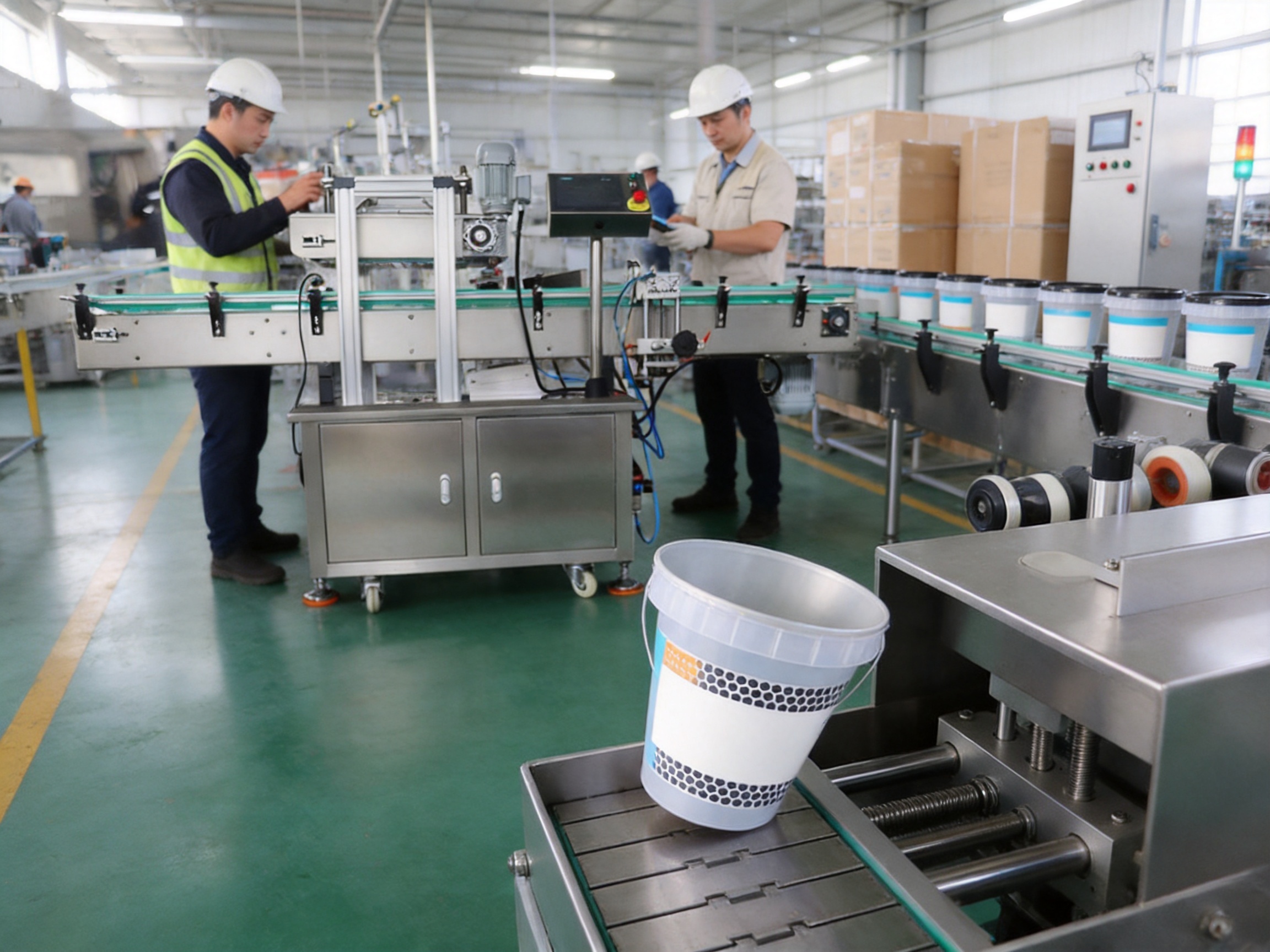
Introduction to Automatic Conical Pail Labeling
Industrial pails and drums are widely used for paints, coatings, lubricants, adhesives, chemicals, food ingredients, pharmaceutical materials, and household products. Although these containers appear simple, labeling them accurately can be considerably more difficult than labeling conventional bottles. A pail may have a tapered or conical body, a curved surface, a movable handle, a large diameter, and strict requirements for label orientation. These factors create challenges for manual labeling and for standard labeling machines designed primarily for cylindrical bottles.
The automatic conical pail labeling machine is developed specifically for this demanding application. It combines product conveying, handle lifting, detection, rotary positioning, label dispensing, and label pressing in one coordinated system. The machine is designed for round pails, conical pails, and small to medium-sized drum products that require consistent label placement and dependable production efficiency.
With a product diameter range of approximately 150 to 400 millimeters and a height range of approximately 200 to 500 millimeters, the equipment can accommodate a broad selection of industrial and commercial pail formats. It can apply labels to the pail body, edge, front, rear, or another predetermined position. Depending on the production requirement, the machine can also be configured for single-label, double-label, front-and-back, or fixed circumferential-position applications.
Unlike a basic sticker applicator, this system is designed around the physical characteristics of pails. The handle-lifting mechanism helps remove the handle from the labeling path. The rotary positioning mechanism controls the orientation of the container. The adjustable labeling head can be moved forward and backward, left and right, up and down, and by angle. These adjustments allow the machine to accommodate changes in product size, taper, label position, and application height.
This article examines the operating principles, technical advantages, application range, manufacturing strengths, configuration options, maintenance considerations, and selection factors associated with automatic conical pail labeling equipment.
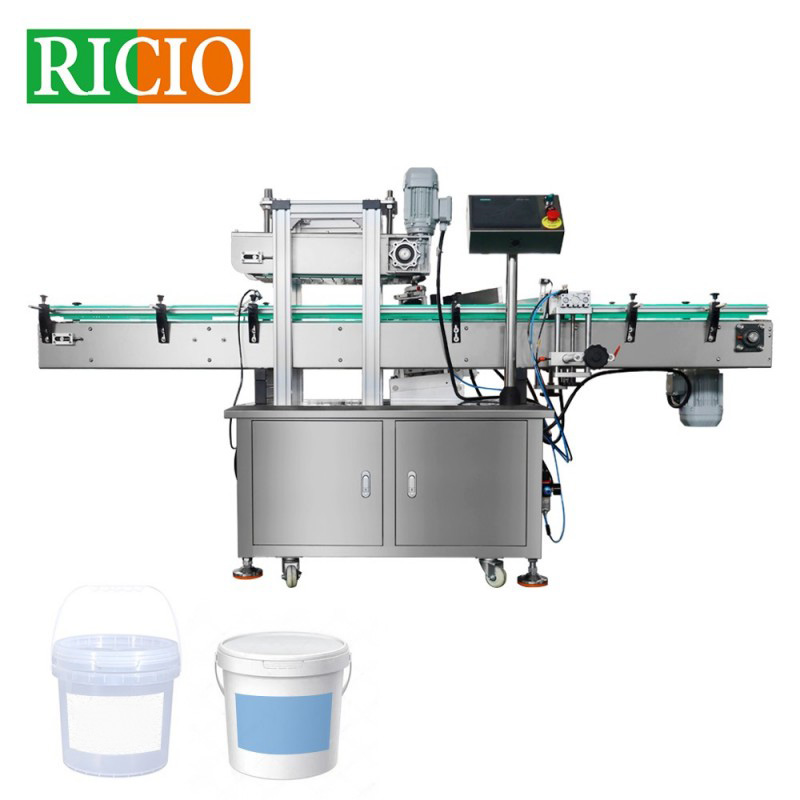
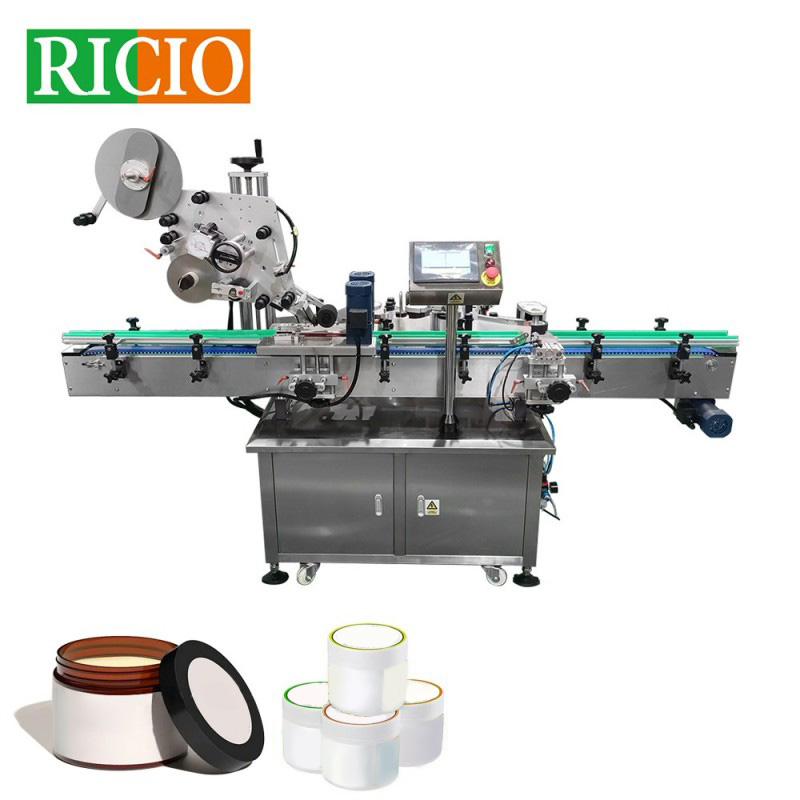
Automatic Conical Pail Labeling Machine
Why Pail Labeling Requires Specialized Equipment
Pail labeling is different from conventional round-bottle labeling in several important ways. A pail often has a wider diameter, greater weight, a stronger container wall, and a handle that can interfere with sensors, rollers, or the label head. Conical pails also have a changing diameter from the bottom to the top, meaning that a label applied to a tapered surface must be controlled carefully to prevent wrinkles, edge lifting, or uneven alignment.
The pail surface may also be made from metal, plastic, or another rigid material. Surface texture, dust, moisture, static electricity, and product residue can affect adhesive performance. In industries such as paint, chemicals, and lubricants, containers may be filled and closed in environments where splashes or small amounts of material are present. A labeling machine must therefore provide stable mechanical control and a suitable pressing process rather than simply dispensing a label at a fixed location.
Manual labeling creates additional problems. Operators may place labels at different heights or angles, particularly when handling heavy pails. The time required for manual positioning increases labor costs and limits line speed. Inconsistent positioning can also affect product appearance, retail presentation, barcode scanning, regulatory information, and customer confidence.
A standard flat-surface labeling machine may not be able to maintain sufficient contact with a curved or tapered pail. A conventional round-container machine may also lack a suitable handle-management system. If the handle enters the labeling path, it can block the label, interfere with product rotation, or cause the container to stop unexpectedly.
The automatic conical pail labeling machine addresses these challenges by treating the pail as a complete handling problem. The product must be introduced, detected, oriented, stabilized, labeled, and pressed in the correct sequence. Each stage contributes to the final labeling result.
Typical Labeling Challenges
One common challenge is inconsistent product orientation. If pails enter the machine with their handles or seams in different positions, a label intended for a particular front-facing area may not appear consistently. The rotary positioning system helps identify and align a preset labeling point before the label is dispensed.
A second challenge is the tapered body. When the product diameter varies along its height, the label must be applied at an appropriate height and angle. The adjustable labeling head and pressing components can be configured according to the container shape and label position.
A third challenge is handle interference. The handle-lifting mechanism raises and supports the handle so that it does not obstruct the application area. This is especially useful for handled pails used for paint, coatings, cleaning products, and construction materials.
A fourth challenge is label adhesion. A label that is only partially pressed may develop bubbles, creases, or lifted edges. The integrated pressing mechanism smooths the label onto the pail after dispensing, helping improve contact and appearance.
Operating Process of the Machine
The machine is designed as a continuous automatic system. Products may be transferred from an upstream filling, capping, or lid-pressing station, or they may be placed manually onto the conveyor. Once a pail enters the machine, each operational stage is coordinated through sensors and the control system.
Product Infeed and Conveying
The conveyor receives the pail and moves it toward the labeling area. The conveying structure is designed to support products with substantial diameter and weight. Depending on the product and line arrangement, the machine can be integrated with upstream and downstream equipment or operated as a stand-alone unit.
Stable conveying is important because even a small movement during label dispensing can affect label position. The product must arrive at the application area in a controlled manner. Adjustable guides and positioning components can be set according to pail diameter and production requirements.
Handle Lifting and Support
After entering the machine, the pail passes through the handle-lifting mechanism. The mechanism raises or supports the handle to keep it away from the labeling zone. This reduces the possibility of contact between the handle and the label, labeling head, sensor, or pressing assembly.
The handle-lifting function is one of the most important differences between a dedicated pail labeling machine and a general-purpose labeling system. Instead of requiring operators to manually reposition the handle, the machine performs this task as part of the automatic cycle. This improves consistency and reduces interruptions.
Product Detection
Photoelectric sensors detect the arrival and presence of the pail. The control system uses these signals to coordinate label dispensing and prevent unnecessary operation. The no-product-no-label function helps prevent labels from being released when a product is absent.
Product detection also supports automatic production counting and monitoring. When combined with label detection and positioning sensors, it allows the system to identify irregular operating conditions and reduce material waste.
Rotary Positioning
The rotary platform lifts and holds the pail while the rotating mechanism controls its orientation. The positioning sensor identifies the preset labeling point, such as a front panel, side seam, handle-related position, or circumferential location.
Rotary positioning is particularly useful when labels must be applied at a fixed point rather than anywhere around the container. It allows the machine to achieve a repeatable relationship between the label and the pail structure.
Label Dispensing and Application
Once the pail reaches the correct position, the labeling unit dispenses the label. The machine can be adjusted for label height, label length, product diameter, and application location. Depending on the configuration, the label may be applied to the body, edge, front, rear, or another specified area.
The equipment can support label heights of approximately 10 to 150 millimeters and label lengths of approximately 15 to 300 millimeters. Special label specifications can be considered according to customer samples and production requirements.
Label Pressing
After the label is dispensed, the pressing mechanism smooths it against the pail surface. This process helps improve adhesion and reduce bubbles, wrinkles, edge lifting, and incomplete contact.
Pressing is particularly valuable for curved and conical products. The pressure, position, and contact arrangement must be selected according to the pail material, label adhesive, label size, and surface geometry. For this reason, sample testing and commissioning are important before final machine configuration.
Key Advantages Over General-Purpose Labeling Machines
The automatic conical pail labeling machine offers several advantages compared with manual labeling, simple conveyor labelers, and general-purpose round-container machines.
Dedicated Compatibility with Pails and Drums
The equipment is built around the dimensions and handling characteristics of pails. It can process round pails, conical pails, and small to medium-sized drum products. Its product range covers diameters of approximately 150 to 400 millimeters and heights of approximately 200 to 500 millimeters, subject to the specific product configuration.
This dedicated compatibility helps reduce the compromises often associated with adapting a bottle labeling machine to a large pail. A pail-specific system can provide more suitable product support, handle clearance, positioning control, and pressing arrangements.
Improved Label Positioning
Inconsistent label position can make products appear unprofessional and may affect barcode or text readability. The rotary positioning mechanism and photoelectric detection system help maintain a repeatable application point.
The stated labeling accuracy can reach approximately plus or minus 1.5 millimeters under suitable product conditions. Actual accuracy depends on container size, roundness, hardness, softness, surface condition, label material, adhesive behavior, and operating speed. Nevertheless, the combination of positioning and pressing provides a more controlled process than manual application.
Reduced Manual Labor
Manual labeling requires operators to lift, orient, label, and press each pail. This can be physically demanding, especially when the containers are filled or made from heavy materials. Automation reduces the amount of repetitive work and allows personnel to focus on quality inspection, material supply, and production management.
The machine can receive pails from a previous process or allow manual loading when a fully integrated line is not required. This flexibility makes it suitable for both developing production lines and established factories seeking to automate a specific stage.
Lower Label Waste
The no-product-no-label function prevents unnecessary label release when a pail is missing. Label detection and automatic correction functions can further help identify problems in the dispensing process.
Lower label waste is valuable for products using high-quality printed labels, regulatory labels, barcoded labels, or labels with multiple colors and special finishes. Reducing rejected labels also improves production cost control.
Support for Multiple Labeling Modes
The same machine platform can support different labeling requirements. A factory may require one large body label for one product and two smaller labels for another. Other applications may require front-and-back labeling or a fixed position relative to the handle.
By providing adjustable labeling positions and optional additional labeling units, the equipment can be adapted to different product formats without requiring a completely separate machine for every application.
Convenient Adjustment
The labeling unit can be adjusted forward and backward, left and right, up and down, and by angle. These adjustment directions are important because pails vary in height, diameter, taper, handle design, and label location.
Compared with a machine designed around one fixed container, a multi-axis adjustment structure provides greater flexibility during product changeover. Operators can fine-tune the system during commissioning and maintain suitable positioning when changing between related pail formats.
Suitable for Demanding Industries
The stainless steel and aluminum alloy construction is suitable for production environments that require durability, cleanability, and stable performance. The machine can be used in coating, paint, lubricant, adhesive, food ingredient, daily chemical, pharmaceutical, toy, and chemical pail packaging applications.
Different industries may have different hygiene, cleaning, traceability, and material compatibility requirements. The machine configuration can be reviewed according to the actual factory environment and product characteristics.
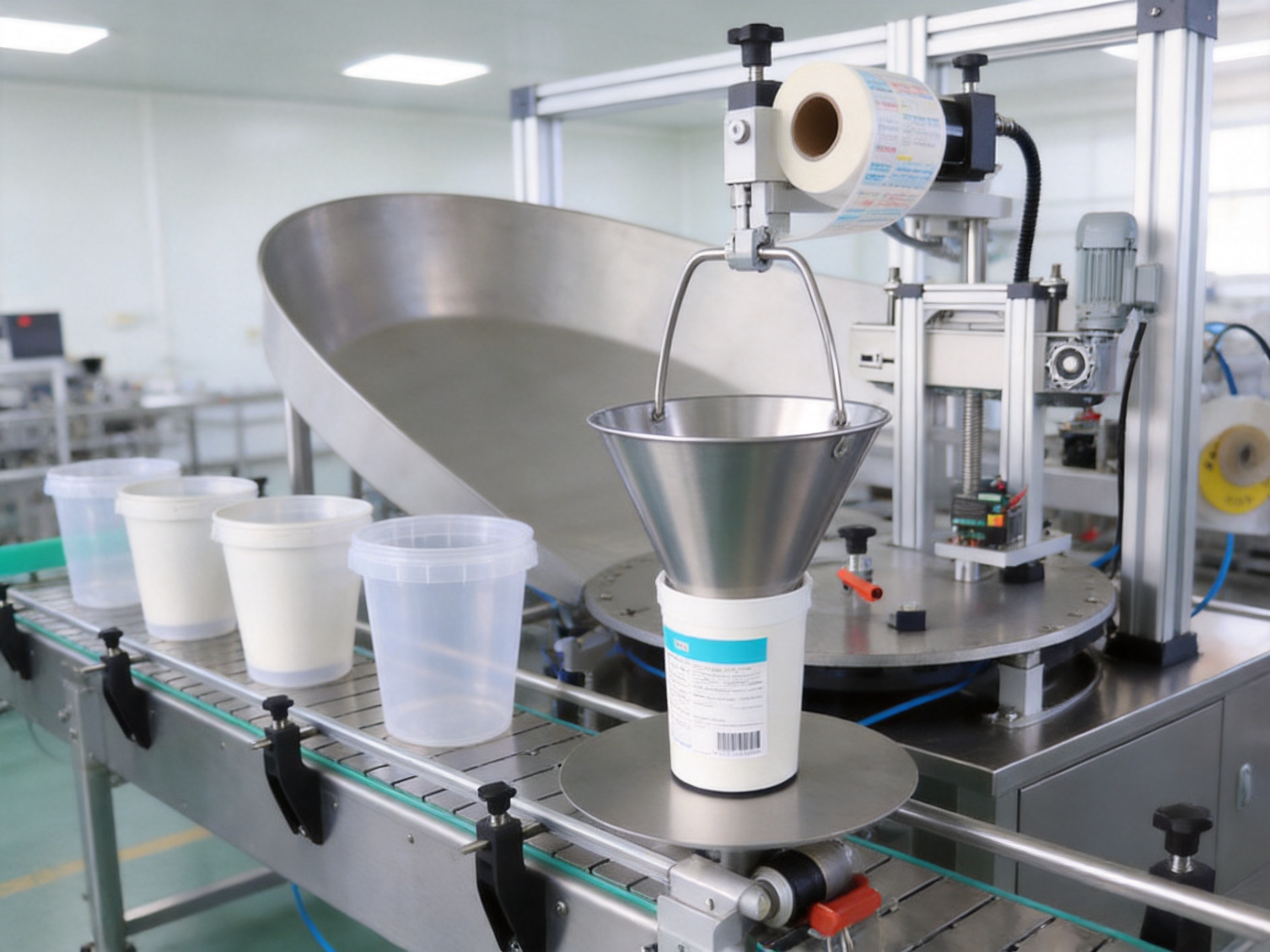
Technical Specifications
The following table summarizes the principal specifications of the automatic conical pail labeling machine. These values are reference parameters. Final specifications may be modified according to product samples, label materials, line configuration, and customer requirements.
| Item | Reference Specification |
|---|---|
| Machine application | Round pails, conical pails, and small to medium-sized drums |
| Power supply | AC 220 V, 50/60 Hz; variable if required |
| Power consumption | Approximately 1,000 W |
| Labeling speed | Approximately 10–25 pieces per minute, adjustable |
| Labeling accuracy | Approximately ±1.5 mm under suitable product conditions |
| Air pressure | Approximately 0.4–0.6 MPa |
| Product diameter | Approximately 150–400 mm |
| Product height | Approximately 200–500 mm |
| Label height | Approximately 10–150 mm |
| Label length | Approximately 15–300 mm; customization available |
| Inner film roll diameter | Approximately 76 mm minimum |
| Outer film roll diameter | Approximately 300 mm maximum |
| Net weight | Approximately 250 kg |
| Packaging dimensions | Approximately 2,000 × 800 × 1,300 mm |
The practical labeling speed depends on pail dimensions, label dimensions, label material, product spacing, positioning requirements, and the overall production rhythm. A larger pail or a more complex front-and-back labeling cycle may require a lower speed than a simple single-label application.
Similarly, accuracy should not be considered as an isolated machine value. Pail roundness, container deformation, surface cleanliness, handle position, label elasticity, adhesive characteristics, and the stability of the upstream conveyor can all influence the final result. A complete sample test is recommended for applications requiring strict positioning tolerance.
Control System and Operator Interface
The machine uses a touch-screen human-machine interface to make daily operation more convenient. Operators can set production parameters, adjust speed, switch functions, and monitor basic operating conditions through the interface.
Parameter Setting
Parameters may include labeling delay, product detection timing, label dispensing length, positioning sequence, pressing operation, and conveyor speed. Proper parameter setting allows the equipment to match the movement and dimensions of different pails.
When several product formats are used, stored or protected parameters can simplify changeover. Permission protection can also help prevent unauthorized changes to critical settings.
Production Counting
The control system can record the number of labeled products. Production counting helps operators compare actual output with planned output, monitor line performance, and identify interruptions.
Automatic Stop and Reminders
The machine can support automatic stopping functions and production quantity reminders. These features can help coordinate packaging batches, material changes, shift management, and quality inspection.
Standby and Energy Management
Power-saving standby functions can reduce unnecessary operation during temporary production pauses. This is useful when the labeling machine is connected to a line that does not operate continuously.
Mechanical Structure and Manufacturing Strengths
The performance of an automatic labeling machine depends not only on its control software but also on the accuracy and quality of its mechanical structure. Labeling requires coordinated motion between the conveyor, product holder, rotary mechanism, dispensing assembly, sensors, and pressing components. Small mechanical inaccuracies can create visible label deviation.
The manufacturer behind this equipment specializes in the research, development, and production of labeling machinery. Its manufacturing background includes in-house precision machining capabilities, complete machine assembly, and commissioning. This provides a stronger foundation than a business that only purchases standard components and assembles machines without control over core mechanical parts.
In-House Precision Machining
The company developed from the acquisition of a machinery parts factory and has established multiple CNC machining centers. CNC machining allows important components to be produced with controlled dimensions and repeatable tolerances.
For a pail labeling machine, precision machining is relevant to guide rails, brackets, positioning structures, rotating assemblies, mounting plates, shafts, and other parts that influence alignment. Accurate parts help reduce unnecessary adjustment and support more stable long-term operation.
Integrated Manufacturing and Assembly
Control over the process from component machining to complete machine assembly enables better coordination between mechanical and electrical design. The team can identify whether a problem is caused by a component, a mounting relationship, a sensor position, or a control parameter.
This integrated approach can shorten the feedback cycle during development and commissioning. It also makes it easier to implement customized solutions for special pail dimensions, unusual label locations, additional labeling heads, or line integration requirements.
Testing and Commissioning
Labeling machines require more than a visual assembly inspection. The manufacturer must verify product movement, label feeding, sensor response, label position, pressing quality, and emergency stop behavior. Testing with customer samples is particularly important for conical pails because the taper and handle geometry can vary considerably.
Commissioning allows the technical team to establish practical parameters for the product rather than relying only on theoretical dimensions. It also helps determine whether optional components such as an additional labeling unit, coding printer, or rejection system are needed.
Quality Management
The company manages production and assembly according to the ISO 9001 international quality system. A quality management approach helps establish procedures for design, procurement, assembly, inspection, commissioning, and customer service.
Quality management does not eliminate the need for application testing, but it supports consistency in the way equipment is produced and evaluated. This is important for customers purchasing machines for continuous industrial use.
International Experience
The manufacturer exports labeling equipment to more than 40 countries and regions. International experience exposes the technical team to different product materials, electrical standards, production layouts, packaging regulations, and operating expectations.
Such experience is useful when designing equipment for customers in food, pharmaceutical, chemical, cosmetics, daily chemical, and industrial packaging markets. It can also support communication regarding documentation, installation, training, spare parts, and future expansion.
Optional Functions and Line Integration
The automatic conical pail labeling machine can be equipped with optional functions according to the customer’s production requirements. These options allow the machine to develop from a stand-alone labeler into a more complete packaging automation station.
Thermal Coding Printer
A thermal coding printer can be used for printing production dates, batch numbers, lot information, and other variable data. This option is useful when the customer needs high-contrast printed information on the label or another compatible packaging surface.
Inkjet Printer
An inkjet printer can provide flexible variable-data marking for production codes, traceability information, barcodes, or other identification requirements. The choice between thermal printing and inkjet printing depends on the label material, printing surface, required resolution, ink compatibility, and production environment.
Automatic Feeding Device
An automatic feeding device can reduce manual product loading and support a more continuous production line. It may be connected to an upstream filling, capping, lid pressing, or conveying system.
Automatic Collection Device
An automatic collection device can receive labeled pails after application and guide them toward palletizing, boxing, storage, or another downstream process. This reduces manual handling after labeling.
Additional Labeling Unit
An additional labeling unit can support products requiring multiple labels. For example, a pail may require a main branding label, a safety label, a back label, or a regulatory information label.
Unlabeled Product Rejection
A rejection system can remove products that do not receive a label correctly or that fail a detection check. This can help protect downstream packaging processes and reduce the chance that incorrectly labeled products reach shipment.
The appropriate combination of options depends on production volume, quality requirements, available floor space, product variation, and the desired level of automation.
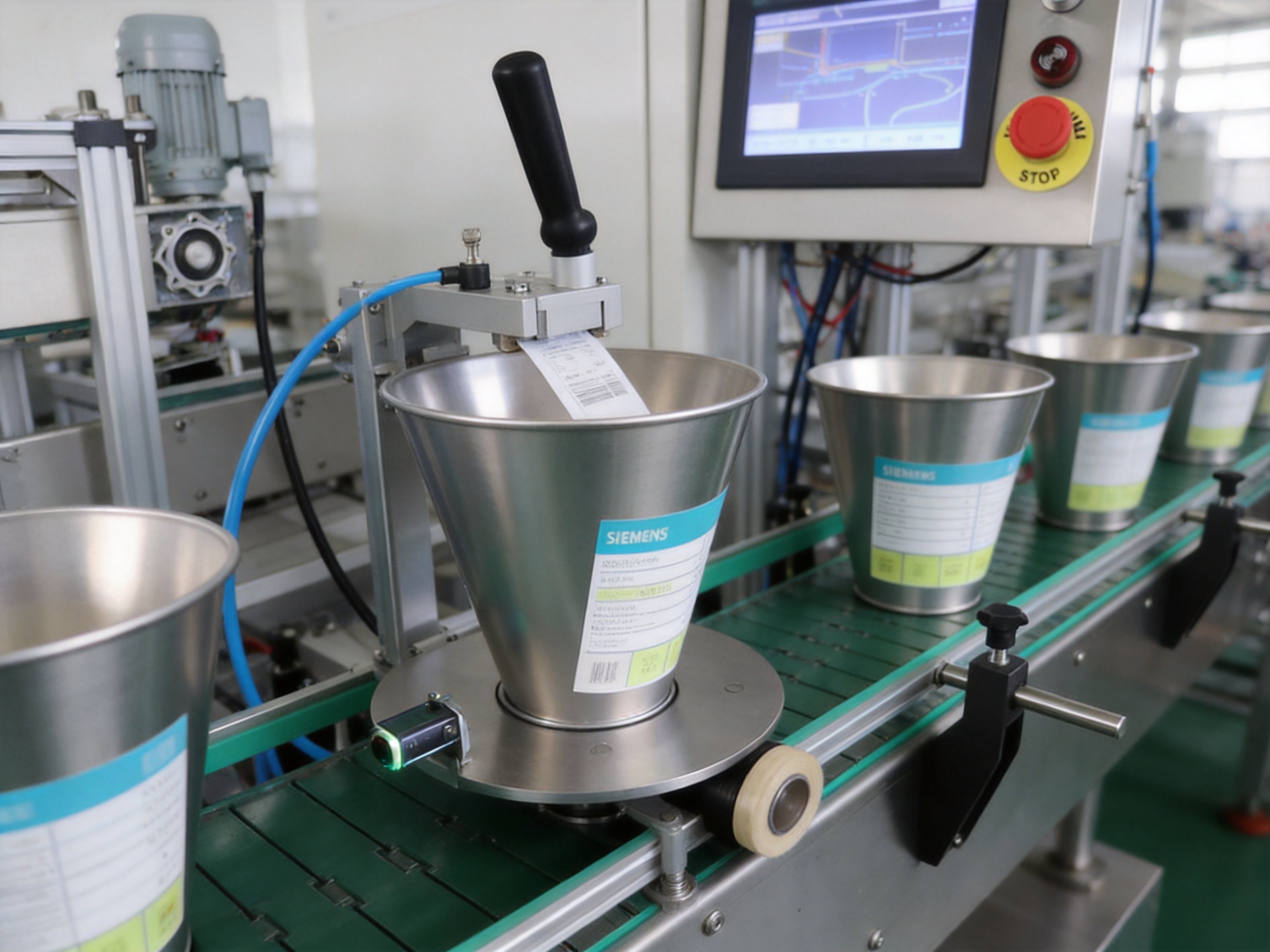
Applications Across Different Industries
Paint and Coating Pails
Paint and coating products are commonly packed in handled plastic or metal pails. Their labels may include color information, product specifications, safety statements, batch data, and application instructions. Consistent label placement improves shelf presentation and helps users identify products quickly.
The machine’s handle-lifting and rotary-positioning functions are especially useful for paint pails where the label must be placed in relation to the handle or a specific front-facing position.
Lubricant and Automotive Product Containers
Lubricants, greases, additives, and automotive chemicals may be supplied in pails or small drums. These products often require clear identification, batch tracking, and durable label adhesion. Automatic pressing can help ensure contact between the label and the curved container surface.
Chemical and Industrial Drums
Chemical products may require hazard information, handling instructions, product codes, and traceability data. Label position and legibility are important for warehouse handling, transport, and regulatory compliance.
Before selecting the final configuration, the customer should evaluate the chemical environment, cleaning procedures, container material, label adhesive, and any requirements for corrosion resistance or special machine protection.
Food Ingredient Containers
Food ingredients and bulk food products may be packaged in pails or drum-shaped containers. The stainless steel and aluminum alloy structure can support applications where cleanability is important. The final machine design should be reviewed according to hygiene procedures and the applicable production environment.
Daily Chemical and Household Products
Cleaning products, detergents, adhesives, and other daily chemical products may be supplied in larger pails for commercial or industrial users. Consistent labeling improves brand recognition and helps communicate usage and safety information.
Pharmaceutical and Healthcare Materials
Some pharmaceutical, healthcare, and laboratory materials are packed in handled containers. Such applications may require controlled labeling, traceability, production records, and careful cleaning procedures. The machine can be evaluated for the specific container, label, and environmental requirements.
Installation, Changeover, and Maintenance
Correct installation is essential for achieving the expected performance of any labeling machine. The equipment should be placed on a stable floor with sufficient space for operation, maintenance, material loading, and product discharge. Electrical power and compressed air should meet the stated requirements.
The reference air pressure range is approximately 0.4 to 0.6 MPa. The factory air supply should be clean and stable, with suitable filtration and moisture control where necessary. Unstable air pressure can affect pneumatic handle lifting, pressing, or product positioning.
Initial Setup
During initial setup, the operator should confirm conveyor height, side guide position, product detection sensor location, label roll direction, label head angle, pressing mechanism position, and rotary positioning parameters.
A small group of product samples should be run before continuous production begins. The operator can then inspect label height, horizontal alignment, circumferential position, adhesive contact, edge condition, and the relationship between the label and the handle.
Product Changeover
When changing between pail sizes, operators may need to adjust guides, supports, sensor positions, label head height, pressing components, and stored control parameters. The extent of adjustment depends on how different the products are.
Using standardized product information and clearly identified adjustment points can help reduce changeover time. If several products share similar dimensions, parameter protection and repeatable mechanical scales can make the process more efficient.
Routine Cleaning
Label adhesive residue should be removed from the label head, pressing components, guides, and conveyor areas according to the recommended cleaning method. Accumulated adhesive can attract dust and affect label movement or pressing quality.
In chemical, paint, and food-related environments, cleaning frequency may need to be increased. Operators should use cleaning agents that are compatible with the machine’s stainless steel, aluminum alloy, plastic, rubber, and electrical components.
Inspection of Wear Components
Rollers, belts, pressing pads, bearings, sensors, and pneumatic components should be inspected periodically. Worn or contaminated components can cause slipping, unstable conveying, delayed detection, or inconsistent label application.
Label rolls should also be stored in a suitable environment. Excessive heat, humidity, dust, or pressure can affect the label liner and adhesive. Proper label storage contributes to stable machine performance.
How to Select the Correct Configuration
Customers should provide detailed product and label information before final machine selection. The most useful information includes pail diameter, height, taper angle, material, filled weight, handle design, lid configuration, surface condition, label dimensions, label material, adhesive type, and desired application position.
Photos and physical samples are valuable because nominal dimensions do not always describe the complete product shape. A pail may have ribs, recessed areas, seams, handles, rolled edges, or other features that affect label placement.
Questions About Product Dimensions
The customer should confirm the smallest and largest product diameters and heights. If products have different taper angles, these should also be identified. The filled weight may affect conveyor and lifting requirements even when the external dimensions remain the same.
Questions About Label Design
The label length, height, liner material, adhesive type, roll direction, gap between labels, and maximum roll diameter should be specified. Transparent labels, highly elastic films, very narrow labels, and labels with unusual liner characteristics may require additional testing.
Questions About Application Position
The customer should explain whether the label must face the handle, avoid the handle, align with a seam, appear on the front or rear, or wrap around a fixed portion of the pail. The required position determines the sensor and rotary positioning arrangement.
Questions About Production Requirements
The required output per minute, operating hours per day, number of product formats, upstream and downstream equipment, and desired level of automation should be considered. A customer producing only one pail format may prioritize speed and simplicity, while a contract packer may prioritize flexibility and rapid changeover.
Recommended Production Workflow
A reliable production workflow begins with sample evaluation. The customer provides representative pails and labels, including the smallest and largest sizes expected during production. Technical personnel then evaluate conveying, handle clearance, product positioning, label dispensing, pressing quality, and changeover requirements.
The next stage is configuration design. The machine may be specified with one labeling unit or multiple units, manual loading or automatic feeding, standard detection or expanded inspection, and a basic discharge or automatic collection system.
After manufacturing and assembly, the machine is tested using the approved product samples. Parameters are adjusted and the labeling result is inspected. If the customer has strict requirements for label position, a larger sample quantity may be used to evaluate consistency across a production cycle.
Installation and operator training should cover machine startup, label loading, product adjustment, parameter operation, cleaning, troubleshooting, and safety procedures. Clear documentation helps operators maintain consistent results after commissioning.
Safety and Operational Considerations
Operators should be trained before using the machine. Hands should be kept away from moving conveyors, rotating mechanisms, lifting assemblies, label dispensing rollers, and pressing components while the machine is operating.
Emergency stops should be tested according to the factory’s safety procedures. Guards and protective covers should remain in place during production. Electrical and pneumatic maintenance should be performed by qualified personnel after the machine has been safely isolated.
Because pails can be heavy, manual loading areas should be designed to reduce lifting strain. If filled pails are handled, the customer should evaluate ergonomic requirements and consider automatic feeding or transfer equipment.
Q&A About Automatic Conical Pail Labeling Machines
What types of products can the machine label?
The machine is intended for round pails, conical pails, and small to medium-sized drum products. Typical applications include paint pails, coating containers, lubricant pails, chemical drums, food containers, adhesive pails, daily chemical products, pharmaceutical materials, and other handled containers.
Can it label tapered or conical pails?
Yes. The machine is specifically designed to support conical and tapered pails. The labeling head, pressing mechanism, and positioning components can be adjusted according to the product shape. Testing with actual samples is recommended because taper angle and surface design vary among manufacturers.
Can the handle interfere with labeling?
The machine includes a handle-lifting and support mechanism intended to move the handle away from the labeling area. This reduces interference during positioning and application. The final handle arrangement should be tested with the actual pail design.
Can the label be placed at a fixed position?
Yes. The rotary positioning mechanism and positioning sensor can be configured to apply the label at a predetermined point. This may include a front-facing position, a rear position, a location relative to the handle, or a fixed circumferential position.
Can it apply more than one label?
Yes. The machine can support single-label, double-label, front-and-back, and other multi-label configurations. An additional labeling unit may be added when the application requires separate labels at different positions.
What is the labeling speed?
The reference speed is approximately 10 to 25 pails per minute. Actual speed depends on product diameter, product height, label size, label position, positioning cycle, pressing requirements, and production rhythm.
What labeling accuracy can be expected?
The reference labeling accuracy is approximately plus or minus 1.5 millimeters under suitable operating conditions. Actual results depend on pail roundness, surface condition, product hardness, label characteristics, positioning stability, and correct machine adjustment.
Can the machine print dates or batch numbers?
Optional thermal coding printers and inkjet printers can be added for production dates, batch numbers, traceability codes, and other variable information. The printer selection depends on the required print surface, resolution, ink or ribbon characteristics, and production environment.
Does the machine require compressed air?
Yes. The reference air pressure requirement is approximately 0.4 to 0.6 MPa. The customer should provide a suitable, stable, and properly filtered air supply.
Can the machine be integrated into an existing line?
Yes. It can receive products from an upstream station or be loaded manually. Optional automatic feeding and collection devices can support integration with filling, lid pressing, coding, packing, and other packaging equipment.
Is the machine suitable for food or pharmaceutical applications?
The machine’s stainless steel and aluminum alloy construction supports applications where durability and cleanability are important. However, the final suitability must be evaluated against the customer’s hygiene standards, product properties, cleaning procedures, and regulatory requirements.
Can special sizes be accommodated?
Special product and label sizes can be considered. The customer should provide product samples, drawings, or detailed dimensions so the technical team can evaluate mechanical compatibility and determine whether customized components are necessary.
How should the machine be maintained?
Routine maintenance includes cleaning adhesive residue, inspecting rollers and belts, checking sensors, confirming pneumatic pressure, tightening mechanical connections, and examining pressing components. Maintenance frequency should reflect production volume and the cleanliness of the operating environment.
Conclusion
The automatic conical pail labeling machine provides a specialized solution for one of the more challenging labeling applications in industrial packaging. Its design addresses the main difficulties associated with pails: large diameters, tapered bodies, curved surfaces, movable handles, heavy product weight, and strict label positioning requirements.
By combining conveying, handle lifting, product detection, rotary positioning, label dispensing, and label pressing, the machine creates a complete automatic process rather than relying on a single dispensing action. This integrated approach helps improve label consistency, reduce manual labor, limit label waste, and enhance the overall appearance of packaged products.
Its adjustable structure allows the machine to accommodate different pail diameters, heights, taper shapes, label dimensions, and application positions. Optional printers, feeding systems, collection devices, additional labeling heads, and rejection units allow the equipment to grow with production requirements.
The manufacturer’s strengths extend beyond the basic machine concept. In-house CNC machining, precision component production, complete assembly, commissioning, ISO 9001-based quality management, and international project experience provide a foundation for reliable equipment development. These capabilities are particularly valuable when customers require customized product handling or integration with an existing packaging line.
For manufacturers of paint, coatings, lubricants, chemicals, adhesives, food ingredients, daily chemical products, pharmaceutical materials, and other pail-packed goods, automated labeling can improve productivity and reduce variation. A properly configured machine can deliver a stable, practical, and customizable solution for consistent pail labeling in modern packaging operations.
References
1. Product specification and application information for the automatic conical pail labeling machine, including operating range, label dimensions, speed, accuracy, power, and air pressure requirements.
2. ISO 9001, Quality Management Systems—Requirements.
3. General principles of industrial labeling equipment design, including product conveying, sensor-based detection, rotary positioning, adhesive label dispensing, and post-application pressing.
4. Packaging automation practices for paint, coating, lubricant, chemical, food ingredient, pharmaceutical, and daily chemical containers.
5. Manufacturer-provided information regarding CNC machining, labeling machinery development, complete machine assembly, commissioning, international applications, and customized automation solutions.
Product: Automatic Conical Pail Labeling Machine

related products
related News
 +86 13681850339
 sales@raxpack.com
 Building 6, No. 477 Tiefeng Road, Baoshan District, Shanghai, China
- Tabletop Labeling Machine
- Round Bottle Labeling Machine
- Automatic Tube Labeling Machine
- Pouch Labeling Machine
- Rotary Labeling Machine
- Syringe Labeling Machine
- Top Labeling Machine
- Single Side Sticker Labeling Machine
- Double Side Labeling Machine
- Bucket Labeling Machine
- Bottom Labeling Machine
- Corner Label Applicator
- Waist Sealing Labeling Machine
- Square Bottle Labeling Machine
