 English
 русский
 Español
 عربى



Automatic Lipstick Bottom Labeling Machine: Precision Automation for Small Cosmetic Packaging
2026-10-24
Content
- 1 Why Bottom Labeling Requires Specialized Equipment
- 2 Product Overview and Operating Principle
- 3 Key Advantages of the Automatic Bottom Labeling System
- 4 Applications in Cosmetics and Premium Small Packaging
- 5 Comparison with Manual and General-Purpose Labeling Methods
- 6 Technical Specifications
- 7 Customized Mold and Label Compatibility
- 8 Manufacturing Strengths and Engineering Capability
- 9 Integration into a Production Line
- 10 Quality, Appearance, and Production Control
- 11 Installation, Operation, and Maintenance
- 12 Purchasing Considerations for Manufacturers
- 13 Return on Investment and Business Value
- 14 Q&A: Automatic Lipstick Bottom Labeling Machine
- 14.1 What products can this machine label?
- 14.2 Can it label products other than lipstick?
- 14.3 How fast can the machine operate?
- 14.4 What labeling accuracy can be expected?
- 14.5 Are customized molds included?
- 14.6 What label sizes can the machine handle?
- 14.7 What utilities are required?
- 14.8 Will the machine scratch cosmetic packaging?
- 14.9 Can the machine be integrated with other equipment?
- 14.10 What information should be provided for a quotation?
- 14.11 Is the machine suitable for high-volume production?
- 14.12 What industries can use this equipment?
- 15 Conclusion
- 16 References
- 17 Product: Automatic Lipstick Bottom Labeling Machine
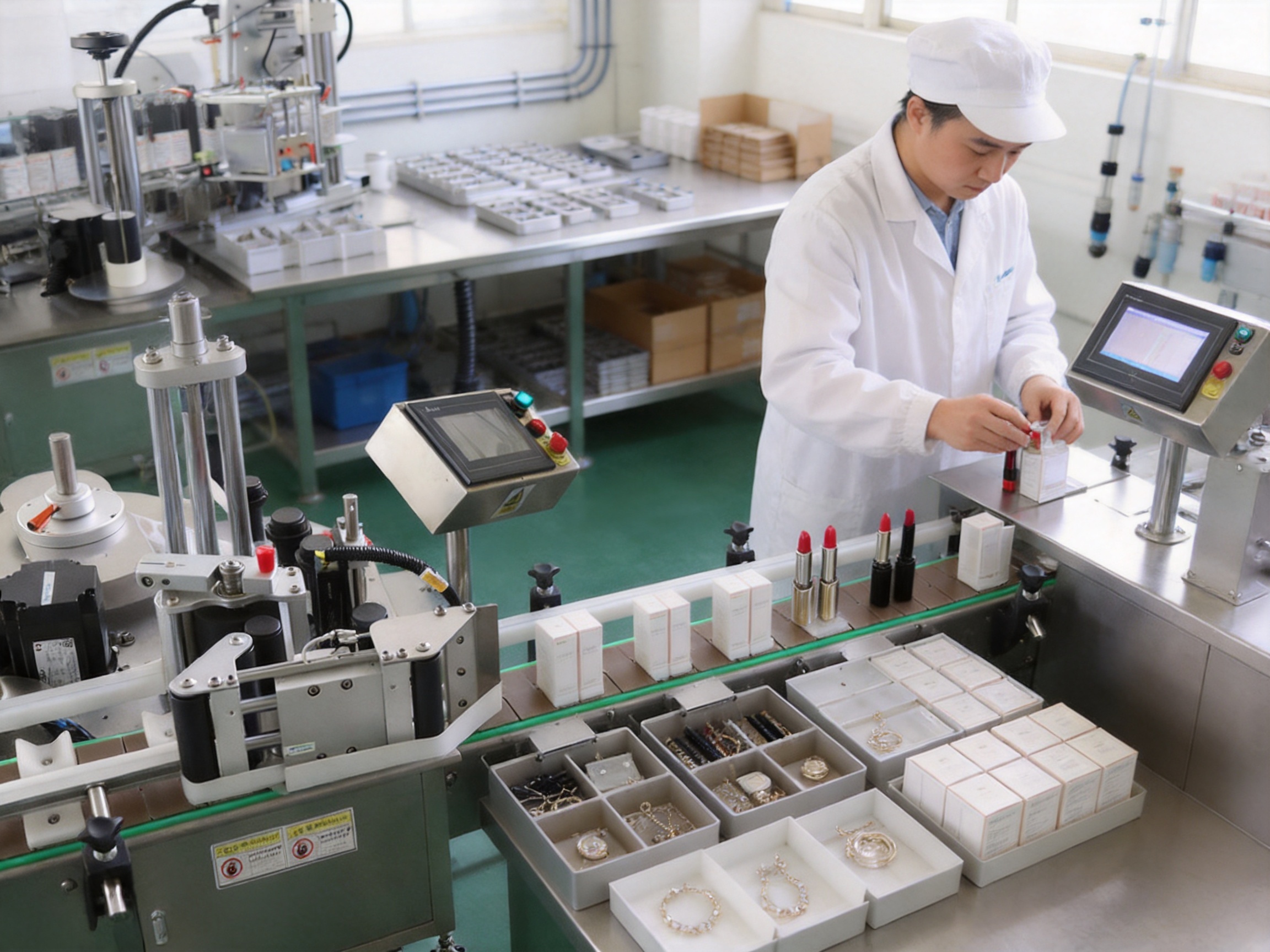
Small cosmetic packages demand a level of labeling precision that is difficult to achieve with manual application or general-purpose labeling equipment. Lipstick tubes, mascara containers, lip gloss packages, eyebrow pencils, compact cosmetic bottles, jewelry boxes, and other premium packages often have limited bottom surfaces, unusual geometries, and highly visible finishes. A label that is slightly off-center, wrinkled, scratched, or applied at an inconsistent angle can affect the perceived quality of the entire product.
The automatic lipstick bottom labeling machine is designed specifically for this type of application. It provides controlled, repeatable labeling on the bottom surface of compact products while reducing manual handling and protecting delicate packaging. The RXL-LB configuration uses customized product molds, photoelectric detection, automatic label dispensing, and a cylinder-driven application mechanism to place labels accurately and consistently.
Unlike a standard labeling machine intended for large bottles or long cylindrical containers, this specialized bottom labeler is designed around the practical challenges of small cosmetic packaging. Its positioning system stabilizes each item, its labeling station applies the label at a defined location, and its adjustable operating parameters allow the equipment to accommodate different product dimensions and label specifications.
For manufacturers seeking improved efficiency, consistent appearance, and reliable bottom-label placement, this equipment offers a practical alternative to labor-intensive manual labeling. It can be used as a standalone machine or integrated into a broader cosmetic, personal care, gift packaging, or small-product production line.
Why Bottom Labeling Requires Specialized Equipment
Bottom labeling is more demanding than it may appear. The bottom of a product is often smaller than its side surface and may contain a shallow recess, curved edge, uneven transition, or limited flat area. Cosmetic packaging may also be made from materials with polished, coated, metallic, or soft-touch surfaces. These characteristics make it difficult to apply a label evenly by hand.
Manual labeling can result in inconsistent placement from one unit to the next. Operators may position labels at different distances from the edge, apply varying pressure, or introduce wrinkles and air bubbles. Over a long production shift, fatigue can further increase the rate of defects. When packaging is premium and the label is associated with product information, batch identification, shade information, or brand presentation, these variations can become costly.
A general-purpose top or side labeling machine may not be suitable for compact cosmetic packages. Such machines are often designed for continuous surfaces with more available space and may not provide the specialized support required for bottom application. A small product can also move, rotate, or tilt during the labeling cycle unless it is held by a properly designed fixture.
The automatic lipstick bottom labeling machine addresses these issues through several coordinated functions:
First, the customized mold supports the product according to its shape and dimensions. The mold can be designed for cylindrical, square, hexagonal, or other compact packages. This keeps the item in a repeatable position as it moves toward the labeling station.
Second, a photoelectric sensor detects the presence of the product and triggers the labeling sequence. This minimizes the possibility of dispensing a label when a product is absent or incorrectly positioned.
Third, the label is dispensed automatically according to the programmed operating parameters. The cylinder-driven pushing mechanism then presses the label against the designated bottom surface.
Finally, the pushing mechanism returns to its initial position, allowing the product and mold to continue toward collection, inspection, or the next packaging operation.
Product Overview and Operating Principle
The RXL-LB automatic lipstick bottom labeling machine is intended for small products that require a stable, accurate, and visually clean label on their bottom surface. Its application range includes lipstick, mascara, lip gloss, eyebrow pencils, cosmetic bottles, compact boxes, jewelry packages, and other small premium containers.
During operation, the operator loads each product into a customized mold. Depending on the production arrangement, loading may be performed manually or incorporated into a larger automated feeding system. The product remains supported by the mold as it travels through the machine.
When the product reaches the labeling position, the photoelectric sensor confirms its presence. The control system coordinates the label-dispensing action with the position of the mold. The label is then presented to the bottom of the product, and the pneumatic cylinder drives the application mechanism forward.
The pushing mechanism applies controlled contact to the label and product surface. Its purpose is not simply to press the label downward, but to produce a repeatable application movement while limiting unnecessary contact with the product body. After the label is applied, the cylinder retracts. The mold then carries the labeled product onward.
This sequence is suitable for manufacturers that require a repeatable cycle rather than a fully continuous wraparound process. Because the product is held in a dedicated fixture, the machine can work with shapes that would be difficult to control using standard conveyor belts or unsupported rollers.
Parameters can be adjusted according to the product size, label dimensions, and desired production speed. With suitable product molds and label settings, the machine can reach approximately 30 to 60 pieces per minute. Actual performance depends on product geometry, label length, operator loading method, label material, and the time required for stable positioning.
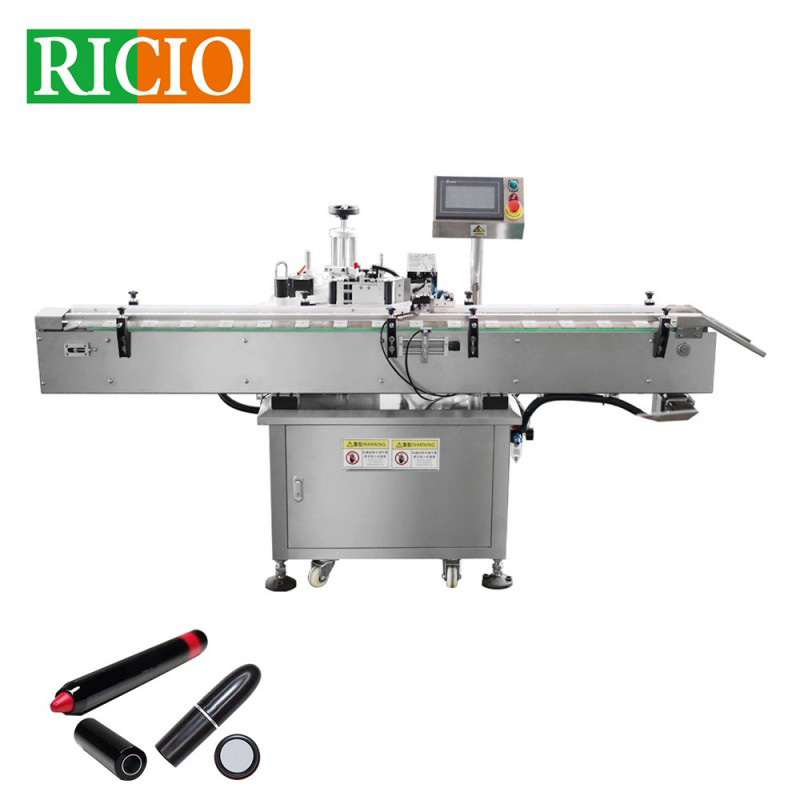
Automatic Lipstick Bottom Labeling Machine
Key Advantages of the Automatic Bottom Labeling System
Accurate Fixed-Position Labeling
One of the most important advantages of this equipment is its ability to place labels at a controlled, repeatable position. The mold determines the orientation of the product, while the sensor and application mechanism coordinate the label cycle. This reduces the variation commonly associated with manual application.
The stated labeling accuracy is approximately plus or minus 1 millimeter, subject to product characteristics, hardness, roundness, label quality, and other application conditions. For small cosmetic packaging, this level of repeatability can significantly improve visual consistency and reduce the number of units requiring rework.
Accurate placement is particularly important when a round label must be centered on a circular base or when a rectangular label must align with the edges of a square box. It also helps maintain a consistent appearance across different production batches.
Customized Molds for Multiple Package Shapes
Many competing general-purpose machines are limited by a fixed conveying or holding structure. The RXL-LB design instead relies on customized molds made according to product specifications. This approach allows manufacturers to stabilize compact packages with different shapes and dimensions.
Possible product geometries include round, square, hexagonal, and other specially shaped packages. The mold can be developed according to samples or technical drawings. It supports the product during movement and helps prevent rotation, shifting, or tilting before the label is applied.
Customized tooling is especially valuable for cosmetic manufacturers with several product lines. A business may use one package design for lipstick, another for mascara, and a third for a gift set or premium compact. With suitable changeover tooling and parameter adjustment, the same basic machine platform can support multiple applications.
Reduced Risk of Surface Damage
Premium cosmetic packaging often has a surface finish that must remain free from scratches, dents, scuffs, and pressure marks. The bottom labeling structure is designed to limit unnecessary friction between the mechanism and the visible product body.
The cylinder-driven pushing method provides a defined application movement. Rather than requiring an operator to press each label manually with varying force, the machine performs the contact action in a controlled and repeatable way. The mold also helps prevent the product from sliding against hard machine surfaces.
When the correct mold material, contact surface, pressure, and label adhesive are selected, the system can help reduce wrinkles, surface marks, and other appearance defects. Product testing remains essential, especially for soft plastic, coated metal, painted surfaces, and packages with decorative finishes.
Improved Production Efficiency
Manual bottom labeling is slow when each product must be picked up, positioned, labeled, inspected, and transferred by hand. The automatic system organizes these actions into a repeatable cycle. This allows one operator to load products efficiently while the machine manages label dispensing and application.
A production rate of approximately 30 to 60 pieces per minute can provide a substantial improvement over inconsistent manual work. The actual output depends on the product and line arrangement, but automation can reduce repetitive labor and make production planning more predictable.
Improved efficiency is not limited to speed. Consistent labeling can also reduce rework, label waste, rejected packaging, and the time required for final inspection. When the equipment is integrated into a larger process, labeled products can continue directly to collection, coding, packaging, or quality control.
Simple Operation and Adjustable Parameters
The machine is designed for automatic operation with convenient adjustment according to product requirements. Operators can set or adjust the labeling cycle, product position, label dimensions, and speed within the capabilities of the selected configuration.
A straightforward operating process helps reduce training time. The operator generally loads the product into the mold, monitors the labeling cycle, removes or transfers completed products, and performs routine checks. Clear procedures for mold replacement, sensor alignment, label roll installation, and pneumatic supply inspection can support stable daily operation.
Compact Design for Cosmetic Production Lines
With an approximate machine size of 2000 by 1000 by 1500 millimeters, the equipment is suitable for many cosmetic workshops, small precision packaging lines, and production areas where floor space must be managed carefully. Its compact structure allows it to be installed as an independent workstation or positioned alongside filling, assembly, inspection, and packaging equipment.
The machine uses a standard AC220V, 50/60Hz single-phase power supply configuration and has a listed power consumption of approximately 1200 watts. Power requirements may be adjusted according to the actual production line and customer requirements.
Applications in Cosmetics and Premium Small Packaging
The automatic lipstick bottom labeling machine is suitable for a broad range of compact products. Its principal applications include lipstick bottom labels, mascara bottom labels, lip gloss bottom labels, eyebrow pencil packages, and small cosmetic containers.
It can also be used for bottom labels on round bottles, square boxes, hexagonal packages, jewelry boxes, gift packaging, and selected daily chemical products. The most suitable products generally have a defined bottom surface that can be supported by a mold.
For lipstick, the bottom label may identify the shade, product code, ingredients, or other required information. Because the bottom surface is small and the container may have a polished or decorative finish, accurate centering is important.
Mascara and lip gloss packages may have cylindrical bodies with different cap and base configurations. A customized mold can hold the package in the required orientation while the bottom label is applied.
Jewelry boxes and premium gift packages may require an understated, clean label on the base. In this application, minimizing marks and maintaining a consistent distance from the edges can be more important than maximum line speed.
For small daily chemical products, the machine can help manufacturers replace inconsistent manual work with a controlled process. The suitability of any specific product should be confirmed through sample testing because base geometry, material hardness, adhesive properties, and label dimensions vary.
Comparison with Manual and General-Purpose Labeling Methods
Compared with Manual Labeling
Manual labeling has a low initial equipment cost and may be acceptable for samples, very short runs, or products that do not require strict cosmetic consistency. However, it depends heavily on operator skill and attention. Positioning, pressure, orientation, and cycle time can vary throughout the working day.
The automatic machine provides a more consistent process. The mold defines the product position, the sensor controls product detection, and the pneumatic mechanism performs the application action. These features reduce dependence on individual operator technique.
Automation also improves traceability and production planning. A company can establish standard operating parameters and repeat the process for future batches. This is more difficult when every product is labeled by hand.
Compared with Standard Side or Top Labelers
Side and top labeling machines are optimized for different application surfaces. They often use rollers, belts, or pressure plates to apply labels to the side, top, or circumference of a package. These mechanisms may not provide stable support for a small item whose bottom must be labeled.
The bottom labeling machine is designed around a vertical application action and a product-specific support mold. This makes it more suitable for limited bottom surfaces and compact packages. It does not attempt to use a universal conveyor arrangement for every shape; instead, it uses customized positioning to improve accuracy.
Compared with Universal Fixture Systems
A universal fixture can reduce tooling changes, but it may not hold every product with the same stability. Small packages often require close control to prevent movement during label application. A customized mold generally provides better positioning for a defined product family.
The trade-off is that new product shapes may require a new mold or modification. For manufacturers producing premium products with recurring specifications, the improved stability and appearance can justify this customized approach.
Compared with High-Speed Industrial Labelers
High-speed labeling equipment may achieve higher throughput for standardized bottles and long production runs. However, maximum speed is not always the primary requirement for cosmetic packaging. A high-speed machine may be excessive for a small product line, difficult to adapt to unusual package shapes, or less suitable for delicate surfaces.
The RXL-LB system emphasizes controlled positioning, flexible customization, and protection of product appearance. Its 30 to 60 pieces per minute range is appropriate for many small and medium cosmetic production operations, especially where quality and adaptability are more important than extreme line speed.
Feature |
Automatic Bottom Labeling Machine |
Manual Labeling |
General-Purpose Side or Top Labeler |
Product positioning |
Customized mold and sensor-controlled station |
Operator dependent |
Usually based on conveyor or standard fixture |
Bottom label suitability |
Designed specifically for bottom surfaces |
Possible but inconsistent |
May require modification |
Label placement consistency |
High repeatability when correctly set |
Varies by operator |
Depends on product compatibility |
Surface protection |
Controlled pushing and reduced unnecessary friction |
Depends on handling technique |
Depends on contact arrangement |
Shape flexibility |
Round, square, hexagonal, and customized forms |
Broad but labor intensive |
Often limited by standard parts |
Typical production speed |
Approximately 30–60 pieces per minute |
Variable and generally lower |
May be higher for compatible products |
Best application |
Small cosmetic and premium packages |
Samples and very small batches |
Standardized top or side labeling |
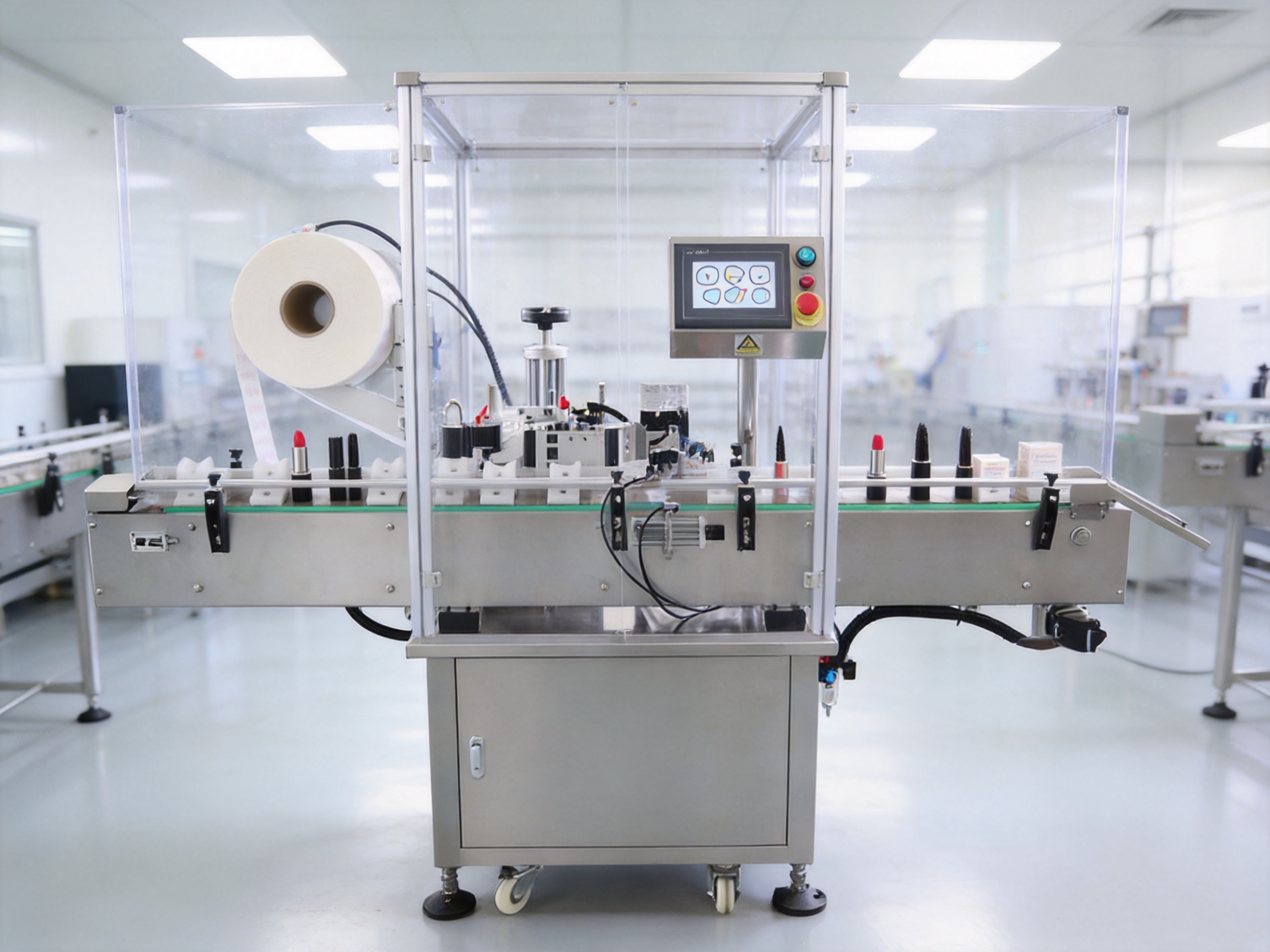
Technical Specifications
The following specifications describe the standard configuration. Final specifications may be adjusted according to the production line, product samples, label materials, and customer requirements.
Item |
Standard Specification |
Model |
RXL-LB |
Application |
Automatic bottom labeling for compact products |
Power supply |
AC220V, 50/60Hz, single-phase by default |
Power consumption |
Approximately 1200W |
Labeling speed |
Approximately 30–60 pieces per minute |
Labeling accuracy |
Approximately ±1mm, depending on product characteristics |
Air pressure |
0.4–0.6MPa |
Net weight |
Approximately 200kg |
Machine dimensions |
Approximately 2000 × 1000 × 1500mm |
Label diameter range |
Approximately Φ6–25mm where applicable |
Label width |
Approximately 20–40mm, customizable |
Label height or length |
Approximately 20–40mm, customizable |
Label roll inner diameter |
Approximately Φ40–76mm |
Maximum outer label roll diameter |
Approximately Φ300mm |
Product range |
Determined by product specifications and customized mold |
The technical data should be treated as a reference for the standard machine configuration. Label dimensions, product dimensions, speed, and accuracy should be confirmed through sample testing before final equipment selection. Products with soft bottoms, uneven surfaces, poor roundness, or high variation may require special tooling or different operating parameters.
Customized Mold and Label Compatibility
The mold is one of the most important components in the entire system. It is responsible for maintaining product position during transport and application. A well-designed mold should support the product without damaging its finish, while also allowing the bottom label to reach the intended surface.
When preparing for a machine quotation or technical evaluation, manufacturers should provide representative product samples or detailed drawings. Useful information includes overall height, body diameter, bottom diameter, corner radius, surface material, product hardness, weight, and any recessed or raised features on the base.
Label information is equally important. The machine can accommodate a range of label dimensions, with common specifications in the approximate 20 to 40 millimeter width and length range. Round labels may be supplied within an approximate 6 to 25 millimeter diameter range, depending on the configuration. Custom sizes can be considered when they are compatible with the product and dispensing system.
Label material, adhesive strength, liner thickness, label spacing, roll direction, and winding direction can all affect performance. A label that is too stiff may not conform properly to a slight bottom contour. An adhesive that is too aggressive may cause application problems during testing, while an adhesive that is too weak may not remain attached during transportation or use.
Sample testing is therefore recommended before mass production. Testing can confirm label release, product positioning, application pressure, cycle timing, and final appearance. It can also identify whether the mold needs protective contact material or additional alignment features.
Manufacturing Strengths and Engineering Capability
The company behind the equipment, Shanghai Ruixiao Packaging Technology Co., Ltd., operates as a labeling machinery manufacturer and supplier based in Shanghai, China. Its capabilities extend beyond simple machine assembly. The company has developed from an equipment assembly operation into a source manufacturer with in-house precision machining capability.
This manufacturing structure is important for specialized equipment such as a bottom labeling machine. Customized molds, brackets, shafts, plates, supports, and other mechanical parts often need to match the product application precisely. In-house machining can improve control over dimensions, fit, modification cycles, and replacement part development.
The company operates multiple CNC machining centers and maintains an experienced technical team. CNC machining supports the production of accurate mechanical components and helps maintain repeatability between design drawings and finished parts. For a machine that depends on mold alignment and controlled mechanical movement, dimensional consistency is directly related to application stability.
Managing core component machining and complete machine assembly within the same manufacturing organization can also shorten communication paths. Engineering staff can review the relationship between individual components and the completed labeling system. If a mold, guide, pushing plate, or support structure requires modification after sample testing, the relevant departments can coordinate the adjustment more efficiently.
The manufacturing process covers core component machining, machine assembly, commissioning, and application testing. This integrated approach is valuable for customized labeling equipment because performance depends on the interaction between mechanical parts, sensors, pneumatic components, control functions, and product tooling.
The company states that its production and quality activities are managed in accordance with the ISO 9001 international quality system. A quality management framework can support standardized inspection, documentation, process control, and corrective action. These practices are especially relevant for export machinery, where customers require stable performance, repeatable construction, and clear technical communication.
Precision Machining and Component Control
Precision machining allows the manufacturer to produce equipment components according to defined dimensions rather than relying entirely on external suppliers. CNC processing can be used for mold plates, mechanical supports, guide components, shafts, and other parts that require controlled geometry.
In-house capability also supports product development. A machine designed for a standard bottle may require significant modification when adapted to lipstick or compact cosmetic packaging. The ability to develop and machine new parts gives the engineering team greater flexibility during customization.
Assembly and Commissioning
After machining and component preparation, the machine is assembled and commissioned as a complete system. Commissioning can include checking product movement, mold alignment, sensor response, label dispensing, cylinder travel, pneumatic pressure, and control sequence timing.
For bottom labeling, commissioning should include real product tests. The machine may operate correctly with an empty mold but show different results when product weight, surface finish, or dimensional variation is introduced. Testing with actual containers and labels helps validate the complete application process.
International Supply Experience
The company exports labeling equipment to more than 40 countries and regions. International experience can help a manufacturer understand different production environments, electrical requirements, packaging standards, documentation expectations, and after-sales communication needs.
Its broader product range includes syringe labelers, round bottle labelers, square bottle labelers, double-sided labelers, high-speed labelers, and real-time print-and-apply systems. This product breadth indicates experience across pharmaceutical, healthcare, food and beverage, cosmetics, daily chemical, and chemical packaging applications.
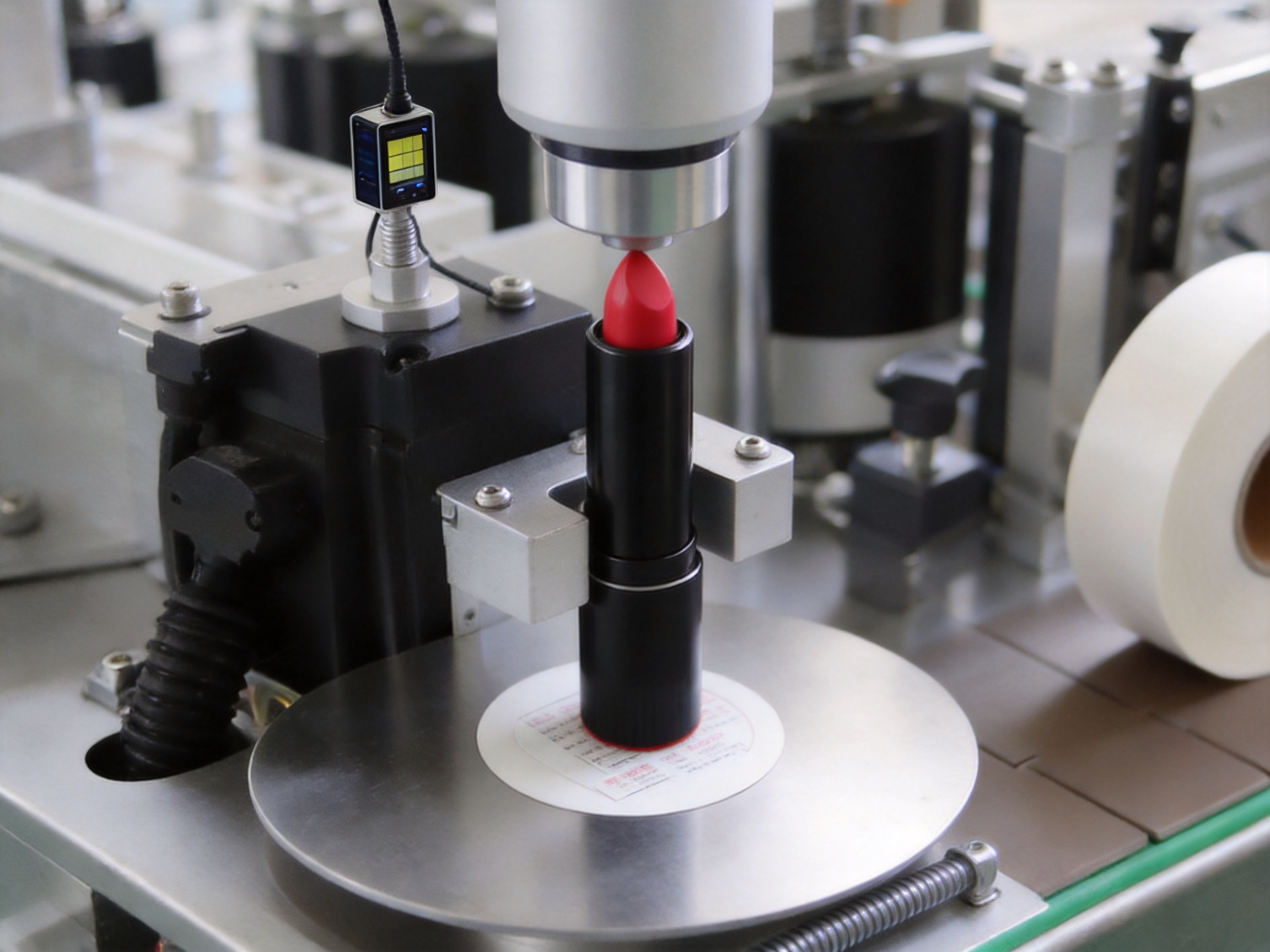
Integration into a Production Line
The automatic bottom labeling machine can be used as a standalone workstation or connected with upstream and downstream equipment. In a small cosmetic operation, an operator may load products into the molds and collect finished pieces manually. In a larger line, the machine may receive products from an automated feeder and transfer labeled items to inspection or packaging equipment.
Possible upstream processes include product assembly, filling, capping, cleaning, weighing, or visual inspection. Downstream processes may include barcode verification, inkjet coding, carton packing, tray loading, or final quality inspection.
Integration should be planned around product orientation and handling. If the product is loaded into the machine with a particular face or edge alignment, the upstream equipment must preserve that orientation. If the bottom surface contains a recess, the mold and application mechanism must be designed to reach the label area without interfering with other product features.
Line integration may also require communication between sensors, conveyors, control systems, and reject devices. For example, an inspection system can verify whether the label is present and correctly positioned after application. Products that fail inspection can then be removed before final packaging.
The machine’s standard power and air requirements should be considered during factory planning. A stable AC220V supply and compressed air at approximately 0.4 to 0.6MPa are required for the standard configuration. The plant should also provide sufficient space for operation, label roll replacement, mold changes, cleaning, and routine maintenance.
Quality, Appearance, and Production Control
Cosmetic packaging is judged not only by function but also by appearance. A label that is technically attached but visibly crooked may be unacceptable for a premium product. The automatic bottom labeling machine supports appearance control by improving the repeatability of product positioning and label application.
Quality control should begin with incoming labels and products. Labels should be checked for correct size, die-cut quality, adhesive condition, roll winding, and spacing. Products should be checked for consistent dimensions, clean bottom surfaces, and freedom from oil, dust, or moisture that could interfere with adhesion.
During operation, operators should monitor label presence, centering, wrinkles, bubbles, adhesion, and possible surface marks. The first pieces of each batch should be inspected after any change to product, label, mold, or machine settings.
Periodic checks are also recommended during longer production runs. Even when the equipment is stable, label roll tension, pneumatic pressure, product variation, and adhesive behavior can change. A simple inspection schedule can identify problems before a large quantity of product is affected.
For regulated or export products, manufacturers may also record production parameters and inspection results. This can support traceability and help identify the cause of any later packaging complaint.
Installation, Operation, and Maintenance
Installation Considerations
The machine should be installed on a stable, level foundation with adequate clearance around the operating area. Space is required for loading products, replacing label rolls, accessing the control system, changing molds, and performing maintenance.
Compressed air should be clean and sufficiently stable for the operating range. Filters, regulators, and drainage arrangements should be maintained to protect pneumatic components and keep cylinder movement consistent.
Electrical installation should follow the machine’s rated power supply and local safety requirements. Grounding, emergency stop access, guarding, and operator visibility should be checked before production begins.
Operating Procedure
A typical operating procedure begins with installing the correct mold and confirming that it matches the product. The operator then loads the label roll, checks the label direction and position, connects the air supply, and powers on the machine.
After the sensor and application position are checked, several test products should be run at a reduced speed. The operator can inspect label centering, pressure, product stability, and label adhesion. If the result is acceptable, the machine can be adjusted to the required production speed.
Operators should avoid placing products that are wet, contaminated, deformed, or outside the approved dimensional range into the mold. Such products can affect label application and may damage tooling or cause a blockage.
Routine Maintenance
Routine maintenance includes cleaning product contact surfaces, checking sensor lenses, inspecting label guides, verifying pneumatic pressure, and examining cylinder movement. Adhesive residue should be removed using an appropriate cleaning method that does not damage machine surfaces or product-contact materials.
Mechanical fasteners, guides, and moving components should be checked periodically for looseness or abnormal wear. Label roll supports and dispensing components should remain aligned so that the web travels smoothly.
Preventive maintenance helps protect accuracy and reduce unexpected downtime. Maintenance intervals should be adjusted according to production hours, product material, label adhesive, and environmental conditions.
Purchasing Considerations for Manufacturers
Before purchasing an automatic bottom labeling machine, manufacturers should define the product range and the expected production volume. A machine designed for one lipstick package may require additional molds for a mascara container or jewelry box. The number of product formats should therefore be discussed at the quotation stage.
Customers should provide product samples, label samples, drawings, or photographs with accurate dimensions. Important details include product diameter, bottom shape, total height, surface finish, label size, label material, and desired application position.
It is also useful to define the target production speed and acceptable labeling accuracy. A line designed for 30 pieces per minute may use different loading and inspection arrangements from a line designed for 60 pieces per minute.
Manufacturers should ask whether the machine will be operated independently or integrated into an existing line. Integration requirements can affect conveyor height, communication signals, product transfer direction, guarding, and control configuration.
Finally, the customer should confirm the scope of customization, mold supply, commissioning, technical documentation, training, spare parts, and after-sales support. A detailed technical agreement helps ensure that the final machine is evaluated against the correct product and label samples.
Return on Investment and Business Value
The business value of the machine comes from more than its nominal pieces-per-minute rate. By reducing manual handling, it can lower labor dependency and make staffing more predictable. By improving placement consistency, it can reduce rejected units, rework, and wasted labels.
For premium cosmetic products, preventing packaging damage can be particularly valuable. A scratched or dented container may need to be discarded even when the product inside is acceptable. A controlled bottom-labeling process helps reduce the risk of such losses.
Automation can also support brand consistency. When product packages are sold through retail, online, or international channels, customers expect the same appearance across batches. Consistent label positioning contributes to a professional presentation.
The machine may provide the greatest return when used for recurring production rather than occasional samples. Manufacturers producing several small cosmetic formats can increase its value by using interchangeable or product-specific molds across multiple campaigns.
Because the system is customizable, its long-term usefulness depends on the quality of the initial engineering discussion. Selecting the correct mold design, label specifications, application pressure, and control sequence is essential for achieving the expected result.
Q&A: Automatic Lipstick Bottom Labeling Machine
What products can this machine label?
It is designed for lipstick, mascara, lip gloss, eyebrow pencils, small cosmetic bottles, compact packages, jewelry boxes, gift boxes, and other products with a suitable bottom labeling surface. Round, square, hexagonal, and customized shapes may be supported through product-specific molds.
Can it label products other than lipstick?
Yes. The equipment is not limited to lipstick. It can be used for various compact cosmetic and premium packaging products, provided that the product dimensions and bottom surface are compatible with the machine and customized mold.
How fast can the machine operate?
The standard stated speed is approximately 30 to 60 pieces per minute. The actual speed depends on product size, label length, label material, mold design, loading method, and the required level of inspection.
What labeling accuracy can be expected?
The stated accuracy is approximately plus or minus 1 millimeter under suitable conditions. Actual results depend on product hardness, roundness, dimensional consistency, label quality, adhesive behavior, mold accuracy, and operating settings.
Are customized molds included?
The machine is designed to use customized molds made according to product specifications. The exact number of molds, mold materials, and customization scope should be confirmed in the equipment quotation and technical agreement.
What label sizes can the machine handle?
The reference specifications include label widths and lengths of approximately 20 to 40 millimeters, with customized sizes available. A round label range of approximately 6 to 25 millimeters is also listed where applicable. Final compatibility should be confirmed through sample testing.
What utilities are required?
The standard configuration uses AC220V, 50/60Hz, single-phase power and compressed air at approximately 0.4 to 0.6MPa. The power supply may be adjusted according to the customer’s production line and local requirements.
Will the machine scratch cosmetic packaging?
The machine is designed to reduce unnecessary friction and surface contact through customized product support and a cylinder-driven pushing mechanism. Nevertheless, final performance depends on mold materials, product coatings, label pressure, product cleanliness, and correct adjustment. Sample testing is recommended for delicate finishes.
Can the machine be integrated with other equipment?
Yes. It may operate as a standalone workstation or be integrated with feeding, inspection, coding, packaging, and conveying equipment. Integration requirements should be discussed before manufacturing so that product transfer, control signals, and machine height can be coordinated.
What information should be provided for a quotation?
Customers should provide product samples or drawings, product dimensions, bottom-surface details, label samples, label size, label material, desired application position, production speed, power requirements, and any special packaging or inspection requirements.
Is the machine suitable for high-volume production?
It can support continuous production within its designed speed range. For extremely high-volume operations, the manufacturer should evaluate whether multiple machines, automated feeding, additional molds, or a different high-speed configuration would be more appropriate.
What industries can use this equipment?
Typical industries include cosmetics, makeup, skincare, jewelry packaging, gift packaging, daily chemical products, and other small premium packaging sectors. The broader manufacturing company also supplies labeling solutions for food and beverage, pharmaceutical, healthcare, and chemical packaging applications.
Conclusion
The automatic lipstick bottom labeling machine is a specialized solution for manufacturers that need accurate, repeatable, and appearance-conscious labeling on compact products. Its combination of customized molds, photoelectric detection, automatic label dispensing, and cylinder-driven application addresses the practical difficulties of small bottom surfaces and delicate cosmetic packaging.
Compared with manual labeling, it offers improved consistency, lower dependence on operator technique, and better production efficiency. Compared with general-purpose top or side labelers, it is designed specifically for bottom application and provides more suitable product support. Its adjustable speed, compact structure, and customizable tooling make it suitable for small and medium cosmetic production lines as well as selected premium packaging applications.
The equipment’s value is strengthened by the manufacturer’s engineering and production capabilities. In-house CNC machining, experienced technical personnel, complete machine assembly, commissioning, and ISO 9001-based quality management support the development of customized labeling solutions. International export experience and a broader range of labeling machinery further support its ability to serve different packaging industries.
For the best result, manufacturers should evaluate the machine using actual products and labels. Correct mold design, product cleanliness, label quality, pneumatic stability, and appropriate application settings all contribute to final performance. When these factors are properly coordinated, the automatic bottom labeling machine can help cosmetic and premium packaging manufacturers improve efficiency, reduce manual errors, protect product appearance, and maintain consistent label placement across production batches.
References
1. Shanghai Ruixiao Packaging Technology Co., Ltd., Automatic Lipstick Bottom Labeling Machine technical information and standard configuration data.
2. ISO 9001, Quality Management Systems—Requirements.
3. General principles of pressure-sensitive label application and packaging line integration.
4. Industrial automation practices for photoelectric product detection and pneumatic positioning systems.
5. Packaging quality-control procedures for cosmetic containers and premium consumer products.
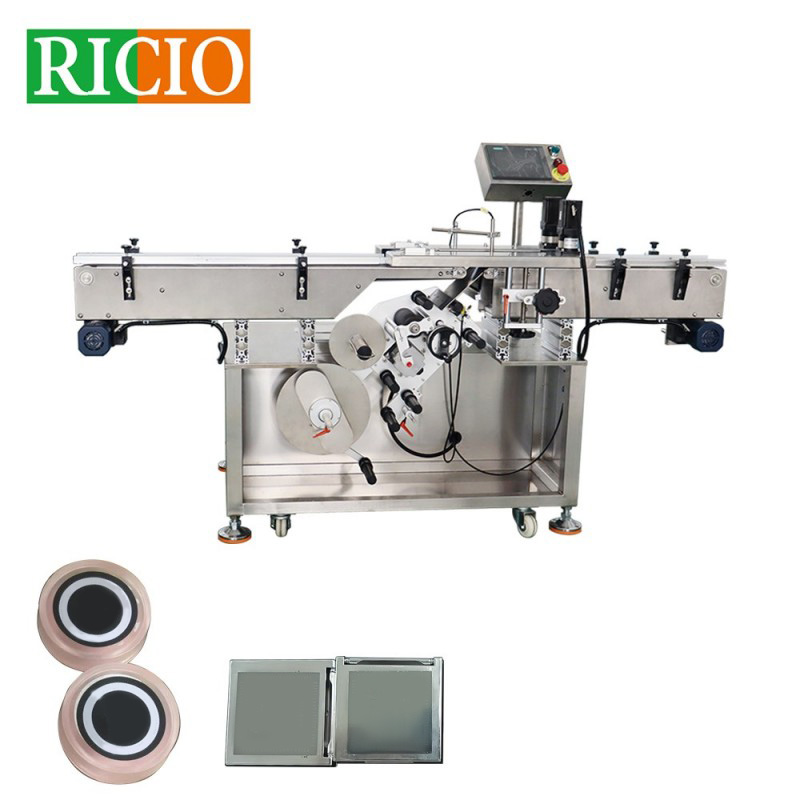
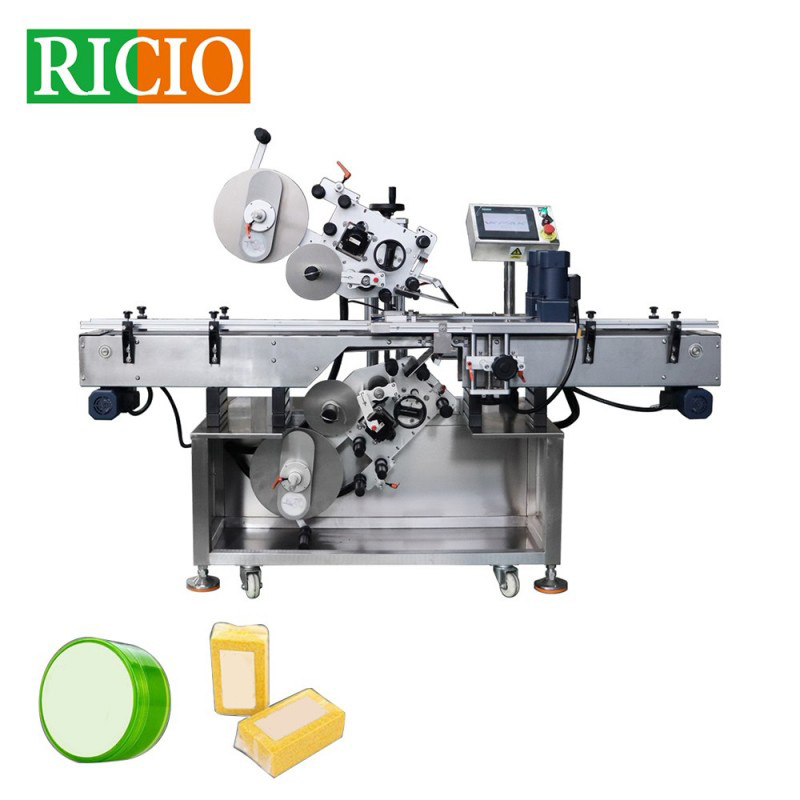
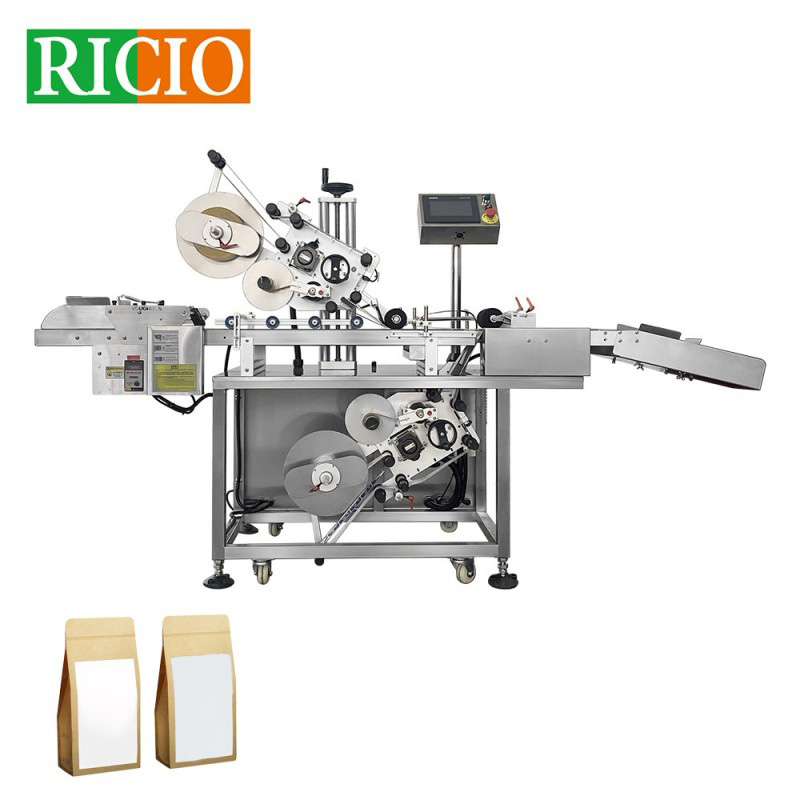
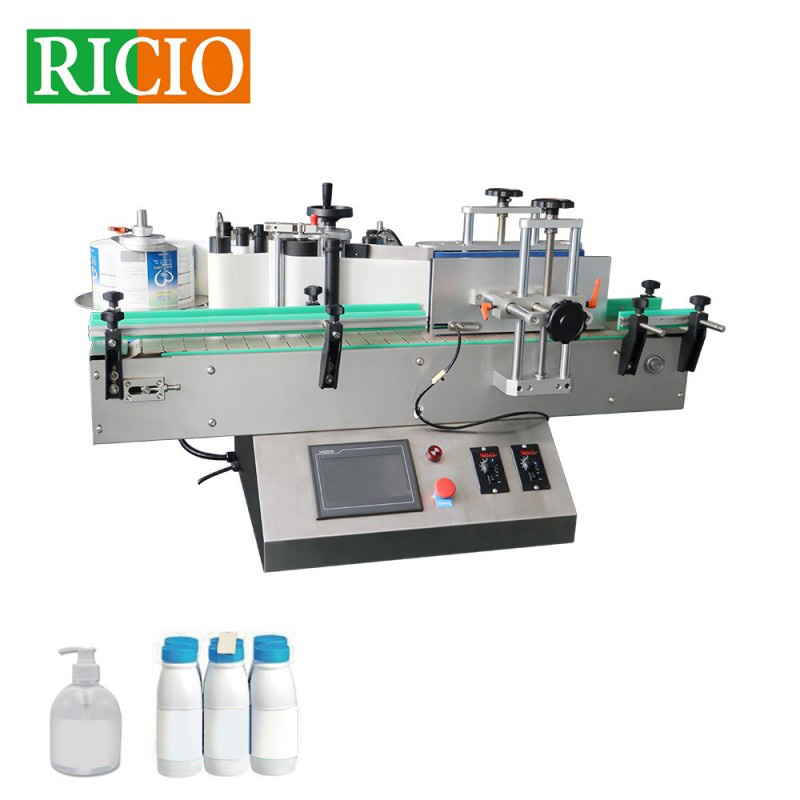
Product: Automatic Lipstick Bottom Labeling Machine

 +86 13681850339
 sales@raxpack.com
 Building 6, No. 477 Tiefeng Road, Baoshan District, Shanghai, China
- Tabletop Labeling Machine
- Round Bottle Labeling Machine
- Automatic Tube Labeling Machine
- Pouch Labeling Machine
- Rotary Labeling Machine
- Syringe Labeling Machine
- Top Labeling Machine
- Single Side Sticker Labeling Machine
- Double Side Labeling Machine
- Bucket Labeling Machine
- Bottom Labeling Machine
- Corner Label Applicator
- Waist Sealing Labeling Machine
- Square Bottle Labeling Machine
