 English
 русский
 Español
 عربى



Automatic Round Bottle Labeling Machine: Precision, Flexibility, and Efficient Packaging Automation
2026-10-28
Content
- 1 Why Round Bottle Labeling Requires Specialized Equipment
- 2 Core Operating Process
- 3 Product Advantages Over Basic Labeling Solutions
- 4 Technical Specifications
- 5 Control System and Operator Experience
- 6 Applications Across Multiple Industries
- 7 Manufacturing Strengths and Engineering Capabilities
- 8 Customization and Line Integration
- 9 Installation, Operation, and Maintenance
- 10 How to Evaluate the Machine Against Competitors
- 11 Business and Export Capabilities
- 12 Return on Investment and Production Benefits
- 13 Frequently Asked Questions
- 13.1 What types of containers can the machine label?
- 13.2 Can it apply a label around the entire bottle?
- 13.3 What is the labeling speed?
- 13.4 What labeling accuracy can be expected?
- 13.5 Can the machine apply transparent labels?
- 13.6 Can batch numbers and dates be printed during labeling?
- 13.7 Is the machine suitable for pharmaceutical production?
- 13.8 How long does product changeover take?
- 13.9 Can the machine be connected to a filling line?
- 13.10 What power supply is required?
- 13.11 How should a customer prepare for a quotation?
- 14 Conclusion
- 15 References
- 16 Product: Automatic Round Bottle Labeling Machine
In modern packaging operations, labeling is no longer a simple finishing step. It is an essential part of product identification, regulatory compliance, brand presentation, traceability, and production efficiency. Pharmaceutical bottles, food jars, cosmetic containers, seasoning bottles, lubricating oil containers, and many other cylindrical packages require labels that are accurately positioned, securely applied, and visually consistent. Manual labeling and basic semi-automatic systems may be suitable for very small production volumes, but they often create problems when manufacturers need higher output, repeatable accuracy, rapid changeovers, and dependable integration with an automated production line.
The automatic round bottle labeling machine is designed to meet these requirements. It provides a coordinated system for bottle separation, product alignment, conveyor transport, label dispensing, and label application. By automating the complete labeling sequence, the machine reduces operator dependence and helps manufacturers achieve consistent results across long production runs. Its design supports both full-wrap and partial-wrap labeling, while optional coding and printing equipment can add batch numbers, production dates, expiration dates, barcodes, or other variable information during the same packaging process.
Developed for cylindrical containers across multiple industries, this equipment combines practical mechanical construction with electronic control, programmable operating parameters, and adjustable labeling components. It can process containers with diameters from 25 to 120 millimeters and bottle heights from 40 to 250 millimeters, with customized configurations available for special container sizes. Depending on the product, label dimensions, line configuration, and operating conditions, the machine can reach a labeling speed of approximately 30 to 120 bottles per minute.
For companies seeking a reliable alternative to labor-intensive labeling or inflexible entry-level machinery, this automatic solution offers an effective balance between productivity, precision, customization, and long-term maintainability.
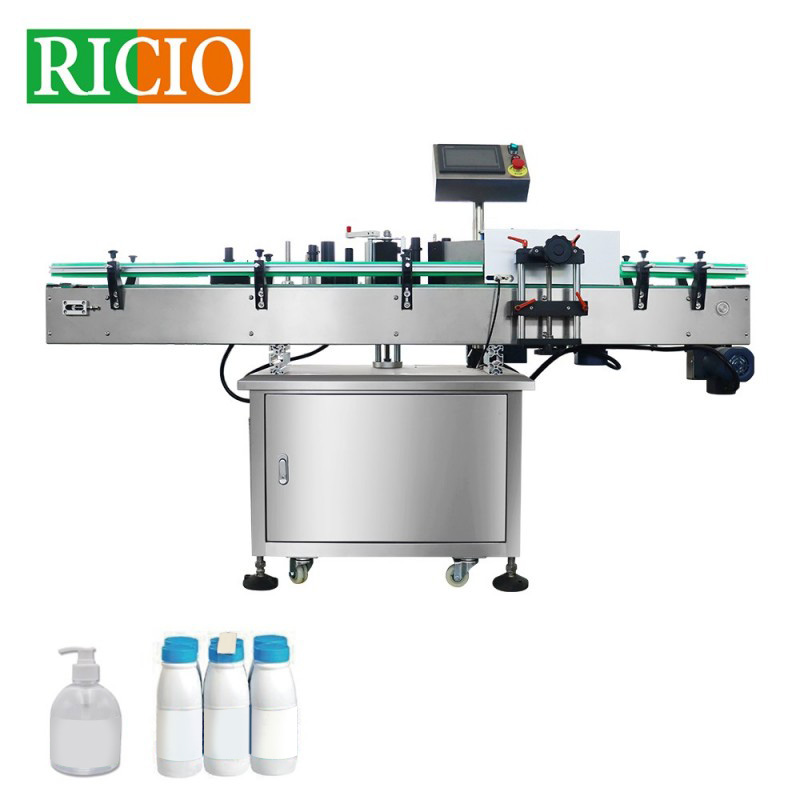
Automatic Round Bottle Labeling Machine
Why Round Bottle Labeling Requires Specialized Equipment
Cylindrical containers present specific labeling challenges. A label must follow the curved surface without excessive wrinkling, skewing, lifting, or overlapping. If the bottle rotates unevenly, the label may be applied at an inconsistent position. If bottles enter the labeling station too close together, the dispensing system may miss a container or apply two labels to one product. If bottle spacing varies during production, label placement can shift even when the label roll and applicator have been correctly adjusted.
These challenges become more significant as production speed increases. Operators working with manual or semi-automatic systems must repeatedly position bottles, activate the labeling cycle, inspect the result, and remove completed products. Such work is repetitive and vulnerable to fatigue. Differences in operator technique can lead to variations in label position, pressure, and orientation. Production interruptions may also occur when operators need to adjust guides, replace label rolls, or correct misaligned products.
An automatic round bottle labeling machine addresses these issues through coordinated product handling and label control. The conveyor carries containers through a controlled path, while the separation and alignment mechanisms help maintain consistent spacing. A product detection sensor identifies the approaching container, and the labeling system releases the label at the appropriate time. Depending on the selected configuration, a wrap-around mechanism, pressing belt, sponge roller, or other application component can complete the labeling process.
The result is a more repeatable operation with fewer manual steps. The machine is especially valuable where product appearance is important, where labels contain legally required information, or where packaging lines operate for extended periods. In pharmaceutical and healthcare packaging, reliable positioning can support inspection and traceability. In food and cosmetic packaging, uniform presentation contributes to shelf appeal. In industrial chemical packaging, a well-applied label improves product identification and handling safety.
Core Operating Process
The automatic round bottle labeling machine performs several stages in sequence. Although the exact configuration may be adapted to the container and label, the operating logic generally includes the following steps.
1. Bottle Infeed and Separation
Containers enter the conveyor from an upstream filling, capping, or accumulation system. A bottle-separation mechanism creates an appropriate gap between products. This spacing is important because the labeling controller needs to identify each bottle individually and release one label for each product. Stable separation also reduces the risk of contact between adjacent containers during application.
2. Product Alignment
Adjustable side guides and product-handling components keep containers in the correct travel position. For cylindrical bottles, alignment determines how the label will meet the surface and whether the finished label will remain at the intended height. The guides can be adjusted for different bottle diameters, while the conveyor width can be configured according to customer samples and actual production conditions.
3. Product Detection
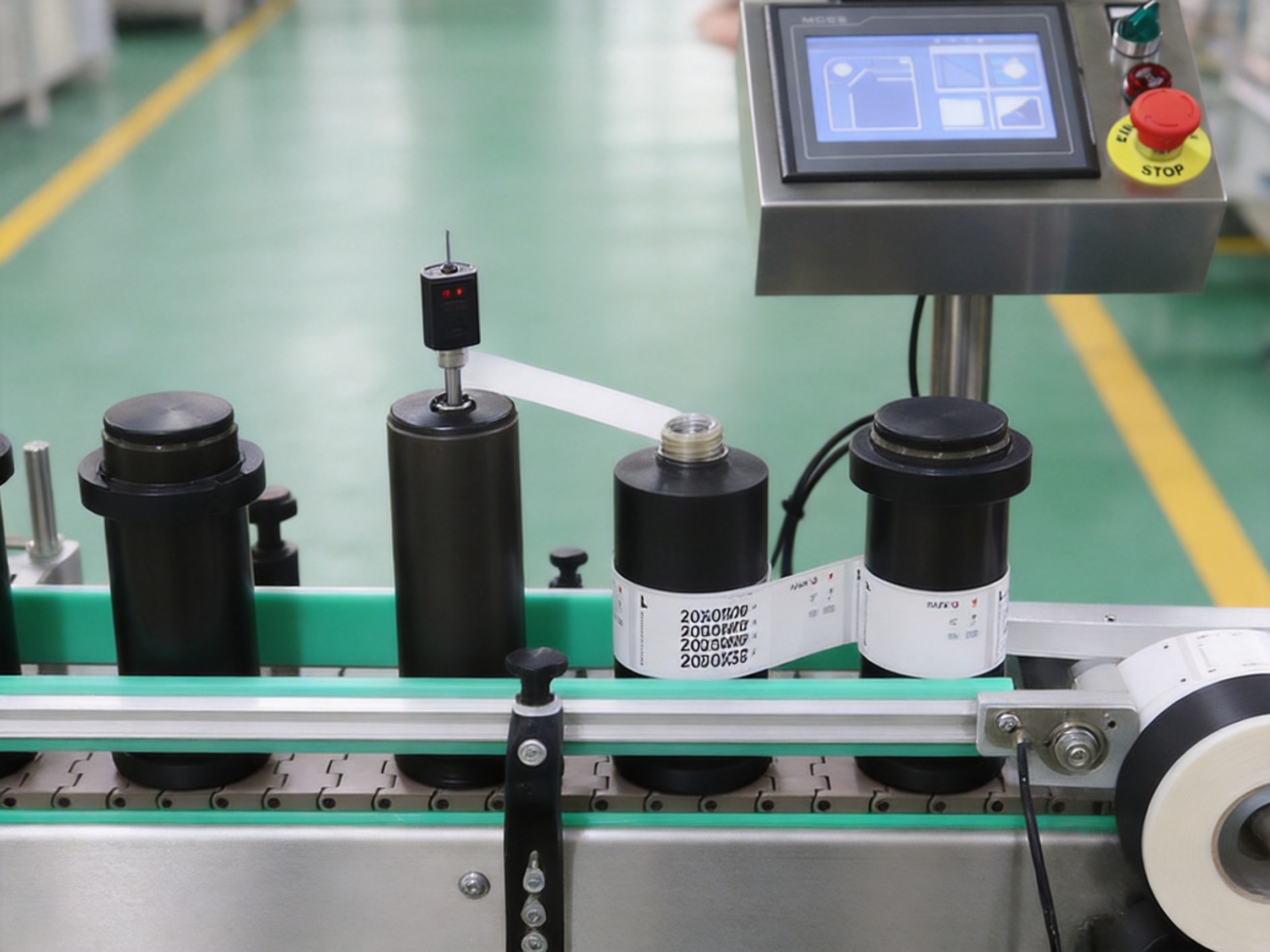
A sensor detects the leading edge or body of the container. This signal is sent to the programmable logic controller, which coordinates the timing of label release. Detection sensitivity and sensor position can be adjusted for different materials, colors, transparencies, and surface characteristics. The use of quality detection components helps maintain stable operation when production speeds or container dimensions change.
4. Label Dispensing
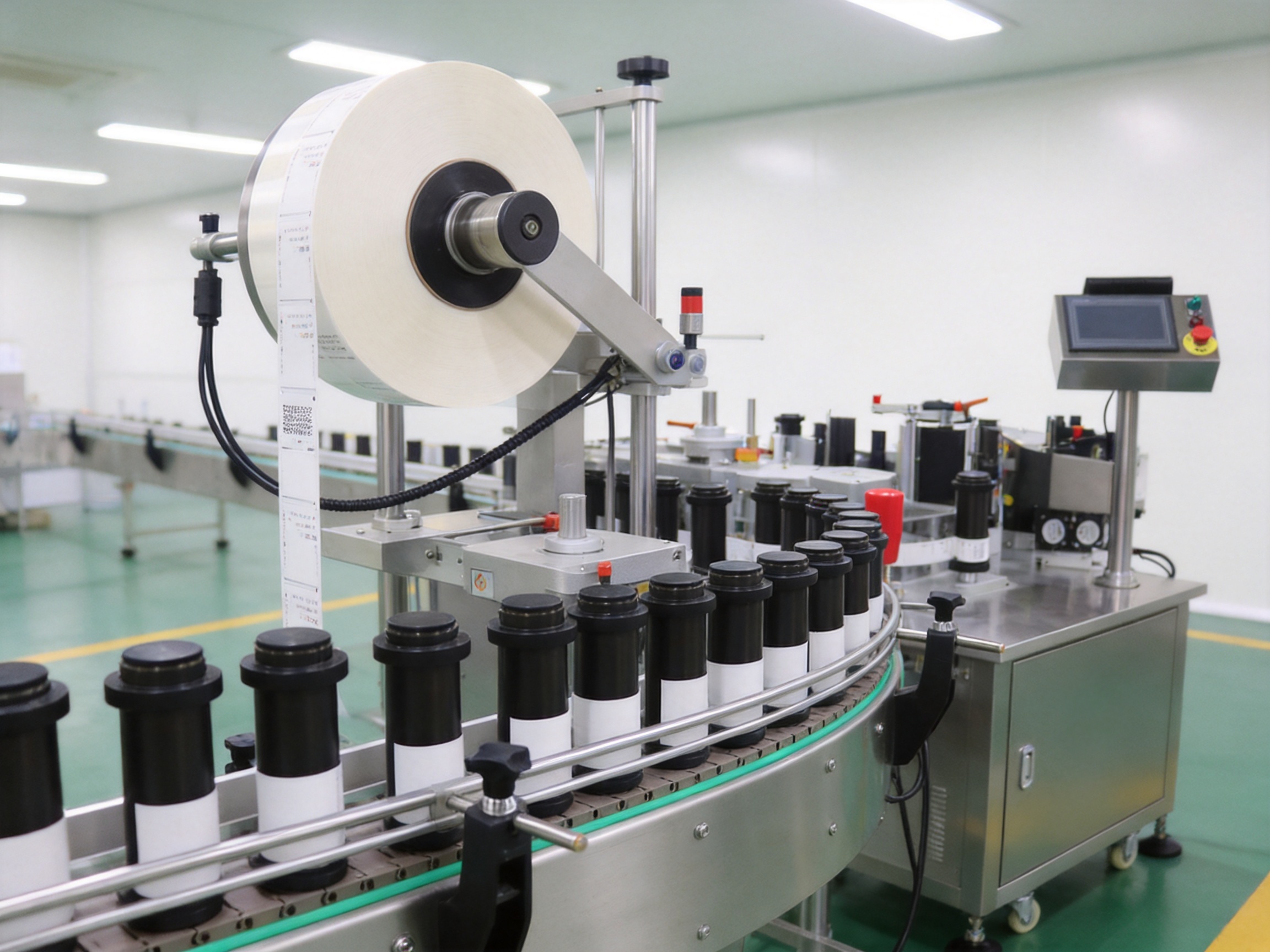
The label roll is mounted on the dispensing system and unwound under controlled tension. The machine separates the adhesive label from the backing material at the dispensing edge. Accurate web guidance and tension control help prevent label drift, wrinkles, and inconsistent release. The system supports label rolls with an inner diameter of approximately 76 millimeters and an outer diameter of approximately 300 millimeters, subject to the final configuration and label material.
5. Label Application
As the bottle passes the application point, the label is transferred to the container surface. For full-wrap labeling, the bottle can rotate or be guided through a wrapping section so that the label extends around the cylindrical body. For partial-wrap labeling, the application distance and wrap angle are adjusted according to the required label position. Pressing components help eliminate air pockets and improve contact between the adhesive and the bottle surface.
6. Inspection and Discharge
After application, the labeled container continues along the conveyor for visual inspection, coding verification, downstream packaging, or collection. The machine can be integrated with additional devices, such as date coders, inkjet printers, conveyors, filling systems, capping machines, or product inspection equipment. This modular approach allows manufacturers to build a packaging line that matches current production requirements while leaving room for future expansion.
Product Advantages Over Basic Labeling Solutions
Many low-cost labeling machines provide only a dispensing function. They may require an operator to place every bottle manually, maintain product spacing by hand, and make repeated mechanical corrections. Such equipment can be useful for limited production, but it may not offer the stability or flexibility needed for professional manufacturing. The automatic round bottle labeling machine provides several advantages over these basic alternatives.
Integrated Automation
The machine combines bottle separation, conveying, detection, and application in one coordinated system. This reduces the number of manual operations and allows the equipment to function as part of a broader production line. Automation improves throughput while helping operators focus on material supply, quality monitoring, and line management rather than repetitive bottle placement.
Consistent Label Positioning
For cylindrical packaging, consistent positioning is one of the most visible measures of quality. The machine uses controlled product movement, adjustable guides, sensors, and programmable timing to support repeatable application. The stated labeling accuracy can reach approximately ±1 millimeter, depending on product roundness, softness, hardness, surface condition, label material, and other variables. This level of precision is suitable for many pharmaceutical, food, cosmetic, chemical, and daily chemical applications.
Adjustable Production Speed
Production speed can be adjusted according to container size, label length, conveyor configuration, and line requirements. The standard operating range is approximately 30 to 120 bottles per minute. Other descriptions of the equipment indicate that higher or broader speed configurations may be possible under suitable conditions. Actual performance should be confirmed through sample testing because bottle geometry, label dimensions, adhesive behavior, and product stability all influence the maximum practical speed.
Support for Full-Wrap and Partial-Wrap Labels
A single machine can be configured for different labeling styles. Full-wrap labeling is commonly used when a label must surround most or all of a cylindrical container. Partial-wrap labeling may be preferred for premium presentation, transparent packaging, product visibility, or specific regulatory layouts. The ability to accommodate both approaches makes the machine more versatile than equipment designed for only one fixed label format.
Fast Product Changeovers
Manufacturers frequently package products in different bottle sizes or use multiple label formats. A machine that requires extensive disassembly and repeated trial-and-error adjustment can reduce overall productivity. This system uses an intuitive color touchscreen and programmable logic controller to store multiple parameter sets. Operators can recall saved settings for different products, then complete fine adjustments as needed. This shortens changeover time and helps reduce the risk of forgetting a critical setting.
Optional Coding and Printing
The labeling machine can be equipped with ribbon coding or inkjet printing systems. These options allow batch numbers, production dates, expiration dates, lot codes, and other information to be added during the labeling process. Combining labeling and coding in a single production stage can reduce the need for separate equipment and simplify line coordination. It also helps reduce manual data entry and supports improved product traceability.
Hygienic and Durable Construction
The machine frame is constructed from SUS304 stainless steel and T6 aluminum alloy. SUS304 stainless steel is widely used in packaging equipment because it offers corrosion resistance, a smooth surface, and straightforward cleaning. T6 aluminum alloy provides structural strength with a relatively favorable weight-to-rigidity ratio. Together, these materials support a durable machine structure suitable for demanding industrial environments.
The smooth and accessible construction supports cleaning and maintenance, which is particularly important in pharmaceutical, food, healthcare, and cosmetic applications. The design is intended to meet GMP-related hygiene expectations when properly configured, installed, operated, and maintained according to the applicable production requirements.
Technical Specifications
The following table summarizes the principal specifications provided for the automatic round bottle labeling machine. Actual performance and final dimensions may vary according to optional components, customized mechanisms, product samples, and production-line requirements.
| Item | Specification |
|---|---|
| Model description | RXL-A automatic round bottle labeling machine |
| Power supply | AC 220 V, 50/60 Hz; 110 V or 380 V options may be available when required |
| Machine power | Approximately 1000 W, subject to configuration |
| Labeling speed | Approximately 30–120 bottles per minute; adjustable according to product and label conditions |
| Labeling accuracy | Approximately ±1 mm, depending on container characteristics and operating conditions |
| Container diameter | 25–120 mm; special sizes may be customized |
| Bottle height | 40–250 mm; special heights may be customized |
| Label height | 10–150 mm; customization may be available |
| Label length | 15–300 mm; customization may be available |
| Label roll inner diameter | Approximately 76 mm |
| Label roll outer diameter | Approximately 300 mm |
| Minimum space between labels | At least 3 mm |
| Label thickness | At least 8 micrometers; transparent paper may require at least 5 micrometers |
| Machine weight | Approximately 200 kg |
| Packaging size | Approximately 2000 × 1100 × 1300 mm |
| Conveyor width | Adjustable according to customer samples and application conditions |
These specifications show that the equipment is intended for a broad range of cylindrical products rather than one narrowly defined bottle size. The diameter range supports small pharmaceutical containers, medium-sized food and cosmetic packages, and larger industrial bottles. The height range also provides flexibility for products with different proportions, although application testing remains important for tall, unstable, very soft, or unusually shaped containers.
Control System and Operator Experience
A labeling machine’s mechanical structure is only one part of its performance. The control system determines how easily operators can set up products, monitor production, and respond to faults. The automatic round bottle labeling machine uses a programmable logic controller and a color touchscreen interface. The interface is designed to support bilingual Chinese and English operation, making it more accessible for different production teams and export markets.
The touchscreen can display production counts, operating status, fault alerts, and stored parameters. Operators can enter or adjust values such as labeling speed, detection delay, label dispensing length, conveyor speed, and other application-related settings. The exact parameters available depend on the selected configuration, but the central purpose is to provide a clear method for coordinating product movement and label release.
Production counting is useful for monitoring shift output, comparing actual production with planned quantities, and identifying unexpected interruptions. Fault alerts can help operators locate conditions such as missing products, label shortages, sensor issues, or abnormal machine states. Data storage and parameter recall support faster repeat production, especially in facilities that package several products on the same line.
Compared with purely mechanical machines, a programmable control system also improves repeatability. Once a suitable set of parameters has been verified for a specific bottle and label combination, the settings can be saved and recalled. This does not eliminate the need for inspection during changeover, but it reduces the amount of adjustment required and provides a more consistent starting point.
Applications Across Multiple Industries
Pharmaceutical and Healthcare Packaging
Pharmaceutical bottles often require accurate label placement for dosage information, product names, batch codes, expiration dates, and regulatory details. A misaligned or wrinkled label can affect readability and create an undesirable appearance. The automatic labeling machine can handle round pharmaceutical bottles and can be paired with coding or printing equipment to add variable information. When used in a validated production environment, the machine can contribute to a more controlled and traceable packaging process.
Healthcare-related products may also involve strict hygiene and cleaning requirements. Stainless steel construction and accessible machine surfaces can support routine sanitation. The final suitability of the machine depends on the product, facility, validation procedure, and applicable regulations, but the material selection and industrial design provide a suitable foundation for these environments.
Food and Beverage Containers
Food jars, seasoning bottles, sauces, condiments, and other cylindrical containers often require attractive labels with consistent orientation. Product appearance is especially important when packaging competes on retail shelves. The machine supports high-throughput operation and can accommodate different label lengths and bottle diameters. It may be integrated with filling, capping, weighing, inspection, and case-packing equipment to create a more complete food packaging line.
Food manufacturers can also benefit from improved label consistency. When labels are applied at a consistent height and angle, product groups look more professional. The machine’s adjustable conveyor and guide structure can be configured to suit a range of rigid containers, while special testing can determine whether a particular jar, adhesive, or label stock requires additional handling components.
Cosmetics and Daily Chemical Products
Cosmetic bottles, skincare containers, shampoo bottles, essential oil containers, and personal-care packages frequently use round formats. Brand presentation is a major consideration in these markets, and labels may contain decorative finishes, transparent sections, or carefully positioned graphics. The machine supports partial-wrap and full-wrap applications, allowing manufacturers to select a format that suits the package design.
Daily chemical products may include cleaning liquids, detergents, sprays, and household care products. These containers can differ significantly in diameter, height, and surface material. The broad adjustment range and programmable controls make the equipment useful for manufacturers that produce several product varieties. Where a container is very flexible or has an irregular surface, sample testing is necessary to select the correct pressure, guide arrangement, and application method.
Lubricants and Chemical Packaging
Lubricating oil bottles and chemical containers require labels that remain legible during storage, transport, and handling. Accurate placement helps users identify product grades, safety information, usage instructions, and technical data. The machine’s stainless steel frame and industrial construction are appropriate for many production environments, while label and adhesive selection should be matched to the chemical resistance and surface characteristics of the container.
For industrial packaging, the optional printing function can be valuable. Batch or date information can be applied during the same production sequence, helping manufacturers improve traceability and reduce the possibility of manual coding errors. The final choice of printer depends on the required resolution, ink type, substrate, data interface, and production environment.
Manufacturing Strengths and Engineering Capabilities
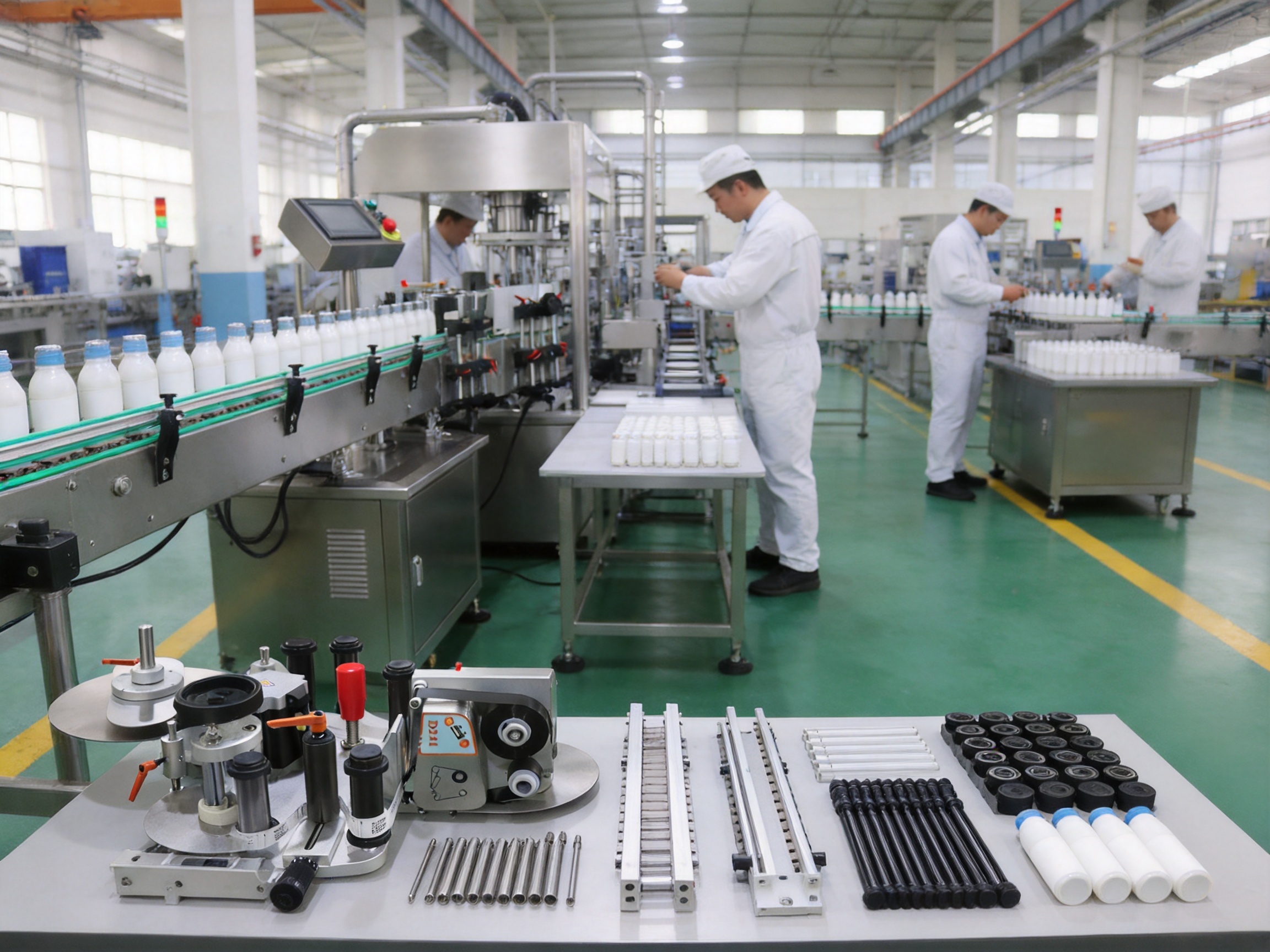
The performance of labeling equipment depends not only on its design but also on how consistently it is manufactured. Shanghai Ruixiao Packaging Technology Co., Ltd., operating under the RICIO product identity, specializes in the research, development, and manufacture of labeling machinery. Its capabilities extend beyond equipment assembly to include precision machining, component preparation, control integration, final assembly, and commissioning.
The company developed from the acquisition of Shanghai Zhenbao Machinery Parts Factory. This background in machinery parts manufacturing provides a foundation for understanding tolerances, component quality, mechanical alignment, and long-term equipment stability. Rather than relying exclusively on external suppliers for all mechanical parts, the company maintains in-house precision machining capabilities supported by multiple CNC machining centers.
In-House CNC Machining
CNC machining allows important mechanical parts to be produced with repeatable dimensions and controlled tolerances. In a labeling machine, the accuracy of rollers, brackets, shafts, mounting plates, guides, and other components affects the smoothness of product movement and the stability of label application. Consistent machining can reduce assembly variation and make replacement parts easier to reproduce.
In-house machining also improves engineering responsiveness. When a customer requires a modified guide, a different conveyor width, a special bottle-handling component, or a customized label station, the manufacturer can evaluate the mechanical change internally. This may shorten communication cycles between design, machining, and assembly teams. It also allows the company to retain greater control over the relationship between a customized part and the complete machine.
Full-Process Equipment Development
The company manages the process from core component machining to complete machine assembly and commissioning. This full-process capability is important because labeling equipment combines mechanical, electrical, pneumatic, sensor, and software elements. A problem that appears to be related to label dispensing may actually involve conveyor speed, bottle spacing, sensor position, or guide pressure. Teams with experience across the whole machine can analyze these interactions more effectively than a supplier focused on only one subsystem.
During commissioning, the machine can be tested with customer samples to assess bottle stability, label adhesion, application accuracy, production speed, and changeover requirements. Sample-based testing is particularly important for transparent labels, thin label stock, flexible bottles, narrow labels, containers with tapered bodies, and products with unusual surface finishes. It enables adjustments before shipment and provides a more realistic basis for confirming performance.
Quality Management
The company manages production and assembly in accordance with the ISO 9001 international quality system. A quality management system helps establish documented processes for design, procurement, manufacturing, inspection, assembly, testing, and customer service. It does not replace application testing or proper maintenance, but it provides a structured framework for improving consistency and accountability.
Quality control for labeling machines should cover more than visual appearance. Important areas include frame rigidity, conveyor tracking, roller alignment, sensor response, electrical safety, control-panel operation, label tension, product detection, emergency-stop function, and repeatability during extended operation. A disciplined manufacturing process helps address these aspects before the machine reaches the customer.
Component Selection
Key components are sourced from leading brands where appropriate. Reliable sensors, electrical control parts, drive components, and interface devices can contribute to stable detection, dependable motion control, and longer service life. Component selection should be considered together with correct installation, wiring, protection, and maintenance. Even high-quality components require appropriate operating conditions to perform effectively.
The combination of recognized components, in-house mechanical capability, and experienced technical personnel gives the manufacturer greater control over system integration. This is an important distinction from basic equipment assembled from unrelated parts with limited attention to the interaction between mechanical and electronic systems.
Customization and Line Integration
Packaging operations rarely have identical requirements. Two manufacturers may use bottles with the same nominal diameter but different materials, surface finishes, weights, cap shapes, or label adhesives. For this reason, the machine is designed with adjustable and customizable elements.
Conveyor width can be adjusted according to customer samples and actual production status. Bottle guides can be configured for different diameters and heights. Label dimensions can be adapted within the machine’s working range, while special bottle sizes may be evaluated for customized tooling. Coding, printing, product inspection, accumulation, and other auxiliary systems can also be incorporated according to the production line.
The machine can be integrated into a fully automated filling line. In a typical arrangement, products move from filling to capping, then to labeling, coding, inspection, and downstream collection or packing. Integration reduces manual transfers and helps maintain a continuous material flow. The control logic and communication method should be planned during the project design stage so that upstream and downstream equipment can operate together safely.
Integration may also include a buffer conveyor or accumulation table. These devices help absorb short interruptions between machines and prevent a brief stop in one section from immediately stopping the entire line. The ideal configuration depends on production speed, available floor space, container behavior, and the required level of automation.
When requesting a customized solution, customers should provide representative bottle samples, label samples, product dimensions, target speed, label position, preferred coding information, power standards, and available installation space. Clear technical information helps the manufacturer select the correct sensors, guides, application components, and control parameters.
Installation, Operation, and Maintenance
Proper installation is essential for achieving the stated labeling performance. The machine should be placed on a stable, level surface with sufficient space for operation, cleaning, label-roll replacement, inspection, and maintenance. Electrical power should match the approved machine configuration. The conveyor should be aligned with upstream and downstream equipment, and the operating height should be comfortable for the production team.
Before production begins, operators should verify that the bottle path is clear, the label roll is correctly installed, the label web is threaded according to the machine layout, and the sensors are positioned correctly. The guide rails should support the bottle without creating excessive friction. Product and label parameters should be loaded from the correct stored program or entered according to the approved setup sheet.
Trial production should begin at a moderate speed. Operators can inspect label height, orientation, wrap position, adhesion, spacing, and coding quality before increasing output. If labels are skewed, the first checks should include bottle alignment, guide pressure, label-web tracking, roller condition, sensor timing, and conveyor speed. Increasing speed before correcting a mechanical or timing issue may make the problem more difficult to diagnose.
Routine maintenance should include cleaning label adhesive residue, inspecting rollers and belts, checking guide components, confirming sensor cleanliness, examining electrical connections, and lubricating approved moving parts when required. The label path should remain free from dust, paper fragments, and adhesive buildup. Preventive maintenance helps protect accuracy and reduces unexpected downtime.
Operators should also monitor label-roll quality. Labels with inconsistent spacing, damaged backing paper, excessive curl, or unsuitable adhesive may create application problems even when the machine is correctly adjusted. The specified minimum spacing between labels is approximately 3 millimeters, but the actual suitability of a label roll should be confirmed through testing.
How to Evaluate the Machine Against Competitors
Price is only one factor when comparing automatic labeling machines. A lower initial price may be offset by frequent adjustment, limited speed, inconsistent label placement, expensive downtime, or difficulty obtaining replacement parts. A meaningful comparison should examine the complete cost and performance of the equipment.
Mechanical Stability
Compare frame materials, conveyor rigidity, guide adjustment, roller quality, and the overall finish of the machine. A rigid and well-aligned structure is more likely to maintain stable application over long production periods. Stainless steel and aluminum construction can provide a practical balance of hygiene, strength, corrosion resistance, and maintainability.
Control and Changeover
Check whether the machine offers a clear touchscreen, programmable settings, fault notifications, production counting, and parameter storage. These features reduce operator dependency and are particularly important when multiple products are packaged on the same line.
Application Flexibility
Determine whether the machine can support full-wrap and partial-wrap labeling, different bottle diameters, different bottle heights, transparent labels, and optional coding or printing. A machine with a broader practical range may provide greater value as product lines expand.
Testing and Service
Ask whether the supplier can test actual bottles and labels before final delivery. Application testing is one of the strongest ways to distinguish a professional labeling equipment manufacturer from a general machinery reseller. Technical support, documentation, commissioning assistance, spare-parts availability, and response time should also be included in the evaluation.
Manufacturing Transparency
A manufacturer with in-house machining, an experienced technical team, documented quality procedures, and complete assembly capabilities can often provide better control over customized equipment. These strengths may not be visible in a basic product photograph, but they have a direct effect on engineering communication, component compatibility, and long-term serviceability.
Business and Export Capabilities
Shanghai Ruixiao Packaging Technology Co., Ltd. serves customers in the food and beverage, pharmaceutical and healthcare, daily chemical and cosmetics, and chemical packaging sectors. Its labeling equipment is exported to more than 40 countries and regions. International project experience can be valuable because export installations often involve different voltage standards, language requirements, safety expectations, line layouts, and documentation practices.
The machine can be configured for AC 220 V, 50/60 Hz as a standard arrangement, with other power options such as 110 V or 380 V available when required. Final voltage, frequency, control-panel language, machine direction, conveyor height, and auxiliary equipment should be confirmed before production.
International customers may also require additional support for customs packaging, installation instructions, electrical diagrams, spare parts, remote troubleshooting, or on-site commissioning. A manufacturer that manages the complete process from design to commissioning is better positioned to coordinate these requirements. The company’s source-manufacturer structure supports direct technical communication rather than relying solely on a trading intermediary.
Return on Investment and Production Benefits
The financial value of an automatic labeling machine comes from more than the number of bottles processed per minute. It also includes labor reduction, improved consistency, fewer rejected products, easier production planning, and the ability to integrate labeling with other automated operations.
When a manual operator labels every bottle, labor cost increases with production volume. A machine does not remove the need for supervision, but it reduces the number of people required for repetitive application work. Operators can instead monitor material supply, check label quality, manage product changeovers, and respond to alerts.
Consistent labeling can reduce waste caused by incorrect placement, wrinkles, missed labels, or double labeling. It can also improve the appearance of finished products and reduce rework before shipping. When optional coding is integrated, the packaging line may avoid a separate manual coding step, saving floor space and reducing handling.
Parameter storage provides additional value for manufacturers with multiple stock-keeping units. Instead of creating a new setup from the beginning each time, the operator can recall the appropriate product program and verify it with sample bottles. Faster changeovers increase available production time and make smaller production batches more practical.
The actual return on investment depends on production volume, labor costs, product mix, label consumption, operating hours, and the degree of line integration. Customers should calculate not only the purchase price but also expected output, operating labor, maintenance, consumables, downtime, and product quality improvements.
Frequently Asked Questions
What types of containers can the machine label?
The machine is designed primarily for cylindrical containers, including pharmaceutical bottles, food jars, cosmetic containers, seasoning bottles, lubricating oil bottles, and other round packages. The standard container diameter range is approximately 25 to 120 millimeters, with bottle heights from approximately 40 to 250 millimeters. Special containers should be tested before final configuration.
Can it apply a label around the entire bottle?
Yes. The machine supports full-wrap labeling and can also be configured for partial-wrap applications. The appropriate application method depends on the label length, bottle diameter, adhesive behavior, desired overlap, and product presentation requirements.
What is the labeling speed?
The listed adjustable speed is approximately 30 to 120 bottles per minute. Actual output depends on bottle size, label length, label spacing, container stability, conveyor arrangement, operator loading, coding requirements, and the performance of connected equipment.
What labeling accuracy can be expected?
The stated accuracy is approximately ±1 millimeter under suitable operating conditions. Actual accuracy may be affected by bottle roundness, softness, hardness, surface condition, label material, label tension, adhesive properties, speed, and mechanical adjustment. Sample testing is recommended for critical applications.
Can the machine apply transparent labels?
Transparent labels may be supported, but they often require more precise sensor adjustment and careful control of label-web tension. The listed label thickness for transparent paper may be at least 5 micrometers, subject to the actual material and configuration. Testing with the exact label stock is important.
Can batch numbers and dates be printed during labeling?
Yes. The machine can be equipped with ribbon coding or inkjet printing systems. These systems may print batch numbers, production dates, expiration dates, and other variable information. The correct printer depends on the required print quality, substrate, ink, data connection, and production speed.
Is the machine suitable for pharmaceutical production?
The machine is designed for applications including pharmaceutical bottles and uses SUS304 stainless steel and T6 aluminum alloy in its construction. It is intended to support hygienic production and easy cleaning. Pharmaceutical manufacturers must still evaluate the machine according to their own validation procedures, facility standards, regulatory obligations, and product-specific requirements.
How long does product changeover take?
Changeover time depends on the difference between products, the number of mechanical adjustments, label-roll replacement, and operator experience. The color touchscreen and parameter-storage function help reduce repeated setup work. The final changeover procedure should be confirmed through testing with the customer’s products.
Can the machine be connected to a filling line?
Yes. The machine can be integrated into a fully automated filling line. It may be positioned after filling and capping equipment and before inspection, packing, or collection systems. The line layout, conveyor height, communication signals, product spacing, and safety controls should be designed as one coordinated system.
What power supply is required?
The default power supply is AC 220 V, 50/60 Hz. Alternative power arrangements such as 110 V or 380 V may be available when required. Customers should confirm the voltage and frequency before order placement and installation.
How should a customer prepare for a quotation?
The customer should provide bottle drawings or samples, bottle material, diameter, height, label dimensions, label material, label-roll specifications, required label position, target speed, coding requirements, power standard, available floor space, and details of upstream and downstream equipment. Physical samples are especially useful for accurate engineering and application testing.
Conclusion
The automatic round bottle labeling machine is a versatile solution for manufacturers that need accurate, repeatable, and efficient labeling of cylindrical containers. Its automatic bottle separation, alignment, conveying, detection, and label application functions reduce manual work and support stable production. Adjustable speed, broad container compatibility, full-wrap and partial-wrap capability, optional coding, and programmable parameter storage make the machine suitable for a wide range of products and production environments.
Its advantages are strengthened by the manufacturing capabilities of Shanghai Ruixiao Packaging Technology Co., Ltd. The company combines labeling equipment research and development with in-house CNC machining, experienced technical personnel, complete machine assembly, commissioning, and ISO 9001-based quality management. This source-manufacturer approach supports greater control over mechanical precision, customized engineering, component integration, and after-sales technical communication.
For pharmaceutical, food, cosmetic, daily chemical, and chemical packaging operations, the machine offers a practical path from manual or semi-automatic labeling toward more dependable production automation. Its final performance will always depend on the bottle, label, adhesive, line design, and operating conditions, but sample testing and proper configuration can help ensure that the equipment meets the required application goals.
When evaluated on total operating value rather than purchase price alone, the machine can help reduce labor requirements, improve label consistency, simplify coding, shorten product changeovers, and support integration with a complete filling and packaging line. For manufacturers planning to improve packaging efficiency while retaining flexibility for future products, it represents a reliable and adaptable labeling platform.
References
1. Product technical information for the RXL-A automatic round bottle labeling machine, including operating range, container dimensions, label specifications, and control functions.
2. ISO 9001 quality management system principles for manufacturing, process control, documentation, inspection, and continual improvement.
3. Good Manufacturing Practice principles relating to hygienic equipment design, cleanability, process control, and pharmaceutical packaging operations.
4. General engineering practices for pressure-sensitive label application, cylindrical container handling, sensor detection, conveyor control, and automated packaging-line integration.
5. Manufacturer information concerning Shanghai Ruixiao Packaging Technology Co., Ltd., its research and development activities, CNC machining capabilities, equipment assembly, commissioning, industry applications, and international service experience.
Product: Automatic Round Bottle Labeling Machine

related products
-
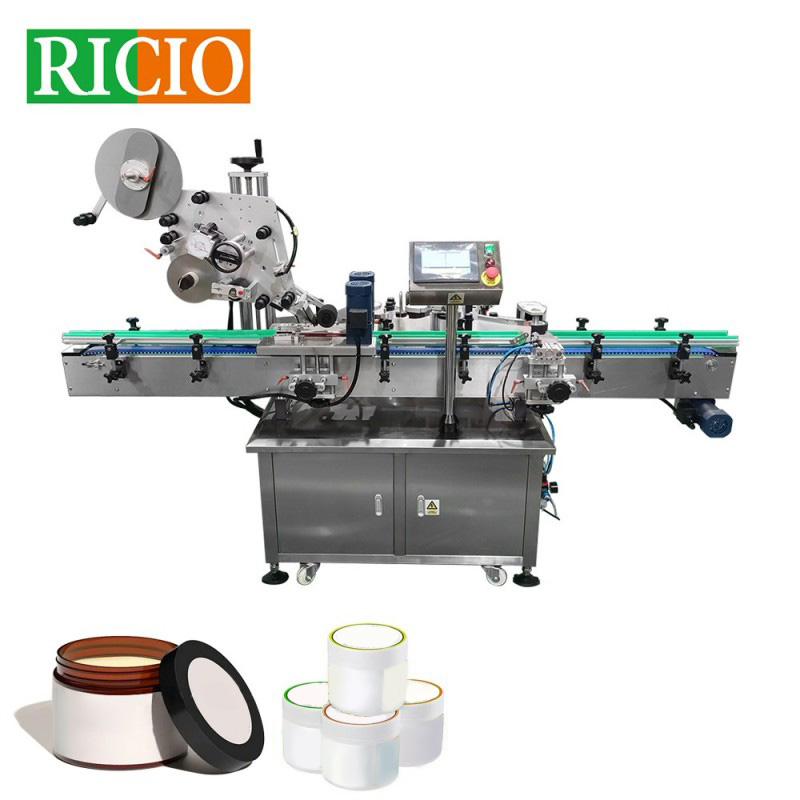
Automatic Round Bottle Side and Top Labeling Machine
-
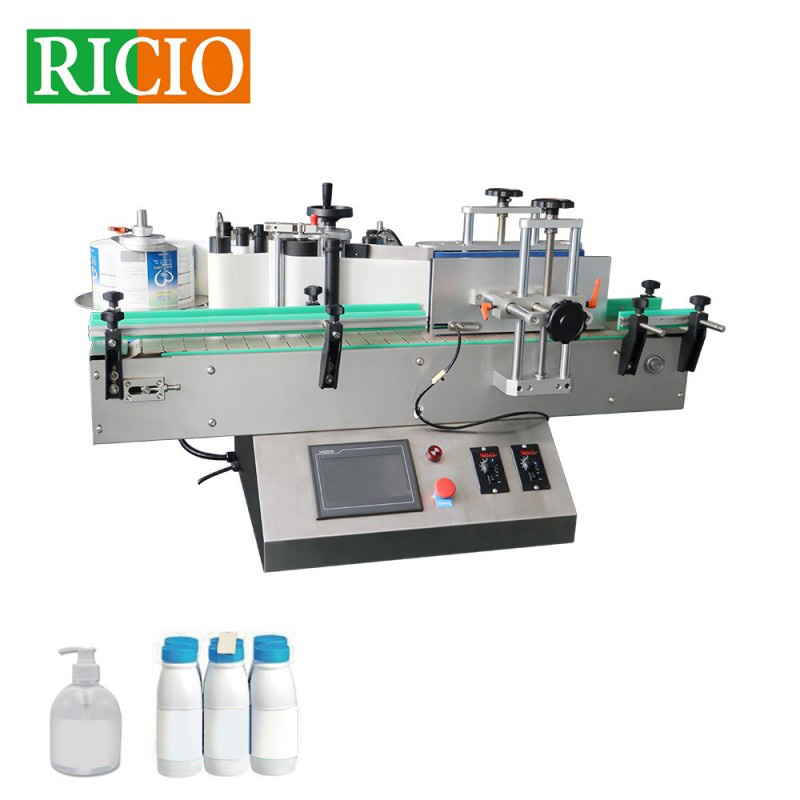
Automatic Round Bottle Tabletop Labeling Machine
-
Automatic Round Bottle Labeling Machine
-
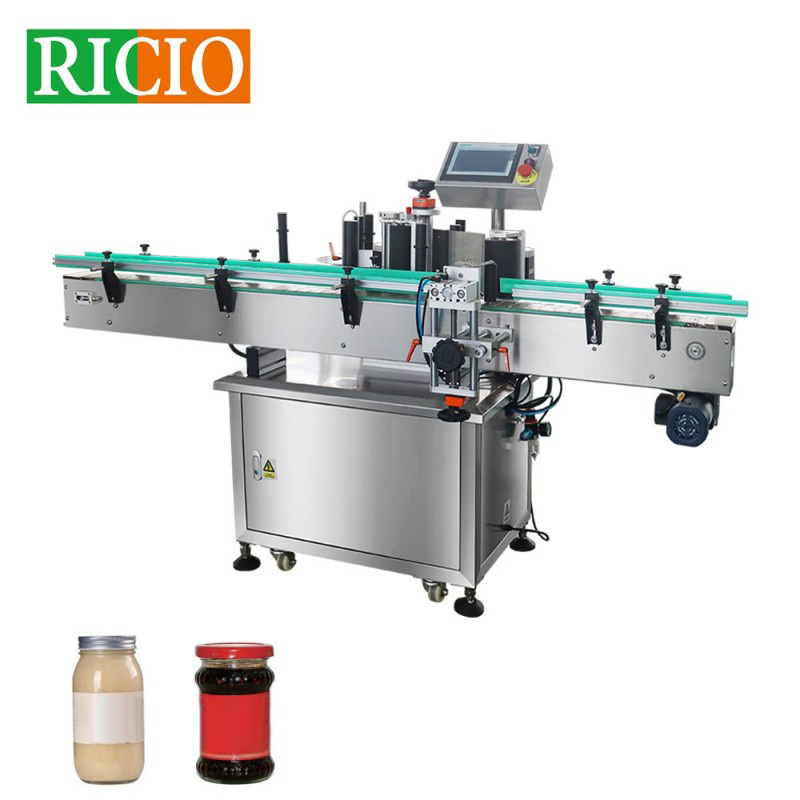
Automatic Round Bottle Positioning Labeling Machine
-
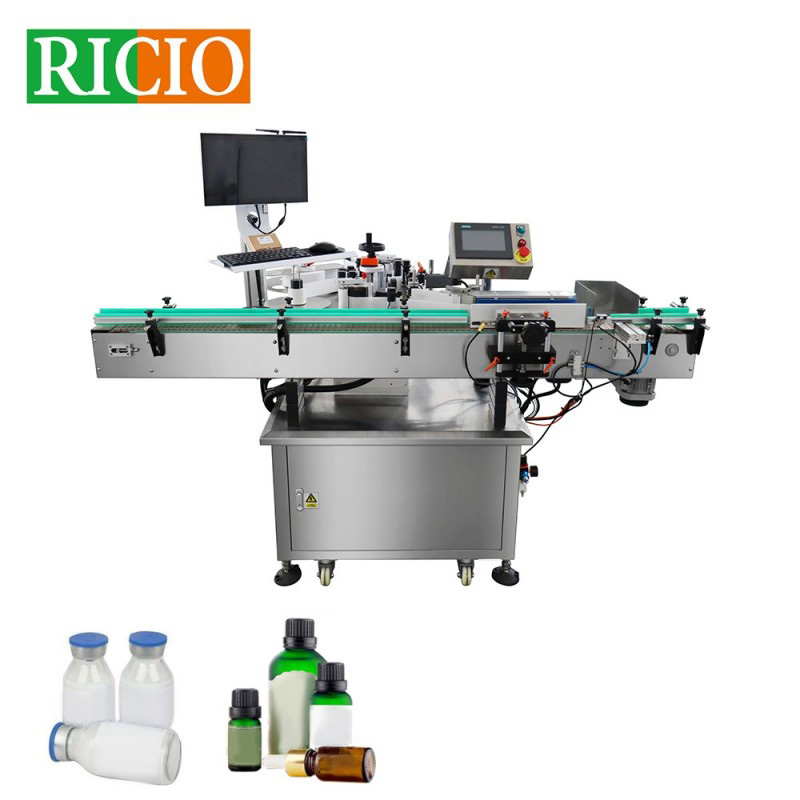
Automatic High Speed Vertical Round Bottle Labeling Machine
-
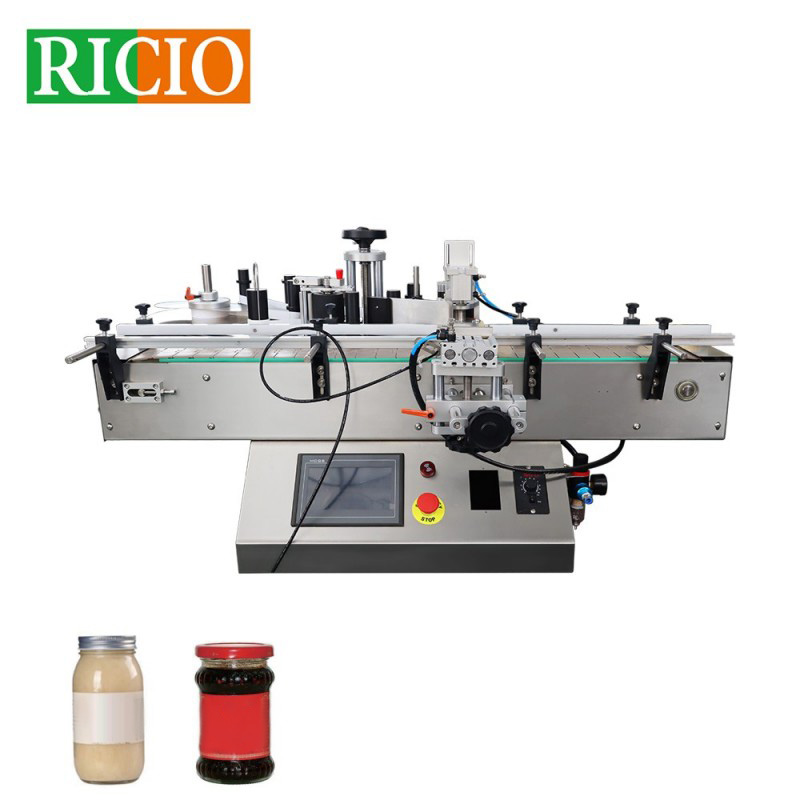
Automatic Round Bottle Positioning Tabletop Labeling Machine
related News
 +86 13681850339
 sales@raxpack.com
 Building 6, No. 477 Tiefeng Road, Baoshan District, Shanghai, China
- Tabletop Labeling Machine
- Round Bottle Labeling Machine
- Automatic Tube Labeling Machine
- Pouch Labeling Machine
- Rotary Labeling Machine
- Syringe Labeling Machine
- Top Labeling Machine
- Single Side Sticker Labeling Machine
- Double Side Labeling Machine
- Bucket Labeling Machine
- Bottom Labeling Machine
- Corner Label Applicator
- Waist Sealing Labeling Machine
- Square Bottle Labeling Machine
