 English
 русский
 Español
 عربى



Automatic Star Disk Positioning Rotary Labeling Machine: Precision, Speed, and Reliable Bottle Labeling
2026-11-11
Content
- 1 1. The Role of Rotary Positioning in Modern Packaging
- 2 2. Product Overview
- 3 3. Main Advantages of the Star Disk Positioning System
- 4 4. Servo-Controlled Label Dispensing and PLC Coordination
- 5 5. Labeling Quality and Production Consistency
- 6 6. Broad Product and Label Compatibility
- 7 7. Safety, Alarm, and Fault Management
- 8 8. Manufacturing Strength and Engineering Capability
- 9 9. Materials, Structure, and Maintenance
- 10 10. Comparison with Common Alternative Labeling Methods
- 11 11. Applications Across Multiple Industries
- 12 12. Installation, Setup, and Changeover
- 13 13. How to Improve Overall Line Performance
- 14 14. Technical Specifications
- 15 15. Why This Machine Is a Strong Investment
- 16 16. Frequently Asked Questions
- 16.1 16.1 What types of bottles can the machine label?
- 16.2 16.2 Can it label square or irregular bottles?
- 16.3 16.3 What is the maximum labeling speed?
- 16.4 16.4 How accurate is the label placement?
- 16.5 16.5 Does the machine support bottle orientation?
- 16.6 16.6 What happens if the label roll runs out?
- 16.7 16.7 Can the machine detect missed labels?
- 16.8 16.8 Is the machine difficult to operate?
- 16.9 16.9 Can the machine be customized?
- 16.10 16.10 What maintenance does the machine require?
- 16.11 16.11 What industries commonly use this equipment?
- 16.12 16.12 What should be checked before ordering?
- 17 17. Conclusion
- 18 References
- 19 Product: Automatic Star Disk Positioning Rotary Labeling Machine
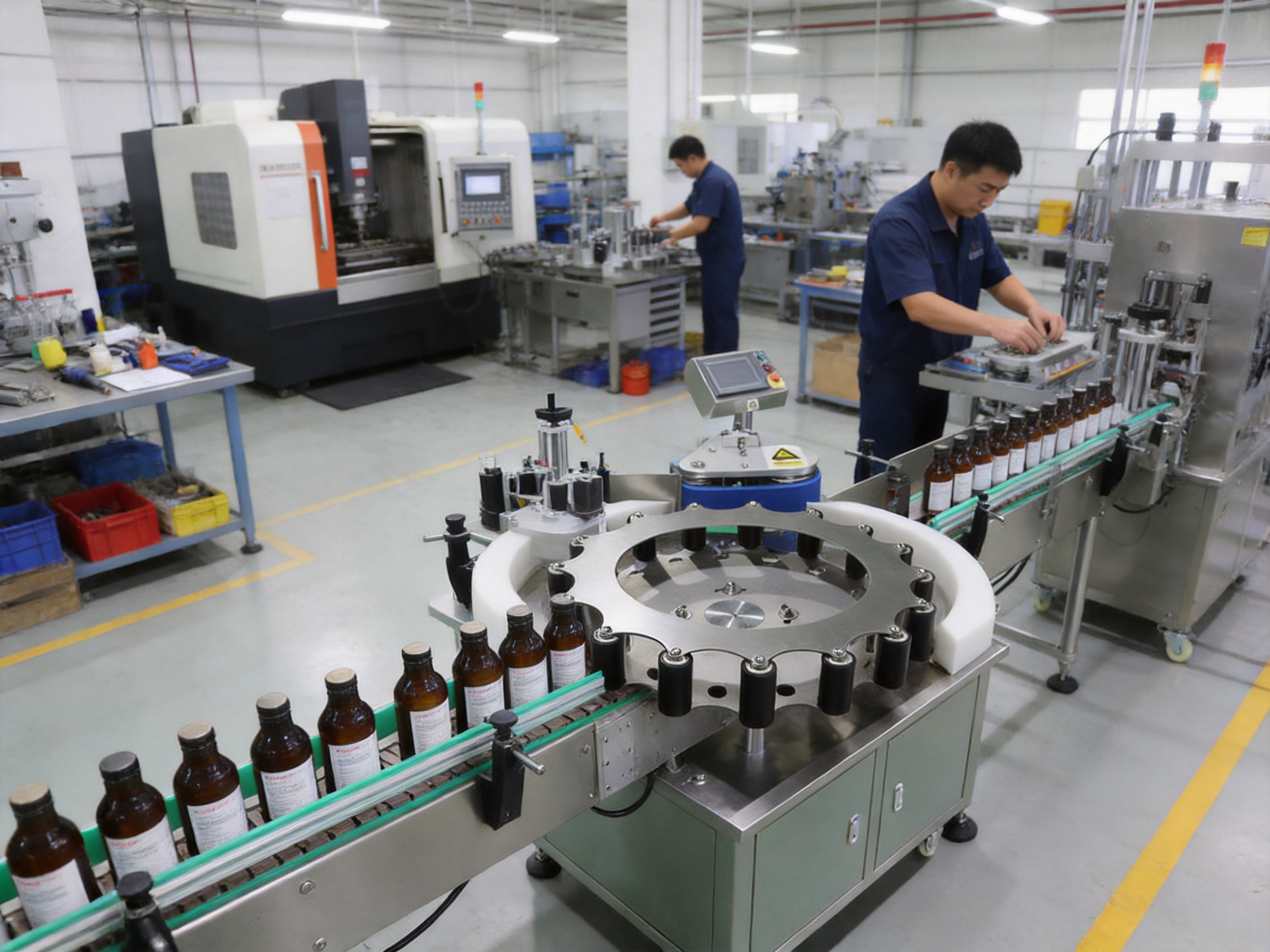
Modern packaging lines require more than simply applying a label to a container. Manufacturers need accurate positioning, repeatable performance, high production efficiency, clean label presentation, and dependable operation over long working periods. These requirements become especially important when bottles must be labeled according to a fixed direction, a positioning mark, a bottom reference point, or a specific package feature. The automatic star disk positioning rotary labeling machine is designed to meet these demands through coordinated bottle handling, rotary positioning, servo-controlled label dispensing, and intelligent process monitoring.
Developed for medium- to high-speed production environments, this machine combines a large star disk positioning system with an automatic labeling unit. The star wheel organizes bottle movement and maintains consistent spacing as each container enters the labeling station. Once the bottle reaches the correct position, the control system synchronizes bottle rotation, label release, and label application. A rolling mechanism then presses the label onto the container surface to improve adhesion and appearance.
The result is a stable labeling process for round bottles, oriented bottles, and other containers that require controlled label placement. With an adjustable production speed of 50 to 100 bottles per minute, labeling accuracy of approximately ±1 mm under suitable operating conditions, and compatibility with a broad range of bottle and label sizes, the equipment offers a practical alternative to labor-intensive manual labeling and less precise general-purpose systems.
1. The Role of Rotary Positioning in Modern Packaging
Conventional labeling machines often depend on a conveyor belt to deliver containers to a label dispensing point. This arrangement can work well for simple applications, but it may not provide enough control when bottles must be oriented accurately before labeling. Bottles can rotate unpredictably, arrive with inconsistent spacing, or shift slightly as they pass through the labeling area. These problems may result in labels being applied at different heights or angles.
A rotary positioning machine addresses these limitations by using a star disk to guide each bottle into a defined position. The star disk separates containers, stabilizes their movement, and presents them to the labeling station in a repeatable sequence. Because the bottle is held and guided during the critical labeling stage, the equipment can maintain more consistent alignment than a free-flowing conveyor arrangement.
This design is particularly useful for bottles with a front panel, a designated orientation, an embossed feature, a handle, a cap position, or a fixed reference point. It is also suitable when the label must be centered relative to a bottle structure or when a partial label must be applied to a predetermined area. The rotary motion allows the machine to control the contact between the label and the bottle surface while maintaining continuous output.
The positioning process is not limited to physical handling. Sensors, programmable logic controls, servo motors, and adjustable mechanical components work together to coordinate the movement of each container. This integrated approach reduces timing errors and helps operators adapt the machine to different packaging formats.
2. Product Overview
The automatic star disk positioning rotary labeling machine is an industrial labeling system identified as model RXL-W. It is intended for automatic bottle labeling applications in industries such as food and beverage, daily chemical products, pharmaceuticals, cosmetics, health products, seasonings, liquor, and other bottled goods.
During normal operation, containers are transferred into the machine and guided toward the star disk. The star disk receives and spaces the bottles before they enter the rotary labeling area. A detection system confirms the presence and position of the container. The labeling unit then dispenses the label at the programmed moment while the bottle rotates or moves through the application position. A rolling device presses the label smoothly against the surface, helping to create a firm bond and a uniform finish.
The machine can be configured for bottle body labels, wrap-around labels, orientation labels, and partial labels. The exact configuration depends on the bottle geometry, label material, label dimensions, and required labeling pattern. The star disk and bottle clamping components can also be adapted to different container specifications.
Standard operating specifications include an AC 220 V, 50/60 Hz power supply, a total power rating of 1,500 W, and a conveyor speed range of 3 to 25 meters per minute. The equipment accommodates bottle heights from approximately 100 to 400 mm and bottle diameters from approximately 30 to 130 mm, subject to the selected tooling and application arrangement. The standard label range is approximately 20 to 150 mm in height and 15 to 300 mm in length.
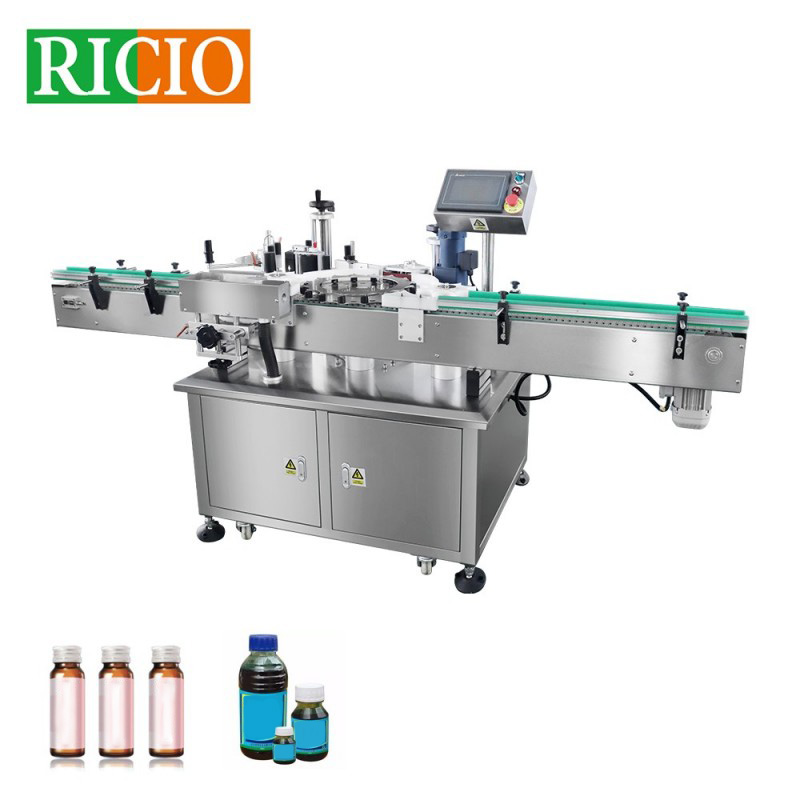
Automatic Star Disk Positioning Rotary Labeling Machine
3. Main Advantages of the Star Disk Positioning System
3.1 Controlled Bottle Spacing
Consistent spacing is essential for automatic labeling. If bottles approach the labeling head too closely or too far apart, the label sensor and dispensing mechanism may not operate at the correct time. The star disk creates defined pockets or positions for the containers, helping to maintain a stable distance between successive bottles.
This controlled spacing improves labeling repeatability and reduces the risk of double labeling, missed labeling, or label placement between two containers. It also supports smoother line integration because the upstream conveyor and downstream packaging equipment receive a more orderly product flow.
3.2 Accurate Orientation
Many bottles are not perfectly symmetrical. They may have a flat panel, a molded logo, a seam, a neck shape, a handle, or a cap that must face a particular direction. A standard conveyor labeling system may apply the label accurately in relation to the conveyor while still producing inconsistent results in relation to the bottle itself.
The rotary positioning structure allows the container to be aligned before application. This is an important advantage for products that require a front label to match a bottle feature or for containers carrying more than one label with a fixed relationship between them.
3.3 Stable Contact During Application
Labels can wrinkle or lift when a bottle moves unpredictably during application. The star disk and clamping arrangement support the container while the label is peeled and transferred. The rolling mechanism then applies pressure progressively across the label surface rather than relying on a single sudden point of contact.
This controlled contact helps reduce air bubbles, creases, edge lifting, and uneven adhesion. It is especially valuable for curved bottle surfaces, where the label must conform to the container without losing alignment.
3.4 Suitability for Continuous Production
Manual positioning and manual label application can create bottlenecks, particularly when production volumes increase. Operators may become fatigued, and small differences in hand movement can lead to inconsistent label placement. The automatic rotary system maintains a repeatable sequence throughout the production cycle, allowing manufacturers to improve output while reducing dependence on manual labor.
At a suitable bottle size and label length, the machine can operate at 50 to 100 bottles per minute. Actual performance depends on the product shape, label size, label material, application pattern, and the skill of the operator during setup. Nevertheless, the automatic sequence provides a much more stable basis for high-frequency production than manual labeling.
4. Servo-Controlled Label Dispensing and PLC Coordination
The labeling unit uses a servo-driven dispensing system to coordinate label release with bottle movement. Servo technology allows the machine to adjust motion precisely and respond quickly to changes in the programmed production parameters. This is important when the label length, bottle diameter, or labeling position changes from one product format to another.
The programmable logic controller serves as the central coordination system. It receives information from sensors, controls the timing of the motors, manages bottle detection, and coordinates the labeling cycle. The PLC can also control alarm conditions and machine stopping functions to protect the product and prevent unnecessary waste.
Synchronization between bottle movement and label dispensing is one of the main factors affecting label accuracy. If the bottle begins rotating before the label is released, or if the label is dispensed too late, the label may shift from its intended position. Servo and PLC coordination reduces this timing variation by treating the labeling process as one integrated motion sequence.
The touch screen interface gives the operator access to production speed, label parameters, detection settings, and other operating controls. Because the interface is designed for routine industrial use, operators can make adjustments without relying on complex manual calculations for every product change. The system can be configured according to different bottle dimensions and label specifications, provided that the selected range remains within the machine’s capabilities.
4.1 Benefits of Electronic Synchronization
Electronic synchronization provides several practical benefits. It helps maintain consistent label release, supports repeatable startup and stopping behavior, simplifies format changes, and allows alarm information to be displayed clearly. It can also reduce the time required to diagnose a problem because the operator can identify whether the issue is related to label presence, label breakage, bottle detection, or a mechanical abnormality.
Compared with purely mechanical timing systems, a PLC and servo arrangement offers greater flexibility when manufacturers introduce new bottle shapes or different label lengths. Mechanical adjustments remain important, but electronic parameters can often be fine-tuned through the operating interface after the basic tooling has been installed.
5. Labeling Quality and Production Consistency
The stated labeling accuracy is approximately ±1 mm, although actual accuracy depends on the object size, label dimensions, bottle surface, label material, and labeling pattern. This specification is suitable for many commercial packaging applications where consistent visual presentation is essential.
High labeling quality depends on more than the label applicator alone. The bottle must enter the machine in a suitable condition, labels must be wound correctly, the label roll must be installed securely, and the adhesive must be compatible with the packaging material. The machine contributes by stabilizing the bottle, controlling label release, maintaining synchronized movement, and applying pressure through the rolling mechanism.
For round bottles, the rolling application process helps the label follow the curved surface. For oriented containers, the positioning system establishes the correct reference before application. For partial labels, the dispensing and rolling settings can be adjusted to meet the required coverage. These capabilities make the equipment more versatile than a basic straight-line applicator designed only for uncomplicated cylindrical containers.
Consistent label placement also improves downstream quality control. When labels are applied at predictable heights and angles, vision inspection systems, barcode readers, and packaging operators can work more effectively. A well-positioned label supports clearer product identification and can improve the overall appearance of a finished package.
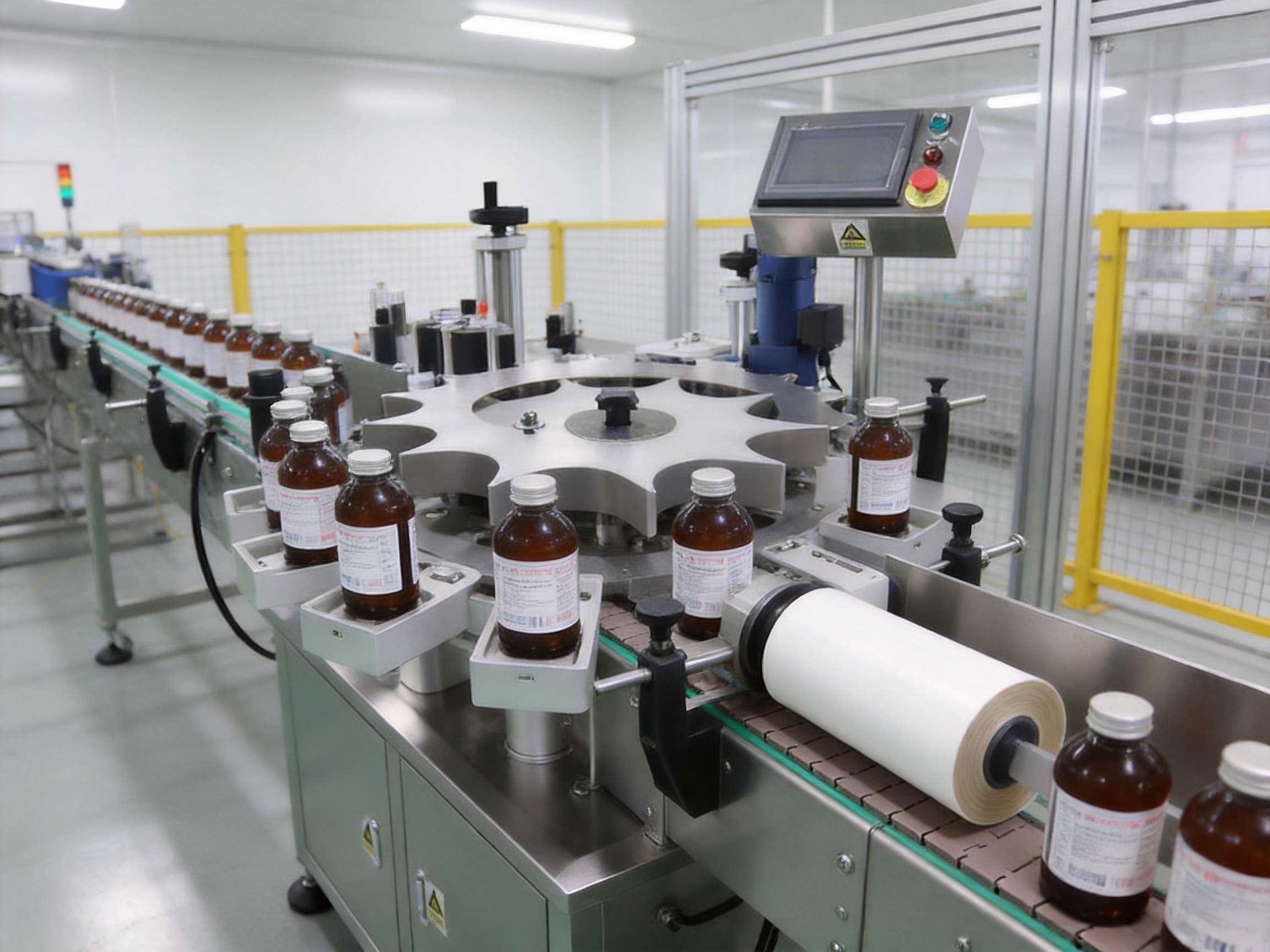
6. Broad Product and Label Compatibility
The machine is designed for containers approximately 100 to 400 mm high and 30 to 130 mm in diameter. These dimensions cover many common bottles used in food, beverages, cosmetics, health products, chemicals, and household goods. Large diameter differences may require replacement of the bottle clamping mold or other format-specific components.
The supported label size is approximately 20 to 150 mm in height and 15 to 300 mm in length. This range allows the equipment to handle narrow identification labels, larger product information labels, wrap-around labels, and selected directional labels. Label roll specifications include an inner diameter of approximately 76 mm and an outer diameter of approximately 300 mm.
When selecting a machine configuration, manufacturers should evaluate the bottle material, surface curvature, cap or shoulder shape, label adhesive, label backing material, and desired application speed. A bottle with a deep taper or irregular surface may require specialized rollers or clamping components. Similarly, a very short label may require different dispensing and detection settings from a long wrap-around label.
The ability to customize the star disk and bottle clamping mold is a significant practical advantage. Instead of selecting an entirely different machine for every container format, manufacturers can often adapt the contact components to match the product. This reduces the need for excessive manual intervention while preserving the core automatic labeling process.
7. Safety, Alarm, and Fault Management
Automatic labeling equipment must protect both the product and the operator. The machine includes automatic alarm and stop functions for situations such as label shortage, label breakage, missed labeling, and mechanical abnormalities. These functions help prevent a fault from continuing through an entire production batch.
A label shortage alarm can notify the operator when the roll is nearly empty or when the label web is no longer feeding correctly. A label breakage function can stop the machine when the backing material separates or tears. Missed-label detection can identify a bottle that has passed through the expected labeling cycle without receiving a label. Mechanical fault monitoring can help limit damage when a component does not move as expected.
These functions reduce material waste and improve production control. Without automatic monitoring, a machine could continue running while producing unlabeled bottles or incorrectly labeled products. Operators would then need to inspect and rework a large quantity of packaging. Timely stopping makes the problem easier to isolate and correct.
Safety also depends on correct installation, guarding, electrical protection, operator training, and routine maintenance. The machine should be installed on a stable surface with suitable access for cleaning, inspection, and label roll replacement. Operators should understand the emergency stop procedure and should not reach into moving areas while the equipment is running.
8. Manufacturing Strength and Engineering Capability
The performance of an industrial labeling machine is closely connected to the quality of its manufacturing process. Shanghai Ruixiao Packaging Technology Co., Ltd. specializes in the research, development, and manufacture of labeling machinery. Its production capabilities extend beyond final assembly and include in-house precision machining.
The company developed from the acquisition of Shanghai Zhenbao Machinery Parts Factory and has progressed from equipment assembly toward source manufacturing. This development is important because it gives the manufacturer greater control over the components that influence accuracy, durability, and machine stability.
With multiple CNC machining centers and an experienced technical team, the company can manage key stages from precision component production to complete machine assembly and commissioning. In-house machining allows engineers to maintain tighter coordination between design requirements and manufactured parts. It can also make it easier to modify components for a special bottle shape or a customized star disk configuration.
Precision machining is particularly relevant to rotary labeling systems. The star disk, bottle guides, rollers, brackets, shafts, and other contact components must work together with limited unwanted movement. Small dimensional errors can accumulate and influence bottle alignment or label placement. CNC processing supports repeatable component geometry and helps the production team maintain consistency across machine builds.
The company manages its manufacturing and quality procedures in accordance with the ISO 9001 international quality system. A quality management system provides a structured framework for documenting processes, inspecting components, controlling assembly procedures, and responding to nonconformities. For customers purchasing production equipment, this process orientation offers greater confidence than relying only on final visual inspection.
Machine assembly and commissioning are also important. A labeling machine may contain high-quality individual components yet perform poorly if the sensors, motors, guides, and label applicator are not correctly integrated. Factory commissioning allows the manufacturer to check motion synchronization, label dispensing, bottle transfer, alarm behavior, and user-interface functions before shipment.
8.1 Advantages of Source Manufacturing
Source manufacturing can provide several advantages compared with a trading-based supply model. It allows closer communication between the customer, engineering staff, and production team. It can shorten the response time for technical questions, facilitate customized parts, and improve traceability when a replacement component is required.
It also allows the manufacturer to build practical knowledge across different labeling applications. Experience with syringe labeling, round and square bottle labeling, double-sided labeling, high-speed labeling, and print-and-apply systems contributes to a broader understanding of container handling and label control. This experience can be valuable when developing a configuration for a new product.
For international customers, a manufacturer with export experience can provide additional support in documentation, electrical adaptation, packaging, commissioning, and application consultation. The company serves customers in more than 40 countries and regions, demonstrating experience with a wide range of production environments and packaging requirements.
9. Materials, Structure, and Maintenance
The machine uses a durable stainless steel and aluminum alloy structure. Stainless steel provides corrosion resistance and is appropriate for production environments where regular cleaning is required. Aluminum alloy can provide a favorable balance between structural strength and manageable equipment weight, while also supporting precise machine framework construction.
The stated machine weight is approximately 200 kg, with overall dimensions of about 2,000 by 1,300 by 1,500 mm. These dimensions should be considered during factory layout planning. Adequate space is needed not only for the machine footprint but also for bottle infeed, product discharge, operator access, label roll replacement, inspection, and maintenance.
Routine cleaning should focus on surfaces that contact containers or labels, including guides, rollers, star disk components, and nearby framework. Adhesive residue should be removed using a method compatible with the material and the manufacturer’s instructions. Sensors should be kept clean because dust, adhesive, or product residue can interfere with detection.
Preventive maintenance should include inspection of belts, rollers, bearings, fasteners, electrical connections, sensor alignment, and label web tension. The operator should also check whether the star disk and bottle clamping components remain properly aligned after format changes. Early detection of wear can prevent more serious downtime and preserve labeling accuracy.
Because the machine is designed for an operating temperature of approximately 0 to 50°C and a relative humidity range of approximately 15% to 90%, the installation environment should remain within these limits. Excessive condensation, dust, vibration, or unstable electrical conditions may affect performance and service life.
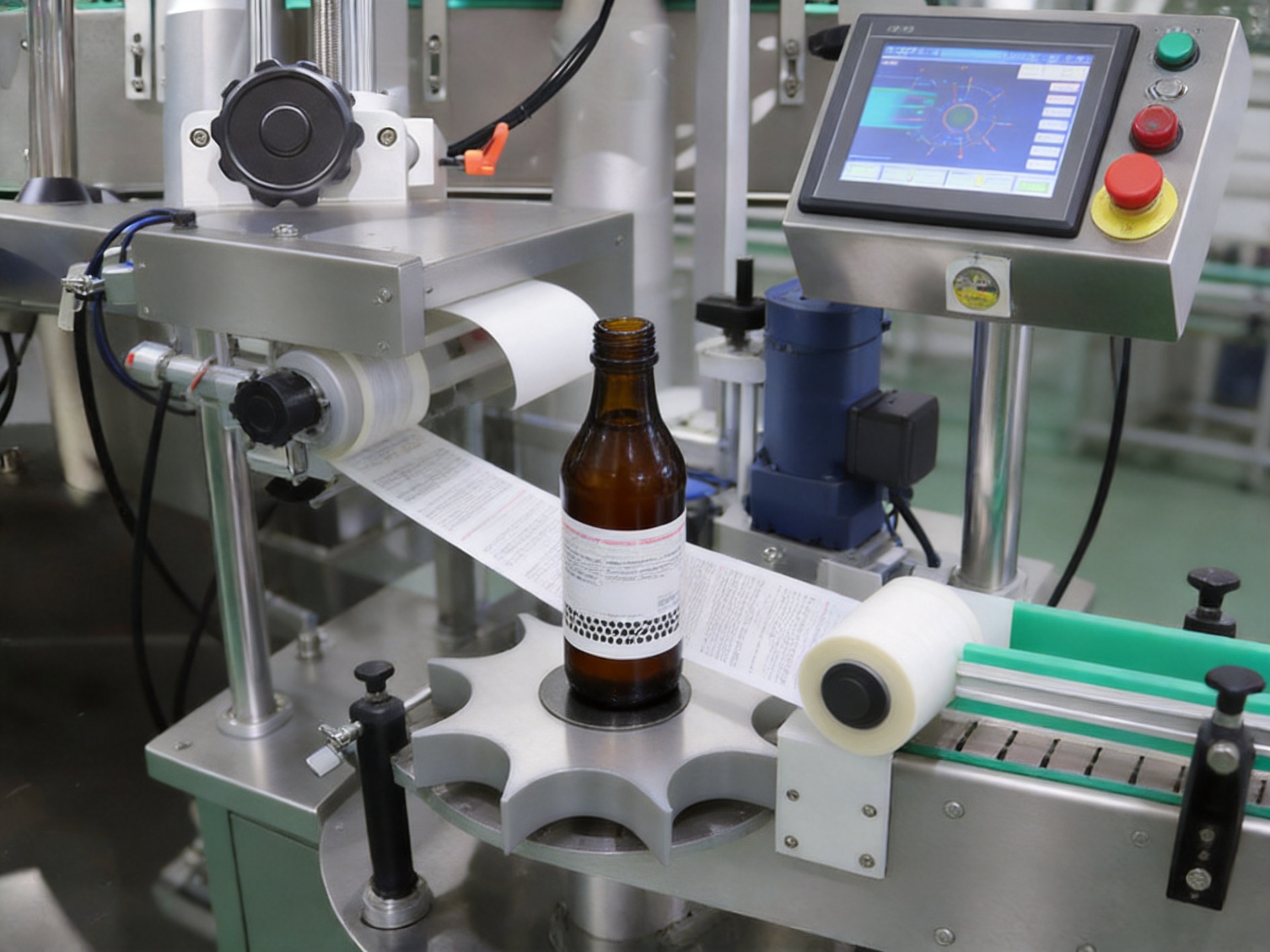
10. Comparison with Common Alternative Labeling Methods
10.1 Manual Labeling
Manual labeling requires low initial investment, but it depends heavily on operator speed and consistency. It can be suitable for small trial batches or products with highly irregular shapes. However, manual work becomes inefficient when output increases. Differences in label height, angle, and pressure can create visible variation, while labor costs and fatigue may become significant.
The automatic star disk positioning machine provides controlled movement, repeatable label placement, automatic detection, and a higher sustained output. It also reduces the amount of direct handling required for each container.
10.2 Basic Straight-Line Labeling
A basic straight-line labeler can be effective for simple cylindrical bottles that do not require orientation. Its relatively simple structure may suit applications where the label can be placed wherever the bottle reaches the applicator. However, it may be less suitable for products with a designated front position or a need for precise bottle rotation.
The star disk rotary system offers greater control over spacing and orientation. This makes it more appropriate for products where visual alignment is part of the package quality standard.
10.3 General Rotary Labeling Equipment
Not every rotary machine includes the same level of bottle positioning or electronic synchronization. Some systems may use a rotary table primarily to increase output without providing precise orientation control. The automatic star disk positioning machine combines rotary handling with bottle detection, servo-driven dispensing, PLC management, and rolling application.
This combination is a major competitive advantage for manufacturers that need both speed and placement accuracy. It provides more than a simple rotary transfer function; it creates a controlled labeling sequence from bottle entry to completed application.
10.4 Outsourced or Semi-Automatic Labeling
Outsourcing labeling may remove the need to purchase equipment, but it can increase lead times, transportation costs, and dependence on external production schedules. Semi-automatic equipment can be more affordable than a fully automatic system, but it still requires operators to load or position containers manually.
For manufacturers with stable production volumes, integrating an automatic labeling machine into the packaging line can improve control over scheduling, quality, and labor utilization. The investment is especially valuable when the same product is labeled repeatedly or when label presentation is important to brand and regulatory requirements.
11. Applications Across Multiple Industries
In the food and beverage sector, the machine can be used for bottles containing sauces, seasonings, drinks, oils, and other liquid or semi-liquid products. Accurate positioning helps ensure that front labels face the customer and remain aligned with caps, handles, or molded bottle features.
In the pharmaceutical and healthcare sectors, consistent label placement is important for product identification, dosage information, batch details, and traceability. Containers may include bottles, vials, or other packaging formats that require a repeatable label position. Final application requirements should be validated according to the product and regulatory environment.
Cosmetic and personal care products often use containers with distinctive shapes and carefully designed labels. A rotary positioning system can help maintain the visual relationship between a label and the bottle profile. This is useful for creams, lotions, shampoos, fragrances, and other packaged products where appearance strongly influences customer perception.
Daily chemical and household product manufacturers may use bottles with handles, flat panels, or irregular surfaces. The adjustable clamping and positioning arrangement can support selected applications while reducing label skew and edge lifting.
Liquor and premium bottled goods frequently require strong front-to-back alignment and a clean finished appearance. When the label must be placed relative to a bottle emblem, glass feature, or cap design, controlled orientation becomes especially valuable.
Manufacturers should conduct application testing before final configuration. Testing confirms whether the proposed star disk, clamping mold, roller, sensor arrangement, and label material are suitable for the specific container and production target.
12. Installation, Setup, and Changeover
Correct installation is the foundation of reliable performance. The machine should be placed on a level, stable floor and connected to a suitable power supply. The infeed and discharge conveyors must be aligned with the production line so that bottles enter and leave without excessive impact or congestion.
During initial setup, the operator selects the appropriate star disk and bottle clamping components. Guides are adjusted to support the container without creating excessive friction. The label roll is installed with the correct unwinding direction, and the label web is threaded through the dispensing path according to the machine procedure.
Sensor positions should be checked using the actual bottle and label. A sensor that is too far from the product may respond inconsistently, while a sensor that is too close may be affected by vibration or irregular surfaces. Label tension should be sufficient for stable feeding but not so high that the backing material stretches or breaks.
The operator then enters or adjusts the relevant parameters through the touch screen. These may include production speed, label dispensing timing, bottle detection delay, rolling speed, and other format-related settings. A test run at reduced speed is recommended before moving to full production.
Changeover time depends on how different the new bottle and label are from the previous format. A change between similar cylindrical containers may require only modest adjustment. A major change in diameter, height, orientation, or label dimensions may require a different star disk or bottle clamping mold. Clear setup procedures and stored parameter records can help reduce changeover time.
13. How to Improve Overall Line Performance
The labeling machine performs best when upstream and downstream equipment are properly balanced. The bottle unscrambler, filling machine, capping machine, inspection station, packaging equipment, and conveyors should provide a steady product flow. Sudden accumulation or gaps can reduce the actual output of the labeling station even when the machine itself is capable of higher speed.
Operators should establish a consistent supply of correctly wound label rolls. Poorly wound rolls, damaged backing paper, uneven label spacing, or adhesive contamination may create faults that cannot be corrected through machine adjustments alone.
Production teams should also define acceptable label tolerances and inspection procedures. A sample-based inspection can verify vertical position, horizontal alignment, bottle orientation, adhesion, wrinkles, and edge condition. Recording these results helps identify whether changes are needed in bottle handling, label material, or machine parameters.
Preventive maintenance should be scheduled according to operating hours, production environment, and manufacturer recommendations. Cleaning and inspection performed at planned intervals are generally more effective than waiting for a failure to stop production.
14. Technical Specifications
| Machine type | Automatic star disk positioning rotary labeling machine |
| Model designation | RXL-W |
| Power supply | AC 220 V, 50/60 Hz; adaptable according to end-user requirements |
| Total power | 1,500 W |
| Labeling speed | 50–100 bottles per minute, adjustable according to bottle size and label length |
| Labeling accuracy | Approximately ±1 mm, depending on bottle size, label size, and labeling pattern |
| Conveyor speed | 3–25 meters per minute |
| Standard conveyor bottle diameter | Approximately 60 mm; star disk configuration varies according to bottle specifications |
| Operating temperature | 0–50°C |
| Operating relative humidity | 15%–90% |
| Bottle height | Approximately 100–400 mm; customization available |
| Bottle diameter | Approximately 30–130 mm; large diameter changes may require a replacement clamping mold |
| Label height | Approximately 20–150 mm |
| Label length | Approximately 15–300 mm |
| Label roll inner diameter | Approximately 76 mm |
| Label roll outer diameter | Approximately 300 mm |
| Machine weight | Approximately 200 kg |
| Overall dimensions | Approximately 2,000 × 1,300 × 1,500 mm |
15. Why This Machine Is a Strong Investment
The value of a labeling machine should be evaluated through its total contribution to production rather than its purchase price alone. The automatic star disk positioning rotary labeling machine can reduce manual labor, improve label consistency, lower the amount of rejected packaging, and support higher output. These benefits can contribute to a shorter return on investment when the equipment is matched correctly to the product and production volume.
Its versatility is another important advantage. The machine supports several bottle labeling patterns and can be adapted to different bottle sizes through suitable tooling. The touch screen, PLC controls, servo dispensing, and automatic fault functions allow the system to serve as a long-term production asset rather than a single-purpose machine.
The equipment also supports quality improvement. A bottle with a straight, well-adhered, and correctly oriented label presents a more professional appearance. In industries where packaging communicates product identity, safety information, or premium value, consistent labeling can influence customer confidence and reduce the likelihood of rework.
The manufacturing capabilities of Shanghai Ruixiao Packaging Technology Co., Ltd. add further value. In-house CNC machining, technical development, complete assembly, commissioning, and ISO 9001-based quality management provide a structured foundation for equipment production. The company’s experience with multiple labeling technologies and international markets also supports customization and application consultation.
For manufacturers seeking a reliable rotary solution for oriented bottles and continuous production, the machine offers a balanced combination of precision, flexibility, maintainability, and industrial durability.
16. Frequently Asked Questions
16.1 What types of bottles can the machine label?
The machine is primarily designed for round and oriented bottles, including containers that require labels to be applied according to a fixed direction or reference point. The standard working range covers bottle heights of approximately 100 to 400 mm and diameters of approximately 30 to 130 mm. The exact suitability depends on the bottle shape, surface, and required label pattern.
16.2 Can it label square or irregular bottles?
The machine is mainly optimized for rotary positioning and round or orientation-sensitive applications. Selected square or irregular bottles may be handled if suitable clamping, star disk, guide, and roller components are designed for them. Application testing is recommended before final configuration.
16.3 What is the maximum labeling speed?
The stated labeling speed is approximately 50 to 100 bottles per minute. Actual output depends on bottle dimensions, label length, bottle stability, labeling pattern, required accuracy, and the configuration of the complete production line.
16.4 How accurate is the label placement?
The reference accuracy is approximately ±1 mm. Actual results depend on the bottle and label dimensions, the quality of the label roll, adhesive performance, bottle surface, machine setup, and labeling pattern.
16.5 Does the machine support bottle orientation?
Yes. Bottle orientation is one of the main purposes of the star disk positioning system. The machine can guide and align bottles before labeling so that labels are applied relative to a designated position, mark, panel, or fixed direction.
16.6 What happens if the label roll runs out?
The machine includes automatic alarm and stop functions for label shortage and related label-feed problems. This helps prevent unlabeled products from continuing through the production line.
16.7 Can the machine detect missed labels?
Yes. The control and detection system can be configured to identify missed labeling conditions. When a problem is detected, the machine can issue an alarm and stop or respond according to the programmed operating logic.
16.8 Is the machine difficult to operate?
The equipment uses a touch screen interface for operating settings and parameter adjustment. Operators still require training in label installation, bottle format changeover, safety, cleaning, and fault handling, but the interface is designed to make routine operation and adjustment more convenient.
16.9 Can the machine be customized?
Customization is available for selected areas, including power supply arrangements, star disk configuration, bottle clamping molds, bottle dimensions, label specifications, and production-line integration. The final design should be confirmed using actual bottle and label samples.
16.10 What maintenance does the machine require?
Routine maintenance includes cleaning label residue, checking rollers and guides, inspecting sensors, verifying fasteners and electrical connections, and monitoring the condition of belts and bearings. Preventive maintenance schedules should be adjusted according to operating hours and production conditions.
16.11 What industries commonly use this equipment?
Typical applications include food and beverage, pharmaceuticals, healthcare, cosmetics, health products, daily chemicals, seasonings, liquor, and other bottled goods. The machine is suitable when consistent label positioning and automatic production are important.
16.12 What should be checked before ordering?
Manufacturers should provide bottle drawings or samples, label samples, label roll details, target speed, labeling position, product material, production-line layout, and power requirements. This information allows the machine configuration and tooling to be selected correctly.
17. Conclusion
The automatic star disk positioning rotary labeling machine is engineered for manufacturers that need accurate, repeatable, and efficient labeling of bottles requiring controlled orientation. Its star disk positioning structure stabilizes containers, maintains spacing, and supports consistent entry into the labeling station. Servo-driven dispensing, PLC coordination, bottle detection, and rolling application work together to improve label placement and finished-package quality.
With a production capacity of approximately 50 to 100 bottles per minute, a reference accuracy of approximately ±1 mm, adjustable parameters, automatic alarms, and compatibility with a broad range of bottle and label sizes, the machine provides a flexible solution for modern packaging lines. Its stainless steel and aluminum alloy construction supports long-term industrial use, while the touch screen interface helps simplify daily operation and changeover.
The manufacturing strength behind the equipment is equally important. Shanghai Ruixiao Packaging Technology Co., Ltd. combines labeling machinery research and development with in-house CNC machining, experienced technical personnel, complete assembly, commissioning, and ISO 9001-based process management. This source-manufacturing approach supports product consistency, customization, technical communication, and long-term equipment development.
For companies replacing manual labeling, upgrading from a basic conveyor applicator, or adding orientation control to an existing packaging line, this rotary system offers a strong combination of precision, speed, flexibility, and manufacturing support. When correctly matched to the container, label, and production target, it can improve packaging consistency while reducing labor dependence and avoidable labeling waste.
References
1. Product technical information for the automatic star disk positioning rotary labeling machine, model RXL-W.
2. ISO 9001 quality management system principles for manufacturing and process control.
3. General engineering practices for automatic labeling machinery, rotary bottle handling, and pressure-based label application.
4. Packaging line design principles for bottle conveying, container orientation, label dispensing, and downstream quality inspection.
5. Industrial maintenance practices for stainless steel packaging equipment, sensors, servo systems, programmable logic controllers, and label-feed mechanisms.
Product: Automatic Star Disk Positioning Rotary Labeling Machine

related products
-
Automatic Star Disk Positioning Rotary Labeling Machine
-
Automatic Mini Star Disk Positioning Rotary Labeling Machine
-
Automatic Round Bottle Positioning Labeling Machine
-
Automatic High Speed Vertical Round Bottle Labeling Machine
-
Automatic Round Bottle Positioning Tabletop Labeling Machine
-
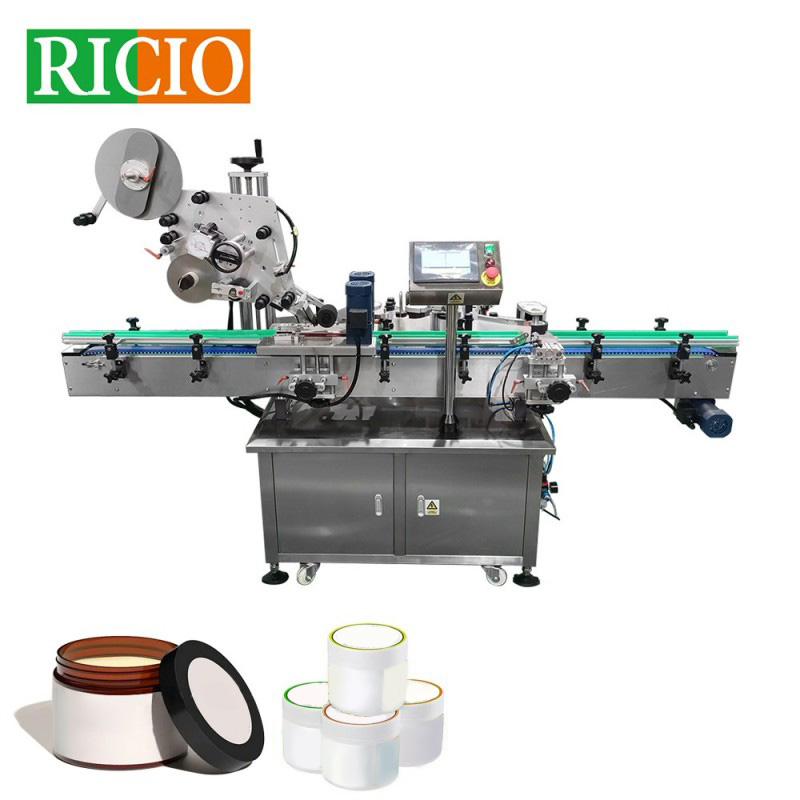
Automatic Round Bottle Side and Top Labeling Machine
related News
 +86 13681850339
 sales@raxpack.com
 Building 6, No. 477 Tiefeng Road, Baoshan District, Shanghai, China
- Tabletop Labeling Machine
- Round Bottle Labeling Machine
- Automatic Tube Labeling Machine
- Pouch Labeling Machine
- Rotary Labeling Machine
- Syringe Labeling Machine
- Top Labeling Machine
- Single Side Sticker Labeling Machine
- Double Side Labeling Machine
- Bucket Labeling Machine
- Bottom Labeling Machine
- Corner Label Applicator
- Waist Sealing Labeling Machine
- Square Bottle Labeling Machine
