 English
 русский
 Español
 عربى



Double-Sided Labeling Machine with Integrated Printing for Advanced Packaging Automation
2026-11-07
Content
- 1 Why Double-Sided Labeling Matters in Modern Packaging
- 2 Integrated Printing and Coding Capability
- 3 Working Principle of the Double-Sided Labeling System
- 4 Multiple Labeling Heads for Better Position Control
- 5 PLC Control and Color Touchscreen Operation
- 6 Stable Conveying and Product Alignment
- 7 Application Range
- 8 Key Technical Specifications
- 9 Construction Materials and Hygienic Design
- 10 Advantages Over Basic or Competing Labeling Solutions
- 11 Manufacturing Strengths and Engineering Capability
- 12 Quality Management and Production Control
- 13 Customization and Project Development
- 14 Installation, Operation and Maintenance Considerations
- 15 Efficiency, Labor Reduction and Production Value
- 16 Safety and Compliance Considerations
- 17 How to Select the Correct Configuration
- 18 Frequently Asked Questions
- 18.1 What products can this machine label?
- 18.2 Can it apply labels to two sides in one operation?
- 18.3 What information can the integrated printer add?
- 18.4 Can the machine read or verify codes?
- 18.5 What is the normal labeling speed?
- 18.6 What labeling accuracy can be expected?
- 18.7 Can the machine handle different product sizes?
- 18.8 Is the conveyor width fixed?
- 18.9 What materials are used in the machine?
- 18.10 Does the machine support multiple languages?
- 18.11 Why is secondary pressing important?
- 18.12 What should be supplied for a technical evaluation?
- 18.13 What industries can benefit from the equipment?
- 19 Conclusion
- 20 References
- 21 Product: Double Side Labeling Machine plus Printer
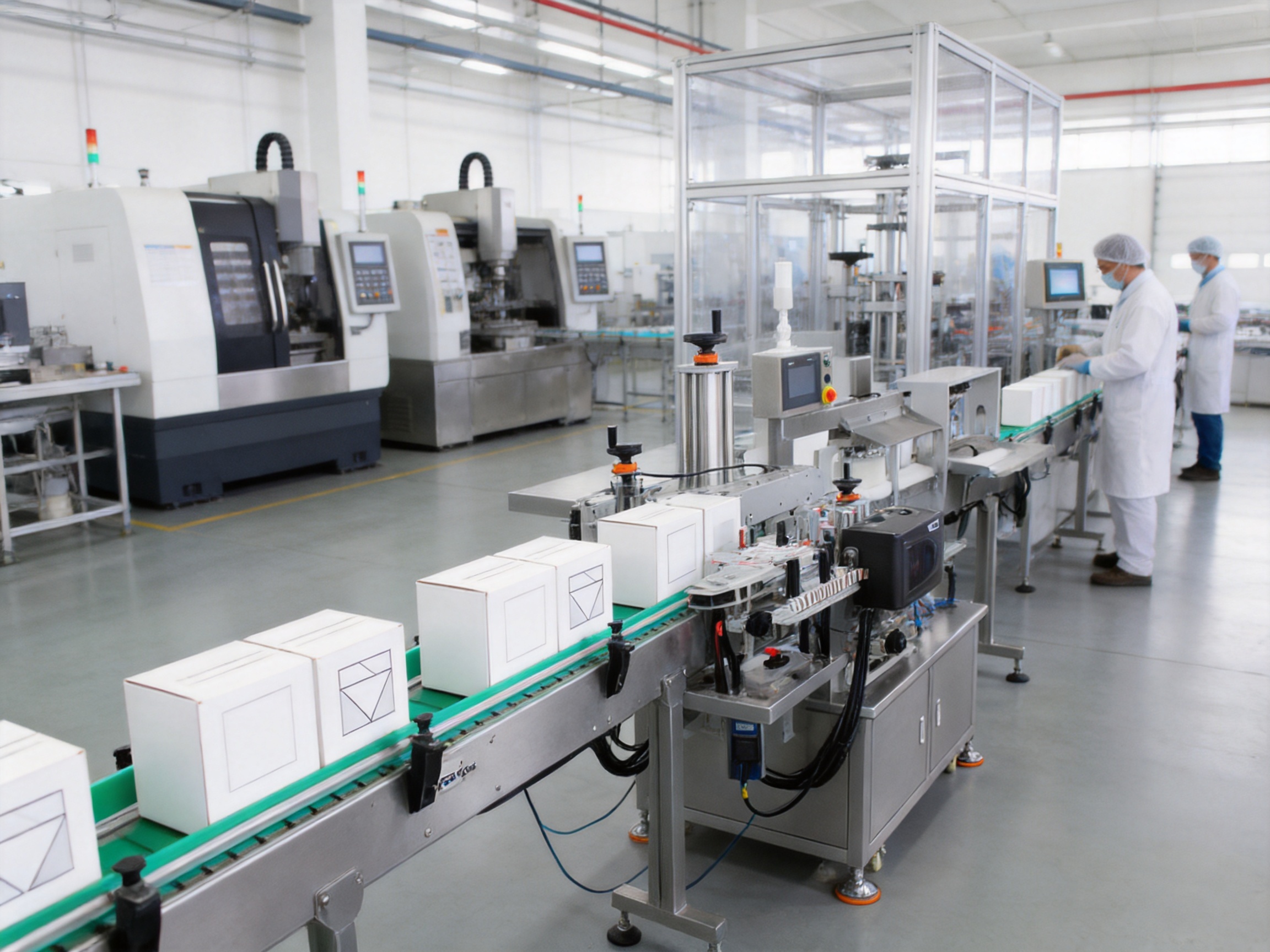
Modern packaging operations increasingly require more than simple label application. Manufacturers must place labels accurately on multiple surfaces, print variable product information, maintain traceability, reduce manual intervention and preserve a consistent appearance at high production rates. These requirements are particularly important for pharmaceutical packaging, chemical products, biochemical products, personal care items and other goods packed in flat or square containers. The Double Side Labeling Machine plus Printer is designed to meet these combined needs through an integrated system for product conveying, alignment, double-sided labeling, secondary pressing and online coding.
The equipment is engineered for automatic application of self-adhesive labels to two sides of flat and square containers. At the same time, an optional printer can add batch numbers, manufacturing dates, expiration dates, barcodes, QR codes and other variable information. By combining labeling and printing in one production solution, the machine helps manufacturers simplify their packaging lines, improve information accuracy and create a more repeatable operating process.
Unlike a basic single-label applicator, this machine is configured to manage multiple operations in sequence. Containers are separated and aligned before they enter the labeling section. Labeling heads position labels on the required surfaces, and additional pressing or extrusion mechanisms help improve adhesion. The control system coordinates the conveyor, sensors, labeling heads, printer and fault-monitoring functions to support continuous production.
Its model designation is RXL-CS, and its design is intended for industrial users that need reliable, flexible and hygienic labeling machinery rather than a manually adjusted tabletop device. The machine can be configured for different product dimensions, label sizes and coding requirements. This adaptability makes it suitable for manufacturers that operate several packaging formats or expect their product range to grow.
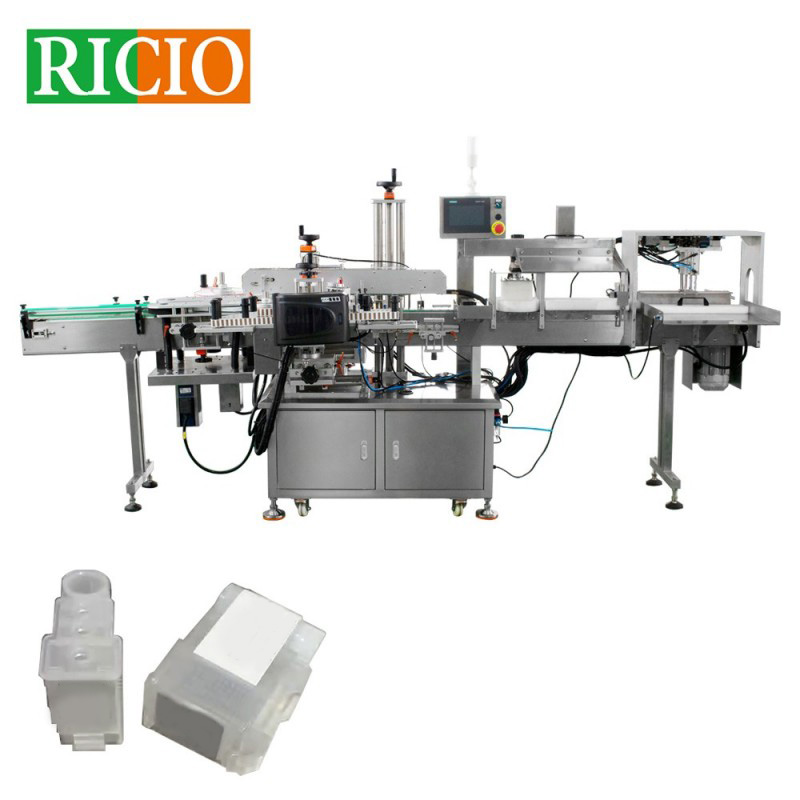
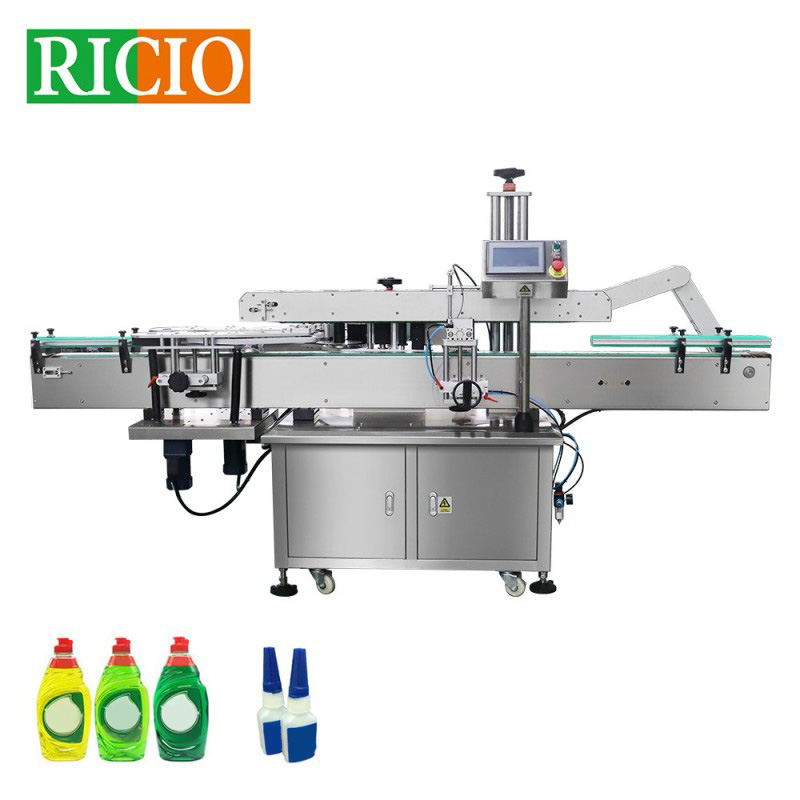
Double Side Labeling Machine plus Printer
Why Double-Sided Labeling Matters in Modern Packaging
Many products require information on both the front and back or on two parallel sides of the container. One label may present the product name, usage information and branding, while the second label may provide ingredients, warnings, regulatory data, logistics information or traceability codes. Applying both labels manually often creates inconsistent positioning, variable spacing and higher labor costs. It can also lead to production interruptions when operators must repeatedly adjust the product or label roll.
Automatic double-sided labeling solves these problems by controlling the movement of each container and coordinating the timing of the labeling heads. Once the product is detected, the machine can apply labels at predetermined positions. The synchronized process helps maintain a consistent relationship between the two labels, even when the line operates for extended periods.
Flat and square containers are especially suitable for this type of equipment. Their defined surfaces provide stable contact areas for labels, while the machine’s alignment and pressing systems help ensure that labels remain straight and firmly attached. Plastic boxes, square bottles, chemical containers and pharmaceutical packages can therefore be processed with less manual handling.
Double-sided application can also improve the visual quality of packaging. When labels are placed at matching heights and distances from the container edges, the finished product presents a more professional appearance. Consistent positioning is valuable for products displayed on retail shelves, stored in warehouses or inspected during pharmaceutical and chemical quality-control procedures.
Integrated Printing and Coding Capability
The integrated printer option expands the function of the labeling machine from a static label applicator into a more complete identification and traceability system. A label may already contain fixed information, but many manufacturers also need to print data that changes from batch to batch. This may include lot numbers, production dates, expiration dates, serial information or machine-readable codes.
During operation, the printer can be synchronized with the labeling process so that information is applied to the correct product or label. This reduces the risk of mismatched codes caused by separate manual printing and labeling operations. The integration is particularly useful where regulatory requirements demand reliable product identification or where downstream customers require traceability throughout the supply chain.
Depending on the production application, the system can be equipped with thermal coding printers, spraying printers and data readers. Thermal coding solutions are commonly used for clear text and variable information, while spraying systems may be selected for specific surfaces or production environments. Data readers can verify barcodes or QR codes and support closed-loop quality management.
Printing and reading functions may also support automated packaging management. A code can identify a product batch, connect the item with a manufacturing record or provide access to digital product information. For companies developing smart-factory systems, the labeling machine can form an important link between physical packaging and production data.
The choice of printer and reader depends on the material, surface finish, ink or ribbon requirements, desired print resolution and line speed. These components can be selected according to the customer’s packaging samples and production objectives. Such configuration flexibility is an advantage over standardized machines that offer only one fixed coding method.
Working Principle of the Double-Sided Labeling System
The machine begins by receiving containers from an upstream conveyor or through manual loading, depending on the production arrangement. The conveying system then separates products and guides them into a stable flow. Separation is important because labels must be dispensed at the correct position for each product. If containers overlap or arrive too closely together, label timing and coding accuracy may be affected.
Alignment mechanisms guide the containers so that their target surfaces face the labeling heads in a repeatable position. The conveyor structure is synchronized with the labeling components, allowing the machine to maintain controlled movement during the application process. Sensors detect the arrival of a container and provide the control system with the signal required to start the corresponding labeling cycle.
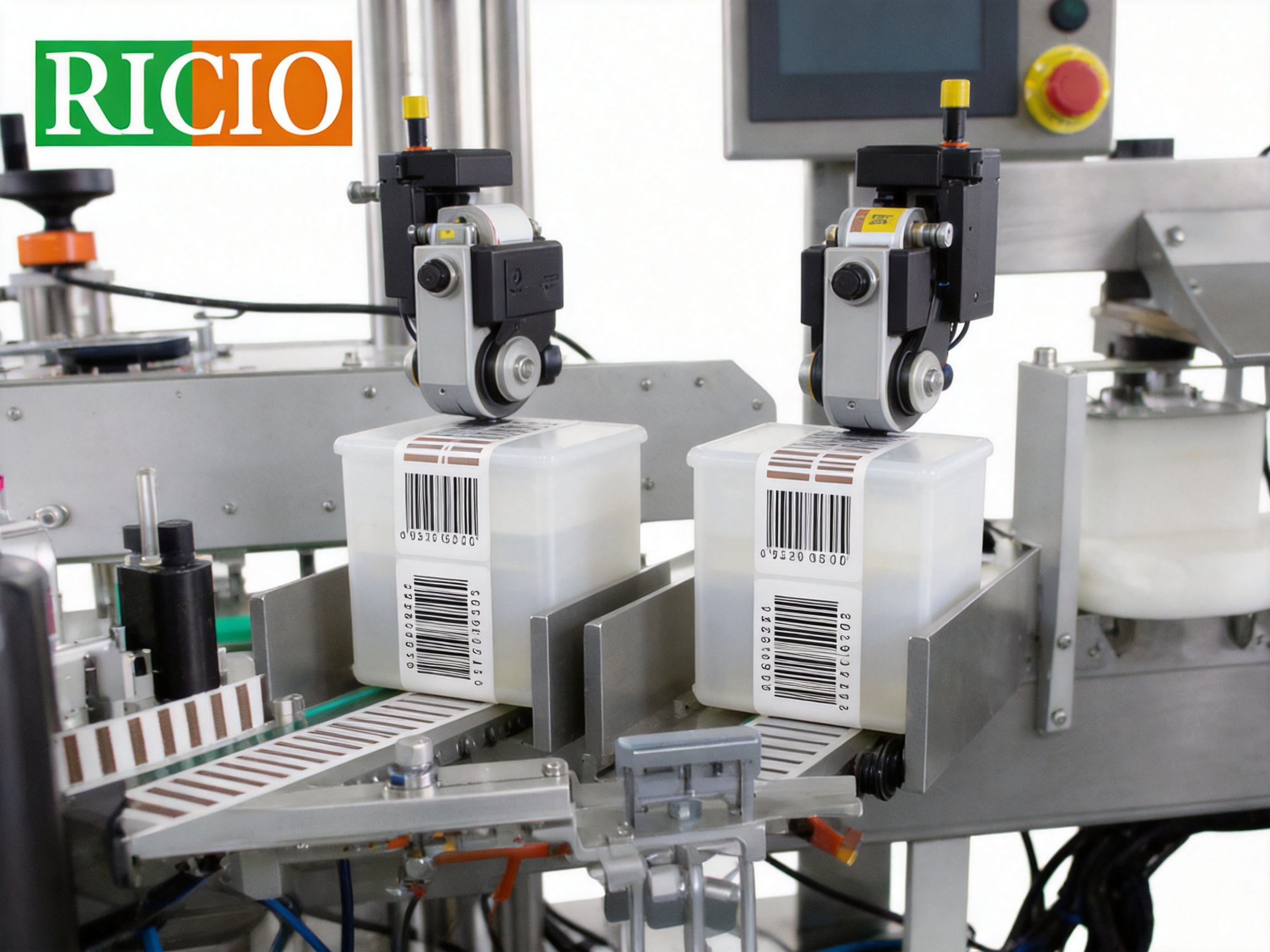
The first labeling head applies a label to one side of the container. Depending on the configuration, another labeling head applies the second label to the opposite or parallel side. The application speed, product position, label length and label offset can be adjusted through the control interface. These adjustments allow the same machine platform to accommodate different package formats.
After initial application, secondary pressing or extrusion labeling mechanisms contact the labels and press them against the container surface. This additional step helps remove trapped air, reduce wrinkles and improve contact between the adhesive and the packaging material. It is especially valuable when the label is large, the container surface has slight irregularities or the product requires a high-quality appearance.
If coding is installed, the printer operates at the appropriate stage of the process. The printed information may be applied directly to the label or to another designated product surface. A data reader can then check the code when verification is required. Depending on the selected configuration, rejected products can be removed manually or connected to a future automatic rejection system.
The finished containers leave the machine through the discharge conveyor and continue to the next packaging stage. This may include inspection, cartoning, case packing, palletizing or warehouse transfer. The machine’s continuous structure helps reduce handling between steps and supports integration with broader packaging lines.
Multiple Labeling Heads for Better Position Control
One of the machine’s principal advantages is its multiple-labeling-head configuration. A machine with only one application head may be adequate for a simple front label, but it cannot efficiently manage coordinated two-sided labeling without additional manual operations. Multiple heads allow the machine to perform the required applications in a controlled sequence.
Each labeling head can be positioned according to the dimensions and shape of the customer’s container. This is important because containers may differ in width, height, shoulder design, surface texture and label placement requirements. Correct mechanical positioning reduces the need for improvised adjustments and helps maintain stable performance during production.
The additional pressing mechanism further distinguishes the equipment from basic applicators. Applying a label is only the first part of the process. The label must also remain flat, secure and visually consistent. Secondary pressing improves the final result by distributing pressure across the label surface and supporting adhesion along the edges.
For manufacturers competing in markets where packaging quality affects purchasing decisions, this finishing stage can be highly valuable. Wrinkled labels, air bubbles and uneven corners can make a product appear poorly controlled, even when the contents meet all quality requirements. A controlled pressing operation helps protect the presentation of the finished package.
PLC Control and Color Touchscreen Operation
The machine uses a PLC-based control system to coordinate its mechanical and electronic functions. A programmable logic controller provides a structured method for managing conveyor movement, sensor signals, labeling timing, printer communication and fault conditions. It also gives the system a foundation for future parameter adjustments and equipment integration.
Operators interact with the machine through a color touchscreen human-machine interface. The interface is designed to make routine setup and production management more accessible than a system based entirely on mechanical switches. Operators can select stored parameters, modify production settings, monitor counts and respond to fault indications from the same control area.
Chinese and English language switching is supported, which is useful for international customers and multilingual production teams. Clear language selection can reduce misunderstandings during setup, maintenance and changeover. It also helps overseas operators use the machine without relying on translated paper instructions for every routine task.
Production counting allows managers to track output during a shift or batch. Parameter storage can reduce changeover time when the same packaging formats are used repeatedly. Instead of rebuilding settings from the beginning, the operator can recall an established product program and make only the necessary adjustments.
Fault indication assists with troubleshooting. When a sensor, conveyor, labeling head or other function requires attention, the interface can identify the relevant condition. Faster diagnosis can reduce downtime and help maintenance staff distinguish between an incorrect setting, a material problem and a mechanical fault.
The PLC and HMI combination also supports a more disciplined production process. Operators can use defined parameters rather than relying on memory or visual estimation. This improves repeatability between shifts and helps standardize operation across different product batches.
Stable Conveying and Product Alignment
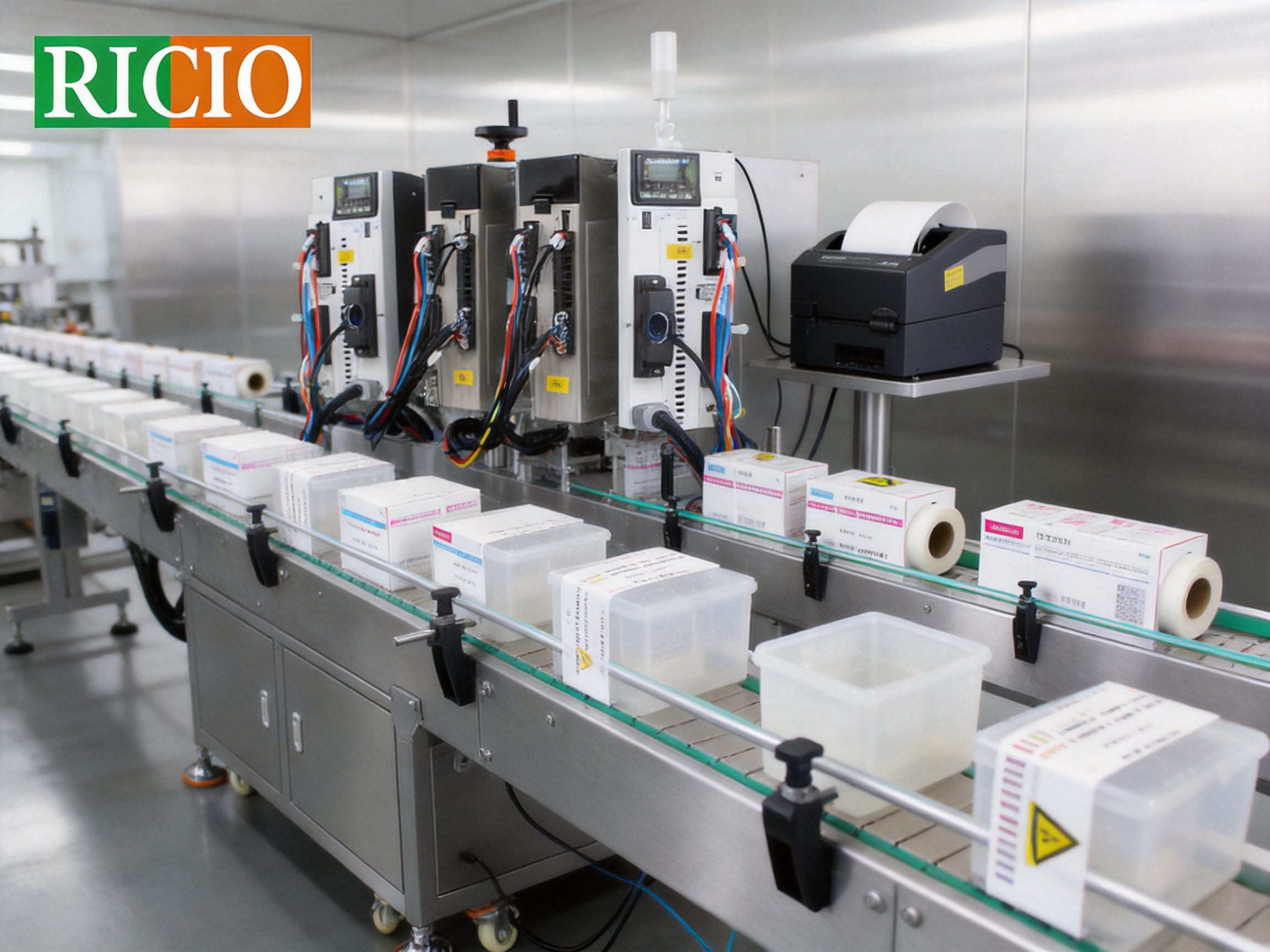
Consistent labeling begins with consistent product movement. A container that shifts, rotates or arrives at an unpredictable position can cause label displacement even when the labeling head is correctly adjusted. For this reason, the Double Side Labeling Machine plus Printer includes a synchronized conveying structure for product separation, alignment and transport.
The conveyor creates a continuous path through the labeling area. Product spacing is controlled so that each container can be detected and processed individually. The alignment section helps establish the correct position before the label is dispensed. This reduces the dependence on manual placement and makes the machine more suitable for continuous industrial operation.
The conveying belt width can be customized according to the actual dimensions of the customer’s sample bottles or containers. When samples are not available for testing, the machine can be prepared according to a normal or standard size. Customization is important because package dimensions vary significantly between pharmaceutical boxes, chemical containers, cosmetic packages and other products.
Stable conveying also supports printer performance. A coding device needs a predictable relationship between the product and the print position. Uncontrolled movement can cause blurred printing, incorrect code placement or a mismatch between the printed data and the product. By maintaining a controlled transport path, the machine creates better conditions for both labeling and coding.
For larger production lines, the conveyor can be considered as part of a complete material-flow system. It may connect to an upstream filling or packing machine and a downstream inspection or cartoning machine. This makes the labeling unit more than an isolated piece of equipment; it becomes a coordinated module within a packaging automation strategy.
Application Range
Pharmaceutical Packaging
Pharmaceutical manufacturers often need accurate labels, variable batch information and traceable production records. Packages may require one label for identification and another for instructions, regulatory information or logistics data. The double-sided labeling system can help apply these labels in a repeatable manner while supporting online coding.
Pharmaceutical packaging also benefits from reduced manual handling. Less manual contact can support cleaner production practices and reduce the possibility of operator error. The machine’s stainless steel and aluminum construction is suitable for environments where hygienic design and long-term cleanability are important considerations.
Chemical Products
Chemical packaging frequently requires hazard information, handling instructions, product specifications and batch identification. A square container may provide two or more usable surfaces, making double-sided labeling an efficient way to present essential information. The machine can be adapted for plastic boxes and square containers used for chemical products.
Printing options are useful in chemical applications because lot numbers, production dates and traceability codes may change frequently. The ability to print during the labeling process can reduce the need for a separate coding station and help ensure that identification data is associated with the correct product.
Biochemical Products
Biochemical products may use compact containers or boxes with detailed information requirements. Automated labeling helps maintain alignment and repeatability when labels contain small text, symbols or machine-readable codes. A data reader can also be considered when barcode or QR code verification forms part of the quality process.
Plastic Boxes and Square Containers
The machine is especially suited to products with flat or square surfaces. These surfaces offer a reliable area for label contact and allow the side labeling heads to work with controlled geometry. Depending on the product design, the system can handle a range of container heights and label sizes within the specified operating range.
Products Requiring Traceability
Manufacturers in many industries now need to identify products throughout production, storage and distribution. A printed QR code or barcode can connect the physical package with a digital record. When readers are installed, the machine can help verify that the correct information has been printed and that the code is readable before the item continues downstream.
Key Technical Specifications
The following specifications describe the standard configuration and operating range. Actual performance depends on the product, label material, label dimensions, operator feeding conditions, printer selection and line arrangement. Testing with customer samples is recommended before final confirmation.
| Item | Specification | Operational Significance |
| Power supply | 380 V, 50 Hz, three-phase industrial grade | Suitable for industrial production environments with compatible electrical infrastructure |
| Power consumption | 2,000 W | Provides power for conveying, labeling, control and integrated equipment functions |
| Labeling speed | 60–150 pieces per minute | Supports medium- to high-throughput applications, depending on product and label conditions |
| Labeling accuracy | ±1 mm | Designed for precise placement when product geometry and materials are suitable |
| Container height range | 40–400 mm | Accommodates a broad range of box and container formats |
| Label height range | 10–150 mm | Suitable for small identification labels and larger information labels |
| Label length range | 10–300 mm | Allows different label layouts and information areas |
| Roll inner diameter | 76 mm minimum | Compatible with common industrial label-roll cores |
| Roll outer diameter | 300 mm maximum | Supports extended production intervals between roll changes |
| Gross machine weight | Approximately 650 kg | Reflects a stable industrial structure designed for continuous use |
| Net machine weight | Approximately 600 kg | Indicates the primary equipment weight excluding certain packaging materials |
| Packaging dimensions | Approximately 2.90 m × 1.50 m × 1.70 m | Important for factory layout, delivery planning and installation access |
| Conveyor width | Customizable according to product samples | Allows adaptation to customer-specific containers and production lines |
The stated speed range should not be interpreted as a guaranteed output for every product. Actual capacity may be influenced by container size, label length, label gap, product stability, label adhesive, human feeding speed and the complexity of the coding process. Larger labels and irregular product surfaces may require a lower speed to preserve placement accuracy and appearance.
The stated accuracy of plus or minus one millimeter is also dependent on product characteristics. Container softness, hardness, roundness, surface finish and dimensional tolerance can affect the final label position. Sample testing enables the machine configuration and speed to be evaluated under realistic conditions.
Construction Materials and Hygienic Design
The main structure is manufactured using SUS304 stainless steel and T6 aluminum alloy. SUS304 is widely used in packaging machinery because it offers corrosion resistance, a durable surface and suitability for hygienic production environments. It is appropriate for industries where equipment may need regular cleaning or where the machine operates near products that require controlled conditions.
T6 aluminum alloy provides a useful balance between strength and weight for selected structural and mechanical components. Its use can support rigid machine construction while helping engineers manage the overall equipment design. The combination of stainless steel and aluminum allows different components to be selected according to their mechanical and environmental requirements.
A stable frame is important for labeling accuracy. Vibration or movement during conveyor operation can influence the relationship between the product and the labeling head. A properly constructed industrial frame helps maintain alignment and supports consistent performance over long operating periods.
Material selection also contributes to service life. Packaging machinery is expected to operate through repeated cycles, product changeovers and routine cleaning. Robust construction reduces the chance that normal industrial use will quickly lead to deformation or loss of alignment.
Advantages Over Basic or Competing Labeling Solutions
One Integrated Process Instead of Separate Operations
A basic label applicator may perform only one labeling task, requiring separate equipment for the second side and for variable coding. The integrated machine combines double-sided application and optional printing in a single coordinated system. This can reduce floor-space requirements, transfer points and manual handling between operations.
Better Control of Two-Sided Alignment
When two labels are applied using separate machines or manual stations, their relative position may vary. Multiple coordinated labeling heads improve consistency between the sides. This is especially important for square containers where the visual relationship between front and back labels is easy to observe.
Improved Label Appearance
The secondary pressing operation provides a finishing advantage over machines that stop after initial label contact. By helping remove air bubbles and wrinkles, it can produce a flatter and cleaner label surface. This supports both product presentation and reliable adhesive contact.
Flexible Coding Options
The equipment can be configured with thermal coding printers, spraying printers and data readers. This gives users more flexibility than a machine restricted to one coding method. The choice can be based on product material, print content, production speed and traceability requirements.
More Convenient Changeover Management
PLC control, touchscreen operation and parameter storage make it easier to manage multiple products. Operators can store settings for different container and label combinations, reducing repeated manual calculations during changeover. This is beneficial for contract packers and manufacturers with a broad product portfolio.
Adaptability to Customer Samples
The conveyor width and other mechanical elements can be customized according to customer-provided product data. Sample-based customization improves the likelihood that the final machine will match the actual package rather than a theoretical standard. This is a significant advantage when containers have unusual dimensions or special surface conditions.
Industrial Construction
The use of SUS304 stainless steel, T6 aluminum alloy and a substantial machine frame supports stable operation in demanding production environments. The equipment is not merely designed for occasional low-volume use; its configuration is intended for continuous industrial packaging applications.
Manufacturing Strengths and Engineering Capability
The manufacturer behind the equipment is Shanghai Ruixiao Packaging Technology Co., Ltd., operating under the RICIO product identity. The company specializes in the research, development and manufacture of labeling machinery. Its product range includes syringe labelers, round bottle labelers, square bottle labelers, double-sided labeling systems, high-speed labeling equipment and real-time print-and-apply solutions.
A major strength is the company’s development from an equipment assembler into a source manufacturer with in-house precision machining capabilities. This development is important because the quality of a labeling machine depends not only on the final assembly but also on the accuracy of the frames, brackets, rollers, shafts, supports and other core components used throughout the system.
The company operates multiple CNC machining centers and employs an experienced technical team. CNC machining allows components to be produced with controlled dimensions and repeatable geometry. In a labeling machine, even relatively small deviations can influence the position of a sensor, roller or labeling head. In-house machining provides greater control over these details than a model based entirely on external component sourcing.
Internal manufacturing capability can also shorten the communication path between design and production. When engineers understand how parts are machined, they can design components with practical tolerances, improve manufacturability and respond more quickly when a customer requires customization. This is particularly valuable for machines adapted to unusual containers or specialized label layouts.
The company manages the process from core component machining to complete machine assembly and commissioning. This integrated approach helps coordinate mechanical construction, electrical control, software configuration and application testing. It also creates a clearer responsibility structure when the machine must be adjusted to meet a customer’s sample requirements.
Quality Management and Production Control
Manufacturing and commissioning are carried out in accordance with the ISO 9001 international quality system. A quality-management approach provides a framework for documenting procedures, controlling production activities and maintaining consistency. For industrial customers, this is important because equipment performance must be repeatable and supported by an organized manufacturing process.
Quality control for a labeling machine can include inspection of machined components, verification of assembly dimensions, testing of electrical connections, checking of sensor operation and trial production with sample products. The final machine should be evaluated not only for whether it powers on, but also for whether it performs the required labeling sequence consistently.
Commissioning is particularly important for double-sided systems. The labeling heads must be aligned with one another, the product flow must remain stable and the printer must communicate correctly with the control system. Trial operation can reveal issues related to label tension, product surface condition, conveyor width and sensor positioning before the equipment is installed at the customer’s facility.
In-house technical expertise also supports after-sales service. When the manufacturer understands the design, machining and assembly of its own equipment, it can provide more informed assistance for troubleshooting, spare parts and future modifications. This is preferable to a supply chain in which the final seller has limited knowledge of the machine’s internal construction.
Customization and Project Development
Every labeling project begins with the product and label requirements. Important information includes container dimensions, material, surface shape, weight, rigidity, label size, label material, adhesive characteristics, desired labeling position and required speed. Coding requirements must also be defined, including the type of information, print area, code format and verification method.
The machine can be customized when the container height or label size exceeds the common range. The conveying belt width can also be developed according to actual customer samples. This project-based approach is more suitable for specialized packaging than a one-size-fits-all machine.
Sample testing is strongly recommended. Tests can confirm whether labels adhere properly, whether the container remains stable, whether the two labels maintain the required relationship and whether the printer produces readable information at the target speed. Testing can also identify whether additional guides, pressing components or special sensors are necessary.
A practical project process may include technical consultation, sample review, preliminary design, component selection, machine manufacture, trial operation, customer inspection, installation and operator training. This sequence helps translate a general requirement such as “double-sided labeling with QR coding” into specific mechanical and electrical specifications.
Customization should not be limited to physical dimensions. Software settings, language selection, counting functions, product programs and fault messages may also be configured according to the user’s production environment. The objective is to create a machine that can be used effectively by the customer’s operators and maintenance team.
Installation, Operation and Maintenance Considerations
Before installation, the customer should confirm the available floor area, electrical supply, conveyor direction, upstream and downstream equipment, ventilation conditions and access route. The listed packaging dimensions are approximately 2.90 meters in length, 1.50 meters in width and 1.70 meters in height. Additional space should be reserved for operator access, label-roll replacement, cleaning and maintenance.
The standard electrical requirement is 380 volts, 50 hertz and three-phase industrial power. The site’s electrical system should be checked by qualified personnel before connection. Grounding, protection devices and cable routing should comply with local industrial safety requirements.
Operators should be trained to load label rolls correctly, thread the web through the dispensing path, set product parameters, select stored programs and respond to alarm messages. They should also understand how label material, roll tension and product cleanliness affect the final result.
Routine maintenance may include cleaning product-contact and label-contact areas, checking conveyor alignment, inspecting rollers, confirming sensor positions and examining the condition of belts and pressing components. Label adhesive residue should be removed using methods compatible with the machine materials and the manufacturer’s maintenance instructions.
Preventive maintenance is generally more effective than waiting for a failure. Regular inspection can identify worn rollers, loose fasteners, damaged cables or sensor contamination before these issues cause extended downtime. Maintenance records can also help identify recurring problems related to particular products or operating speeds.
Efficiency, Labor Reduction and Production Value
Automation can reduce the number of manual steps required for packaging. Instead of manually positioning two labels and then transferring the product to a separate printing station, operators can feed products into an integrated process or connect the machine to an upstream line. This allows personnel to focus on material replenishment, quality checks and broader production supervision.
Labor reduction does not mean eliminating quality control. Rather, it allows quality control to become more systematic. Operators can inspect label rolls, verify stored parameters, monitor production counts and perform sampling checks while the machine maintains the repetitive application cycle.
The ability to store product parameters can reduce setup losses between batches. When a manufacturer produces many product variants, changeover time can significantly affect total equipment efficiency. A clear HMI and repeatable mechanical adjustments help shorten the transition between formats.
Using larger label rolls with an outer diameter of up to approximately 300 millimeters may also reduce the frequency of roll replacement. Fewer interruptions support longer continuous runs. The actual benefit depends on the label length, production schedule and roll configuration.
Integrated coding can reduce transfer time and eliminate some duplicated handling. It may also reduce the risk of applying the wrong preprinted label to a product batch because variable data can be generated during production. When connected with data management systems, the printer and reader can support a more controlled traceability process.
Safety and Compliance Considerations
Industrial labeling equipment should be installed and operated according to applicable local safety requirements. Operators should be protected from moving conveyors, rollers, label dispensing parts and pressing mechanisms. Guards, emergency stops and warning labels should be maintained in good condition.
Before changing a label roll or performing mechanical maintenance, the machine should be stopped and isolated according to the site’s lockout and safety procedures. Only trained personnel should access electrical cabinets, drive systems or control components.
Packaging compliance also depends on the product and market. The machine provides the means to apply and print information, but the customer remains responsible for confirming that the content, placement, readability and regulatory format meet the requirements of the intended market. Data-reader options can assist with verification, but production procedures should still include appropriate quality checks.
How to Select the Correct Configuration
The first selection factor is the container geometry. The machine is designed primarily for flat and square containers, but the exact shape, surface angle and rigidity should be reviewed. Samples help determine whether additional guides or pressing adjustments are necessary.
The second factor is the label design. Label height, length, material, adhesive, gap and winding direction influence the labeling setup. Two labels may have the same dimensions, or they may differ in size and content. The required configuration should be based on the actual label artwork and application position.
The third factor is production speed. A target of 150 pieces per minute may be realistic for some small, stable containers with short labels, while larger products or complex codes may require a lower speed. A balanced design should prioritize reliable quality over an unrealistic nominal speed.
The fourth factor is the printing method. Thermal coding, spraying and other printing approaches have different requirements for surface material, resolution, drying time and maintenance. The printer should be selected after reviewing the required content and the product surface.
The fifth factor is data verification. If the customer needs to confirm that a barcode or QR code is readable, a data reader should be considered. If the product only requires fixed text, a simpler configuration may be sufficient. The system should be designed around actual traceability objectives rather than unnecessary complexity.
The final factor is line integration. The customer should define whether products are manually fed, supplied by an upstream machine or transferred from a previous conveyor. The inlet and outlet heights, product spacing, communication requirements and floor layout should be confirmed before manufacturing.
Frequently Asked Questions
What products can this machine label?
The machine is designed for flat and square containers, including plastic boxes, square bottles and packaging products used in pharmaceutical, chemical and biochemical industries. The exact suitability depends on the container dimensions, rigidity, surface condition and label requirements.
Can it apply labels to two sides in one operation?
Yes. The machine uses multiple labeling heads to apply self-adhesive labels to two designated sides of the container during a coordinated automatic process. The product is separated and aligned before entering the labeling area.
What information can the integrated printer add?
Depending on the selected printer, the system can add batch numbers, manufacturing dates, expiration dates, QR codes, barcodes and other variable product information. The exact print method should be selected according to the surface, data format and production speed.
Can the machine read or verify codes?
Data readers are available as optional components. They can be used to identify or verify barcodes and QR codes, supporting traceability and automated packaging management.
What is the normal labeling speed?
The stated speed range is 60 to 150 pieces per minute. Actual output depends on container size, label dimensions, label material, product stability, coding requirements and feeding conditions. Sample testing is recommended for a reliable production estimate.
What labeling accuracy can be expected?
The stated accuracy is approximately plus or minus one millimeter under suitable conditions. Product roundness, softness, hardness, surface characteristics and dimensional consistency can affect the final result.
Can the machine handle different product sizes?
Yes. The standard container height range is approximately 40 to 400 millimeters, and the label range is approximately 10 to 150 millimeters in height and 10 to 300 millimeters in length. Settings and certain mechanical elements can be customized when requirements exceed common ranges.
Is the conveyor width fixed?
No. The conveying belt width can be customized according to the customer’s actual product samples and dimensional data. If samples are unavailable, a normal or standard size can be used as the basis for preparation.
What materials are used in the machine?
The main structure uses SUS304 stainless steel and T6 aluminum alloy. These materials support hygienic production, structural stability and long-term industrial operation.
Does the machine support multiple languages?
The touchscreen control system supports Chinese and English language switching. It also provides production counting, parameter storage, production setting functions and fault indication.
Why is secondary pressing important?
Secondary pressing helps improve contact between the label and container. It can reduce air bubbles and wrinkles, support edge adhesion and improve the appearance and stability of the finished package.
What should be supplied for a technical evaluation?
Customers should provide representative containers, label samples, production speed targets, label placement drawings, coding requirements and information about upstream or downstream equipment. These details allow the machine configuration to be evaluated more accurately.
What industries can benefit from the equipment?
Typical applications include pharmaceutical packaging, chemical packaging, biochemical products, plastic boxes, square containers and products requiring barcode or QR code identification. The machine can also be integrated into automated packaging production lines.
Conclusion
The Double Side Labeling Machine plus Printer provides a comprehensive solution for manufacturers that need accurate two-sided labeling together with integrated product coding. Its combination of synchronized conveying, product alignment, multiple labeling heads, secondary pressing, PLC control and touchscreen operation addresses the main challenges associated with automated labeling of flat and square containers.
Its advantages extend beyond the basic act of applying a label. The machine supports improved appearance, repeatable positioning, reduced manual handling, flexible coding and traceability. Optional printers and data readers allow the system to develop from a labeling unit into an integrated identification station for modern packaging lines.
The equipment is also strengthened by the manufacturer’s engineering and production capabilities. In-house CNC machining, experienced technical personnel, complete assembly and commissioning, and ISO 9001-based quality management provide a structured foundation for consistent manufacturing. The ability to customize conveyor width, label ranges and related components allows the machine to be adapted to real customer samples rather than limited to a generic standard.
For companies packaging pharmaceutical, chemical, biochemical or other products in square and flat containers, this system offers a practical path toward improved efficiency and packaging consistency. Proper sample testing, configuration planning and operator training will help ensure that the machine delivers its full value in the intended production environment.
References
1. Shanghai Ruixiao Packaging Technology Co., Ltd., Double Side Labeling Machine plus Printer technical product information.
2. Shanghai Ruixiao Packaging Technology Co., Ltd., Company manufacturing and engineering profile.
3. ISO 9001, Quality management systems—Requirements.
4. General industrial guidance on self-adhesive label application, product conveying and packaging-line integration.
5. General technical guidance on barcode, QR code printing and automated packaging traceability.
Product: Double Side Labeling Machine plus Printer

related products
related News
 +86 13681850339
 sales@raxpack.com
 Building 6, No. 477 Tiefeng Road, Baoshan District, Shanghai, China
- Tabletop Labeling Machine
- Round Bottle Labeling Machine
- Automatic Tube Labeling Machine
- Pouch Labeling Machine
- Rotary Labeling Machine
- Syringe Labeling Machine
- Top Labeling Machine
- Single Side Sticker Labeling Machine
- Double Side Labeling Machine
- Bucket Labeling Machine
- Bottom Labeling Machine
- Corner Label Applicator
- Waist Sealing Labeling Machine
- Square Bottle Labeling Machine
